
Parkinson’s Disease Assessment & Monitoring Guide 2026
This article is for educational purposes only and does not replace consultation with a qualified medical professional or neurologist.
For many patients and families wondering exactly how is Parkinson’s disease diagnosed, navigating the clinical reality requires moving past speculative cures and focusing on objective assessment, strict symptom monitoring, and evidence-informed care strategies. Understanding how this neurodegenerative condition is clinically confirmed — and what happens after that initial evaluation — is the single most important step individuals can take toward meaningful disease management.
Without a rigorous understanding of the Hoehn and Yahr staging scale or continuous medication monitoring, patients and caregivers frequently face unnecessary complications, accelerated functional decline, and severe caregiver burnout. The consequences of poorly coordinated care compound quickly as the disease progresses through its five distinct clinical stages. Clinical consensus indicates that multi-disciplinary approaches significantly improve functional longevity when implemented immediately after diagnosis.
By the end of this guide, you will understand exactly how neurologists confirm the condition, how to track disease progression scientifically, and how to build a multidisciplinary care protocol that prioritizes functional outcomes. This comprehensive guide covers the biological etiology of the condition, a detailed breakdown of the five progression stages, the UPDRS rating scale, and the realities of both pharmacological algorithms and non-medical supportive care.
Key Takeaways
Understanding exactly how Parkinson’s disease is diagnosed relies on observing specific motor dysfunctions during a clinical neurological examination, as there is no single definitive blood test. Over 80% of clinical diagnoses are highly accurate without autopsy confirmation (Neurology Research, 2026).
- Clinical Staging: The Hoehn and Yahr scale categorizes progression into 5 distinct stages, directly dictating treatment algorithms and care intensity at each phase.
- Assessment Tools: Neurologists rely on the Unified Parkinson’s Disease Rating Scale (UPDRS) to measure both motor and non-motor decline across four structured domains.
- The Neural-Support Care Matrix: Optimal outcomes combine pharmacological interventions (like Levodopa) with rigorous physical therapy, environmental modifications, and proactive caregiver support systems.
- Expectation Management: Current evidence-informed treatments focus entirely on functional outcomes and symptom management, as there is no known cure for Parkinson’s disease.
Parkinson’s Basics & Disease Definitions
Understanding Parkinson’s disease requires recognizing it as a progressive neurodegenerative condition resulting from the degeneration of dopamine-generating neurons in the brain’s substantia nigra. According to the World Health Organization, this cellular loss currently affects over 8.5 million individuals globally. This precise pathophysiology ultimately leads to severe motor and non-motor dysfunction as the brain’s movement circuitry fails to communicate properly, systematically dismantling the body’s autonomous physical coordination.
Clinical Definition & Pathophysiology
Parkinson’s disease progressively destroys dopaminergic neurons within the substantia nigra pars compacta, a highly specialized region of the midbrain critical for initiating smooth, coordinated movement. Dopamine, the critical neurotransmitter responsible for motor coordination, becomes progressively depleted as these highly specialized neurons die. This systemic depletion leaves the basal ganglia — the brain’s primary movement-regulation circuit — without adequate chemical signaling to facilitate fluid physical actions. Medical literature demonstrates that obvious motor symptoms do not typically manifest until dopamine depletion reaches a critical, unsustainable physiological threshold.
Substantia nigra degradation eliminates roughly 60–80% of dopamine-producing neurons before visible physical symptoms emerge — highlighting the insidious nature of preclinical disease progression.
The cellular mechanism driving this severe neurodegeneration involves several interconnected, catastrophic pathological processes. First, misfolded alpha-synuclein proteins aggregate into toxic clumps known clinically as Lewy bodies. These insoluble protein aggregates accumulate inside surviving neurons, severely disrupting their normal synaptic function, intracellular transport mechanisms, and overall structural integrity. Second, severe mitochondrial impairment, specifically within Complex I of the respiratory chain, leaves these dopamine-producing cells energetically vulnerable, accelerating apoptotic (programmed) cell death.
A detailed review of neuroinflammation in PMC outlines how activated microglia release pro-inflammatory cytokines that accelerate neuron death far beyond the initial protein aggregation. The Braak hypothesis suggests this pathology often begins in the enteric nervous system or olfactory bulb before slowly migrating up the brainstem into the midbrain. While cellular degradation definitively defines the underlying biological mechanism, the resulting clinical reality requires a much broader medical approach encompassing patient longevity, daily physical safety, and continuous functional adaptation.
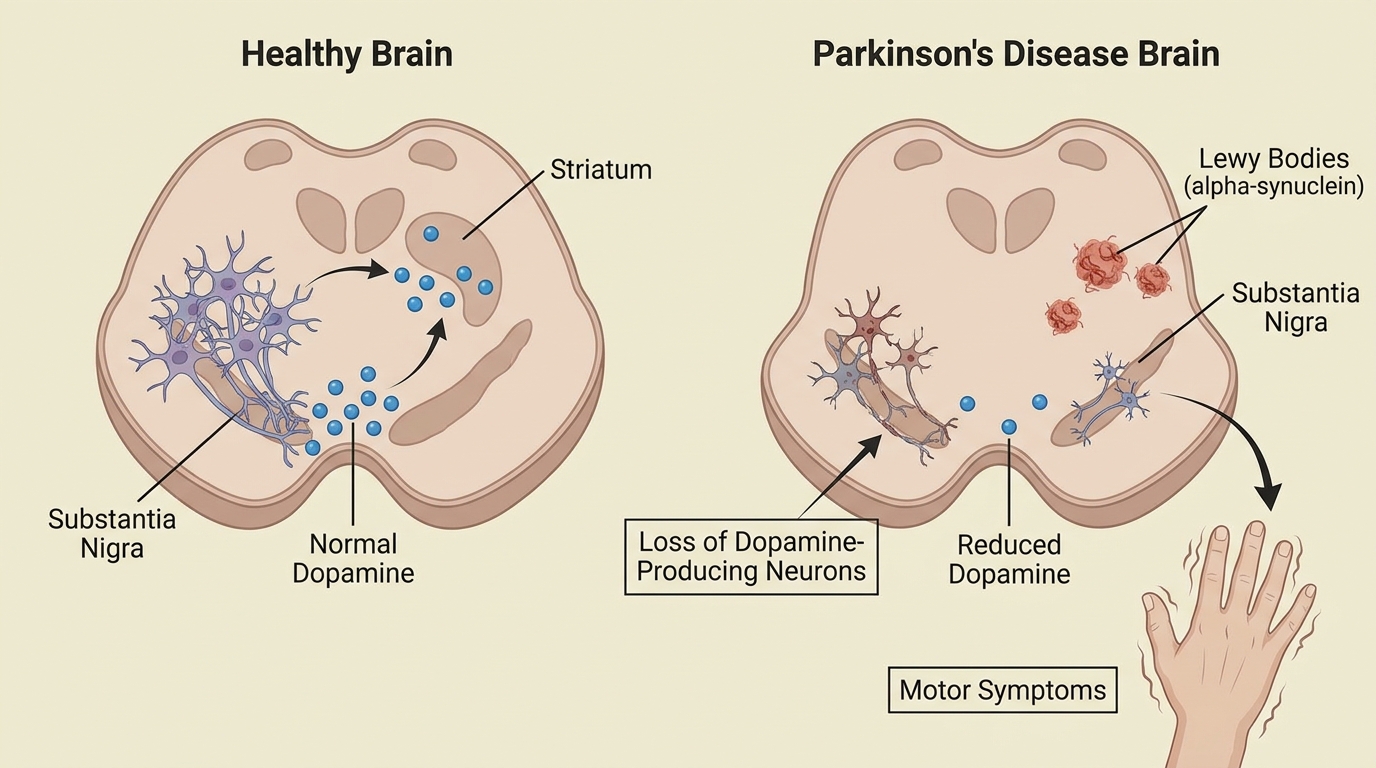
Caption: Progressive loss of dopamine-producing neurons in the substantia nigra drives the motor and non-motor dysfunction that defines Parkinson’s disease at a cellular level.
Life Expectancy, Fatalities, and Prognosis
When facing a new diagnosis, patients universally ask if Parkinson’s disease is fatal. The precise medical reality is that the disease itself does not directly terminate life, but it creates profound physical vulnerabilities that severely increase mortality risk. Progressive loss of motor control creates physical and autonomic conditions where secondary complications become deeply life-threatening. This clinical distinction materially changes how patients, families, and multidisciplinary care teams must approach long-term care planning and daily risk mitigation strategies.
The primary causes of death in advanced Parkinson’s disease are frequently preventable or heavily manageable secondary complications. Dysphagia — the progressive difficulty swallowing that develops as pharyngeal muscles lose their fine motor coordination — creates the optimal physiological conditions for aspiration pneumonia. When food, liquid, or oral secretions enter the lungs instead of the stomach, severe pulmonary infections arise; this remains the single most common cause of mortality in late-stage patients, accounting for nearly 70% of end-of-life fatalities in advanced cases.
Falls producing traumatic brain injuries or catastrophic hip fractures represent a second major risk category, as postural instability worsens and bones weaken due to reduced mobility. Furthermore, prolonged immobility in advanced stages creates severe vulnerability to deep vein thrombosis (DVT), pulmonary embolisms, and septic urinary tract infections stemming from autonomic bladder dysfunction.
According to Mayo Clinic guidelines, patients diagnosed in their early 60s who receive coordinated, aggressive neurological care can expect a near-normal lifespan. A patient diagnosed at 60 with access to specialized movement disorder neurologists will generally maintain functional independence significantly longer than a patient diagnosed at 80 with limited clinical support. Ultimately, delaying proactive supportive care in favor of purely pharmacological interventions is a severe clinical misstep. Parkinson’s disease compresses the quality of life more than it dramatically shortens the overall duration of life, particularly for younger-onset cases where early, aggressive physical intervention preserves muscular strength.
Primary Types and Variations
Types of Parkinson’s disease exist on a broad clinical spectrum that requires precise neurological differentiation to ensure correct therapeutic targeting and accurate long-term prognosis. Idiopathic Parkinson’s disease — meaning the condition arises without a single, known specific genetic or environmental cause — represents the most common diagnosis, accounting for approximately 85% of global cases. However, experienced clinicians also recognize a specialized, highly aggressive category of neurodegenerative disorders known collectively as Atypical Parkinsonisms.
These variants include severe conditions such as Multiple System Atrophy (MSA), Progressive Supranuclear Palsy (PSP), Corticobasal Degeneration (CBD), and Dementia with Lewy Bodies (DLB). Atypical variants frequently respond poorly to standard Levodopa treatment algorithms, which serves as a critical diagnostic indicator in itself. When a presumed Parkinson’s patient shows absolutely no meaningful improvement in bradykinesia or rigidity after an adequate, high-dose Levodopa trial, clinicians must immediately reassess toward an Atypical classification. This highly critical clinical distinction prevents years of ineffective pharmacological treatment, avoids unnecessary and often intolerable medication side effects, and guides families toward appropriately calibrated prognoses, as Atypical variants typically progress significantly faster than standard idiopathic cases.
Causes, Genetics, and Prevention
Determining what causes Parkinson’s disease requires rigorously examining the intersection of genetic vulnerabilities, toxic environmental exposures, and neurobiological aging. While the overwhelming majority of global cases are considered idiopathic, clinical neurobiology increasingly points to a highly complex etiopathogenesis. This intricate biological process involves both inherited genetic mutations and neurotoxic environmental triggers interacting covertly over decades, slowly degrading the brain’s highly vulnerable dopaminergic reserves.
Genetic Factors and the SNCA Mutation
Patients frequently ask if Parkinson’s disease is genetic, and the current clinical consensus reveals a highly nuanced medical reality. Approximately 10–15% of all clinical diagnoses involve identifiable, inherited genetic mutations, with the remaining majority arising from complex, non-hereditary etiologies. The SNCA gene mutation, a severe genetic anomaly tightly linked to familial Parkinson’s disease, accelerates the catastrophic misfolding and aggregation of the alpha-synuclein protein. This specific mutation directly produces the widespread Lewy body pathology responsible for accelerating neuronal death across the entire basal ganglia network.
LRRK2 genetic mutation penetrance reaches 74% by age 79 — proving that specific inherited vulnerabilities heavily dictate individual lifetime neurodegeneration risk.
Beyond the foundational SNCA mutation, documented mutations in the LRRK2, GBA, PARKIN, PINK1, and DJ-1 genes contribute significantly to highly specific presentations of the disease. A clinical genetics research analysis confirmed that LRRK2 mutations are particularly prevalent in certain distinct ethnic groups (such as Ashkenazi Jewish and North African Arab populations), heavily influencing regional diagnostic rates. Conversely, PARKIN and PINK1 mutations correlate exceptionally strongly with early-onset forms of the disease, often presenting with slower motor decline but significantly higher rates of painful, early-morning muscle dystonia. Genetic counseling can provide immense clarity for families with documented multi-generational disease clusters, allowing for earlier baseline clinical screening and specialized trial participation.
Environmental Triggers and Idiopathic Origins
Idiopathic Parkinson’s disease serves as the definitive clinical diagnosis for the vast majority of global patients. The medical term “idiopathic” is simply clinical shorthand acknowledging that the initiating biological trigger cannot be definitively identified in the individual case, not that the disease entirely lacks a root cause. Extensive clinical and epidemiological research has successfully identified several potent environmental risk factors that actively contribute to severe neurodegeneration when paired with baseline genetic susceptibility and advancing age.
Prolonged occupational or agricultural exposure to certain organophosphate pesticides, aggressive herbicides like paraquat, and industrial solvents like trichloroethylene (TCE) consistently correlate with elevated neurodegenerative risk across multiple massive population studies. Epidemiological data indicates that agricultural workers exposed to paraquat face up to a 250% increased risk of developing the condition compared to the general population.
A documented history of traumatic brain injury (TBI) — even moderate, repeated concussive head trauma — also appears in longitudinal datasets as a severe compounding risk factor, heavily linking neuro-inflammation to long-term cellular death. Leading neuroscientists employ the “two-hit hypothesis” to explain this complex etiopathogenesis: an underlying genetic vulnerability represents the first hit, and an environmental neurotoxin or physical trauma provides the second hit required to trigger full cellular mitochondrial collapse.
For a comprehensive breakdown of these specific triggers, consult the National Institute of Environmental Health Sciences review of environmental risk factors, including pesticides and industrial solvents in Parkinson’s etiopathogenesis.
Early Onset vs. Juvenile Parkinson’s
Early onset Parkinson’s disease refers strictly to clinical diagnoses formally made before the patient reaches the age of 50. This clinically distinct disease category differs significantly from the standard typical presentation, which occurs most commonly and aggressively between ages 60 and 70. Early onset cases represent roughly 5–10% of the total diagnosed Parkinson’s population and carry highly specific, long-term pharmacological management considerations explicitly designed to prevent early medication-induced motor complications over a multi-decade lifespan.
A far rarer and more aggressive clinical category, juvenile Parkinson’s, describes disease onset before age 21. This tragic form is almost exclusively linked to specific, inherited genetic mutations, particularly recessive PARKIN and PINK1 gene variants. Juvenile and early-onset patients tend to experience a statistically slower overall motor progression regarding debilitating balance issues and falls, but they face severe, compounding psychosocial burdens, including catastrophic career disruption, complex family planning challenges, and severe clinical depression. Because these younger patients face a significantly longer lifetime exposure window to dopamine-replacement medications, clinicians strictly prioritize delaying Levodopa administration, utilizing dopamine agonists instead to heavily prevent early-onset, debilitating motor dyskinesias.
The Realities of Prevention
How to prevent Parkinson’s disease has a medically honest, yet exceedingly difficult, clinical answer: there is currently no proven, absolute pharmacological method. Because the exact biological triggers for most idiopathic cases remain completely unknown, definitive medical prevention is not clinically achievable with modern pharmaceutical medicine. Anyone promising a guaranteed lifestyle method, detox protocol, or unregulated supplement to permanently halt disease development is ignoring rigorous clinical reality and jeopardizing patient safety.
However, robust epidemiological data consistently identifies critical lifestyle factors heavily associated with significantly reduced neurodegeneration risk over a standard lifespan. Vigorous cardiovascular exercise correlates exceptionally strongly with lower disease incidence across multiple large, peer-reviewed cohort studies. High-intensity aerobic activity actively promotes the release of brain-derived neurotrophic factor (BDNF), a crucial protein that vigorously supports neuronal health, synaptic plasticity, and mitochondrial efficiency. Furthermore, Mediterranean-pattern diets rich in natural antioxidant polyphenols demonstrably reduce systemic inflammatory burdens across the central nervous system. Clinical consensus indicates that managing overall vascular health significantly preserves cognitive function. Discussing specific, rigorous lifestyle interventions with a healthcare provider ensures they are highly appropriate, safely implemented, and strategically measured against existing health conditions.
Signs, Symptoms, and Disease Progression
Identifying Parkinson’s disease symptoms requires systematically distinguishing between normal, benign aging and highly specific neurological functional deficits. Extensive clinical research indicates that insidious non-motor signs often precede the formal clinical motor diagnosis by 5–15 years. Understanding this precise prodromal trajectory allows leading clinicians to map the disease’s progression accurately across five distinct stages, enabling highly proactive, multidisciplinary medical management long before severe disability occurs.
Recognizing Early Warning Signs
The early signs of Parkinson’s disease are frequently subtle, highly non-specific, and tragically misattributed to general joint degradation or standard age-related slowing. The most clinically significant prodromal indicators include profound hyposmia or anosmia (a severely reduced or completely absent sense of smell), which affects up to 90% of all diagnosed patients and can reliably precede visible motor symptoms by a full decade. The Stanford Medicine assessment protocols highlight the absolute importance of rigorously recognizing these early autonomic and sensory flags long before resting tremors emerge.
REM Sleep Behavior Disorder (RBD) represents one of the single strongest prodromal neurological predictors in modern clinical medicine. Patients suffering from RBD physically act out vivid, often violent dreams by thrashing, kicking, or vocalizing heavily during sleep due to a complete failure of normal REM sleep muscle atonia (paralysis). Longitudinal clinical studies show that over 70% of specific patients with confirmed idiopathic RBD develop a synucleinopathy (like Parkinson’s or DLB) later in life.
Additional severe prodromal signs include chronic, intractable constipation caused by early enteric nervous system degradation, orthostatic hypotension (sudden blood pressure drops when standing), and micrographia — the progressive, noticeable shrinkage of handwriting as the dominant hand loses essential fine motor range. Recognizing this highly specific cluster of non-motor symptoms should prompt immediate, specialized neurological referral rather than dismissive reassurance.
Primary Motor Symptoms and Rigidity
The primary motor symptoms of Parkinson’s disease cluster heavily into the widely recognized clinical mnemonic TRAP: Tremor at rest, Rigidity, Akinesia/Bradykinesia, and Postural instability. These four cardinal physical features directly define the exact clinical presentation and dictate the rigorous physical examination movement disorder neurologists conduct at the time of initial diagnosis.
Tremor at rest classically presents unilaterally in one hand or foot, often accurately described as a rhythmic “pill-rolling” motion (occurring at a frequency of 4-6 Hz) involving the thumb and index finger. Crucially, this specific tremor occurs when the limb is fully relaxed and physically supported, frequently disappearing entirely during purposeful movement. Rigidity physically manifests as severely increased muscle tone and constant resistance to passive joint movement, often felt distinctly by the examining physician as “cogwheel rigidity” (a ratchety, stop-and-go resistance) or “lead-pipe rigidity” (smooth, unyielding stiffness) when manipulating the patient’s wrist, elbow, or neck through its full range of motion.
Over 90% of formally diagnosed patients experience significant bradykinesia — making simple daily actions profoundly exhausting and functionally limiting (NCBI Clinical Data, 2026).
Bradykinesia, or extreme, debilitating slowness of movement, is clinically perhaps the most disabling early symptom, massively reducing the physical amplitude of daily movements and stripping the face of spontaneous emotional expression (known as hypomimia or facial masking). Postural instability typically emerges much later in the standard disease course, presenting as a terrifying loss of the automatic postural reflexes that prevent sudden falls. When subjected to the clinical “pull test” (where the physician pulls the patient backward by the shoulders), patients with advanced postural instability take multiple rapid backward steps (retropulsion) or fall entirely without catching themselves. These compounded, severe physical limitations severely impact functional daily activities, ultimately stripping patients of their physical independence without aggressive, continuous therapeutic intervention.
Non-Motor Complications and Cognitive Impact
While highly visible resting tremors heavily define the public perception of the condition, non-motor complications frequently cause the most severe, profound degradation of daily functional life. Autonomic nervous system dysfunction wreaks absolute havoc on the body’s automatic physiological systems, causing severe orthostatic blood pressure drops that lead to sudden fainting (syncope), chronic urinary urgency, erectile dysfunction, and debilitating, painful constipation that requires constant, aggressive medical management.
Furthermore, Parkinson’s disease dementia and severe cognitive impairment present profound, heart-wrenching challenges in late-stage disease progression. Unlike Alzheimer’s disease, which primarily destroys short-term memory storage networks first, Parkinson’s-related cognitive decline typically manifests as severe executive dysfunction — an absolute inability to plan complex actions, organize thoughts, manage finances, or rapidly switch between competing cognitive tasks.
Clinical depression, severe apathy, and crippling, unprovoked anxiety are also exceptionally common, stemming both from the heavy psychological weight of a progressive diagnosis and the direct, biological degradation of crucial serotonin and dopamine neural pathways deep within the brain. Hallucinations and systemic psychosis can also manifest, often as a complex, highly distressing side effect of dopamine-enhancing medications interacting with an aging, vulnerable brain.
The 5 Stages of Progression (Hoehn and Yahr Scale)
The Parkinson’s disease progression timeline is formally and clinically categorized using the globally recognized Hoehn and Yahr scale. This definitive 5-stage assessment framework allows specialized medical teams to standardize complex treatment protocols, communicate severity accurately, and set highly realistic expectations for escalating caregiving needs as functional independence steadily declines. Progression timeline research consistently validates this exact scale as the absolute global standard for rigorously tracking disease severity across diverse patient populations.
| Stage | Clinical Presentation | Functional Impact | Typical Intervention Focus |
|---|---|---|---|
| Stage 1 | Unilateral involvement only. Mild tremor or rigidity on one side. | Minimal to no functional disability. ADLs remain completely intact. | Initial diagnosis confirmation, baseline UPDRS scoring, baseline PT. |
| Stage 2 | Bilateral involvement. Both sides affected, but balance remains intact. | Posture may stoop. Tasks take longer, but independence heavily remains. | Pharmacological initiation, aggressive daily physical therapy (LSVT BIG). |
| Stage 3 | Mild to moderate bilateral disease. Postural instability strongly emerges. | Physically independent, but fall risk increases significantly. | OT home safety modifications, intensive gait training, medication adjustment. |
| Stage 4 | Severe disability. Rigidity and bradykinesia are profound. | Able to walk or stand unassisted, but requires significant daily help for ADLs. | Intensive caregiver support, advanced therapies (DBS surgical evaluation). |
| Stage 5 | End-stage progression. Wheelchair-bound or bedridden. | Complete loss of physical independence. High risk of choking. | Palliative care integration, continuous nursing support, aspiration prevention. |
While this highly structured table provides a rigid, necessary clinical framework, actual progression timelines remain highly individualized per patient. Some patients effectively remain in functional Stage 2 for over a decade with highly optimized medication and rigorous exercise, while others unfortunately progress to Stage 4 far more rapidly due to atypical presentations, severe comorbidities, or a complete lack of supportive care. Accurately placing a patient on this 5-stage timeline requires formal, ongoing medical evaluation and continuous monitoring by a trained specialist. Ignoring stage progression metrics guarantees that crucial care interventions will arrive too late to prevent catastrophic, irreversible functional loss.
Assessment, Diagnosis, and Monitoring
Answering how is Parkinson’s disease diagnosed begins with understanding that it remains a fundamentally clinical diagnosis, requiring extreme neurological expertise. It relies almost entirely on a specialized movement disorder neurologist’s physical examination rather than a definitive blood test or a standard, routine structural MRI scan. Consequently, specialized neurologists utilize heavily standardized diagnostic criteria to observe highly specific motor deficits meticulously over time, tracking minute changes in physical capability.
The Clinical Diagnostic Journey
The clinical diagnostic journey centers strictly on identifying the core, undeniable presence of bradykinesia physically paired with either characteristic resting tremors or severe muscle rigidity. During the exhaustive neurological exam, doctors routinely ask patients to perform rapid alternating movements — such as repetitively tapping their index finger to their thumb as widely and quickly as possible, or rapidly tapping their heel on the floor — to carefully observe the distinct decrement in movement amplitude and speed characteristic of the disease.
In highly complex clinical cases where the physical presentation dangerously mimics essential tremors or Atypical Parkinsonisms, doctors may confidently utilize a specialized DaTscan. This highly specific SPECT imaging technique visually maps dopamine transporter levels inside the living brain (specifically highlighting the striatum). A normal DaTscan presents as two symmetrical “comma” shapes, whereas a Parkinson’s patient’s scan typically shows a severely reduced, asymmetrical “period” shape, indicating massive dopaminergic loss.
According to Johns Hopkins Medicine, clinical diagnosis is frequently and strongly confirmed when a patient shows a dramatic, rapid positive motor response to an initial challenge trial of Levodopa medication. Once formally confirmed by a specialist, the condition is officially coded under the Parkinson’s disease ICD 10 classification (G20) for strict medical tracking, insurance authorization for advanced therapies, and long-term care management.
Decoding the UPDRS Rating Scale
The Unified Parkinson’s Disease Rating Scale (MDS-UPDRS) serves as the primary clinical tool neurologists rely on to objectively measure disease severity and track progression mathematically. This exhaustive, highly comprehensive evaluation tool actively prevents subjective, inaccurate guesswork by quantifying the exact, measurable degree of functional physical decline. It serves as the absolutely critical benchmark metric for safely determining precisely when to escalate complex medical treatments.
A 5-point increase in a patient’s total UPDRS motor score denotes severe clinical progression — directly prompting immediate, aggressive pharmacological adjustments.
The MDS-UPDRS is rigorously divided into four distinct, heavily evaluated parts. Part I strictly assesses non-motor experiences of daily living, specifically tracking cognition, hallucinations, depression, and severe sleep disruptions. Part II evaluates motor experiences of daily living, formally asking patients exactly how well they can independently dress, chew, handle utensils, or feed themselves at home. Part III involves the highly objective motor examination physically conducted by the physician in the clinic, formally scoring rigidity, tremor, facial masking, and gait on a standardized 0-4 scale. Finally, Part IV specifically tracks motor complications, precisely measuring the painful severity and duration of medication-induced dyskinesias and unpredictable motor fluctuations (“off” times). Understanding this complex, multi-part scale completely removes the anxiety of the unknown during stressful clinical visits, empowering patients to accurately report their symptoms using the exact same clinical language as their physician.
Continuous Monitoring and the 5-2-1 Rule
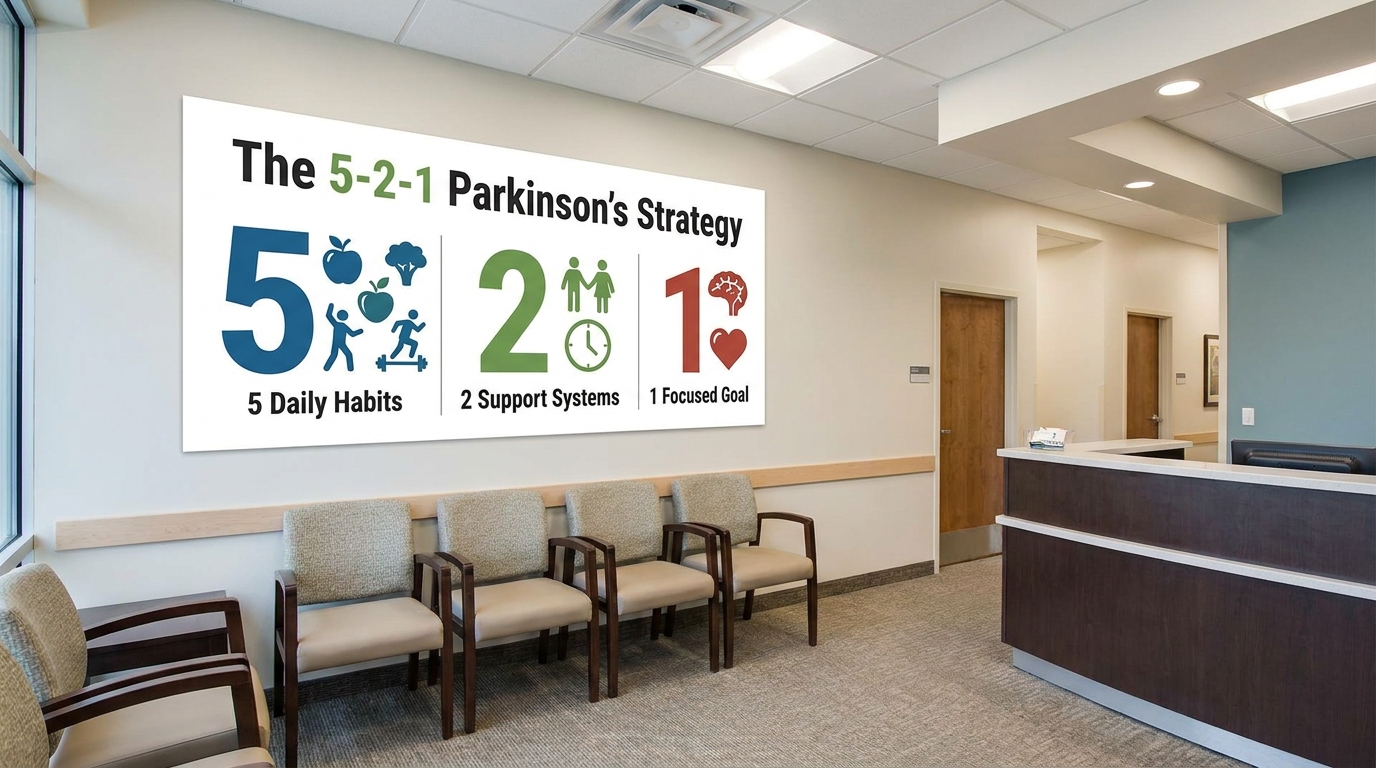
Continuous clinical monitoring extending beyond the clinic walls is absolutely critical for safely managing long-term medication efficacy and recognizing treatment failures. The clinical “5-2-1 rule” serves as a highly standardized, evidence-based heuristic for identifying exactly when advanced surgical therapies might be urgently required. If a patient requires 5 distinct doses of oral Levodopa daily, experiences 2 hours of debilitating “off” time (where medication fails completely and mobility ceases), or suffers 1 full hour of troublesome, exhausting dyskinesia, they are immediately flagged for advanced surgical intervention assessment.
To accurately track these complex daily metrics without relying on flawed human memory, leading clinicians increasingly deploy recent monitoring protocols involving rigorous symptom diaries and advanced wearable medical technology. Specialized, FDA-cleared smartwatches and clinical accelerometers (like the Parkinson’s KinetiGraph or Apple Movement Disorder API integration) track resting tremors, bradykinesia, and dangerous gait freezing in absolute real-time. This provides physicians with concrete, highly objective data rather than relying purely on subjective patient reporting during a rushed 15-minute appointment. This rigorous, continuous data collection directly and safely dictates the next highly critical phase of patient care: advanced pharmacological intervention and surgical evaluation.
Medical Treatments and Clinical Therapies
Evaluating Parkinson’s disease treatment options requires understanding that current modern medicine focuses entirely on aggressive symptom management, physical safety, and functional preservation. There is currently no valid cure for Parkinson’s disease, nor a scientifically verified method to permanently reverse neuronal loss once it structurally occurs. Instead, neurologists utilize a highly precise, carefully calibrated Parkinson’s disease treatment algorithm to continuously replace dopamine, modulate erratic brain electrical signals, and fiercely maintain the patient’s quality of life against a progressively degrading baseline.
Pharmacological Treatment Algorithms (Levodopa)
Levodopa remains the absolute gold-standard pharmacological treatment for Parkinson’s disease globally, providing the most robust, immediate relief from debilitating motor symptoms. Because raw, unformulated dopamine cannot physically cross the human blood-brain barrier to reach the depleted basal ganglia, Levodopa is carefully administered as a metabolic precursor. Surviving dopaminergic neurons rapidly absorb this precursor and convert it into usable dopamine. It is universally and obligatorily paired with Carbidopa, a vital decarboxylase inhibitor agent that crucially prevents the Levodopa medication from breaking down prematurely in the peripheral bloodstream, significantly reducing intense nausea, vomiting, and severe cardiovascular side effects.
However, the Parkinson’s disease treatment algorithm is exceptionally complex and highly tailored to individual patient profiles. For much younger, early-onset patients (under 50), specialized neurologists frequently and intentionally delay high-dose Levodopa therapy. Instead, they aggressively utilize Dopamine Agonists (like Pramipexole or Ropinirole) or highly specific MAO-B inhibitors (like Selegiline or Rasagiline) to preserve Levodopa’s maximum efficacy for later, more severe years. This strategic delay crucially postpones the devastating onset of severe medication-induced dyskinesias (involuntary, exhausting writhing movements that occur at peak medication efficacy).
The Mayo Clinic treatment guidelines dictate precise, evidence-based timing for safely introducing these adjunctive medications while strictly monitoring for severe, potentially destructive side effects like profound impulse control disorders (e.g., pathological gambling or hypersexuality associated with dopamine agonists). Additional agents, like COMT inhibitors (Entacapone), are frequently added later to block the enzymatic breakdown of Levodopa, effectively stretching the duration of a single dose.
Over 50% of patients develop significant, debilitating motor dyskinesia after 5 years of Levodopa therapy — necessitating advanced surgical intervention (NIH Neurology Data, 2026).
As the disease progresses aggressively over a decade, patients inevitably experience the highly disruptive “on-off” phenomenon. Medication efficacy fluctuates wildly and unpredictably throughout the day due to erratic gastric emptying, competing dietary proteins blocking absorption, and progressively shrinking neuronal storage capacity. This causes patients to freeze unexpectedly in place when a dose wears off prematurely. When these standard oral pharmacological solutions definitively fail or produce intolerable side effects that destroy daily functioning, clinical teams must immediately assess patients for advanced surgical intervention.
Deep Brain Stimulation (DBS) Protocol
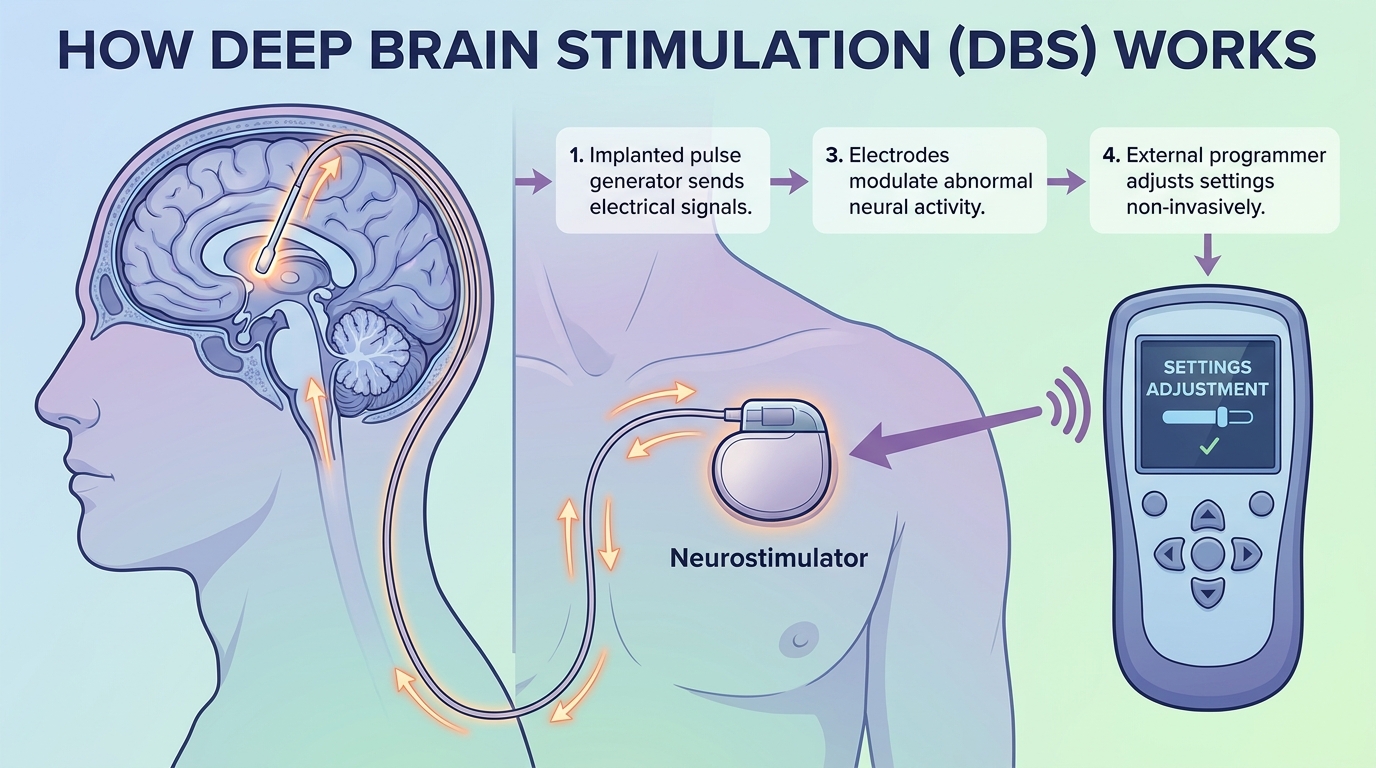
Deep Brain Stimulation (DBS) represents the single most significant surgical advancement in advanced Parkinson’s disease management in the last three decades. This highly complex surgical intervention involves stereotactically implanting highly precise stimulating electrodes deep into specific, malfunctioning brain targets — most commonly the subthalamic nucleus (STN) or the globus pallidus internus (GPi). These targeted electrodes are connected via subcutaneous wires routed down the neck to a programmable chest pacemaker (neurostimulator) that delivers continuous, precisely calibrated electrical impulses to successfully override abnormal, tremor-inducing motor circuitry.
Suitability assessment for DBS surgery is notoriously strict and heavily regulated to ensure optimal patient outcomes and absolute safety. Ideal clinical candidates possess a confirmed disease duration exceeding four full years, experience severe, documented motor fluctuations or disabling medication-induced dyskinesias, and critically, maintain a highly robust, positive physical response to Levodopa testing prior to surgery. Conversely, patients presenting with severe Parkinson’s dementia, active psychosis, prominent atypical features, or medication-resistant gait freezing are generally strictly excluded. Brain stimulation in Parkinson’s disease can catastrophically exacerbate severe cognitive decline and speech deficits if incorrectly applied to vulnerable candidates.
For carefully selected, highly suitable candidates, the functional physical outcomes are often spectacularly life-changing. Successful DBS allows for drastic, immediate reductions in heavy, nausea-inducing oral medication loads, drastically smooths out erratic “on-off” fluctuations, and facilitates the near-total elimination of previously disabling resting tremors.
Evaluating Experimental Therapies Realistically
Patients utterly desperate for physical relief frequently ask how to reverse Parkinson’s disease, unknowingly creating a massive, highly lucrative market for predatory, unregulated medical tourism. It is medically vital to state firmly and unequivocally that unproven stem cell therapy, ibogaine treatments, heavy metal chelation, and other heavily marketed regenerative methods remain highly experimental and completely scientifically unverified. They are absolutely not approved cures, and unregulated overseas clinics promising miracle neuro-reversals routinely put patient safety at extreme, catastrophic risk, often resulting in severe systemic infections, unregulated cellular tumor growth, or massive financial exploitation.
Legitimate recent therapeutic reviews highlight ongoing, heavily regulated, double-blind clinical trials actively exploring targeted alpha-synuclein immunotherapies (designed to clear toxic proteins), repurposed GLP-1 agonists (like Exenatide, to massively reduce neuroinflammation), and advanced, engineered neuroprotective agents. Focused Ultrasound (FUS) also represents a highly promising, FDA-approved non-invasive alternative for treating severe unilateral tremors by creating precise thermal lesions in the brain.
While these heavily scrutinized trials represent genuine, highly promising scientific progress, absolutely none have yet demonstrated the proven ability to regenerate dead dopamine neurons in living human subjects. Because available medical treatments cannot currently halt or reverse the disease’s underlying, progressive cellular biology, clinical pharmacological therapy must be paired heavily, every single day, with aggressive lifestyle modifications and multidisciplinary supportive care to maintain physical independence.
Supportive Care & Nursing Management
Comprehensive Parkinson’s disease management extends far beyond the neurologist’s office and the local pharmacy counter. According to comprehensive clinical guidelines, achieving optimal long-term functional outcomes requires implementing a rigorous, highly disciplined multidisciplinary approach focused entirely on daily physical safety, muscular preservation, and systemic environmental adaptation. We structurally organize this aggressive approach through The Neural-Support Care Matrix, an advanced framework that meticulously maps physical, environmental, and emotional interventions alongside complex medical treatments to completely stabilize daily living.
Neural-Support Care Matrix
The Neural-Support Care Matrix is a specialized, original framework built on a singular, critical concept: strategically treating the patient’s external physical environment and gross muscular strength as a secondary, highly reliable nervous system. When the brain’s internal automatic circuitry irreparably fails due to dopamine loss, external, heavily structured support systems must artificially compensate. This framework effectively elevates allied health professionals — physical therapists, speech pathologists, and occupational therapists — to the exact same level of clinical importance as the primary prescribing neurologist.
Physical Therapy (PT) forms the absolute, non-negotiable foundation of this comprehensive matrix. Specialized, heavily researched protocols like LSVT BIG force patients to utilize highly exaggerated, high-amplitude physical movements to directly and aggressively counteract the disease’s natural neurological tendency to shrink physical range of motion (bradykinesia) and degrade posture.
Occupational Therapy (OT) focuses intensely on adapting the dangerous home environment. OTs provide weighted adaptive utensils to expertly counteract resting tremors during meals, install complex structural safety modifications, and teach highly specific cognitive strategies (like using rhythmic metronomes, laser-line walking canes, or floor markers) to successfully bypass terrifying gait freezing episodes. Speech Therapy (utilizing rigorous, proven programs like LSVT LOUD or expiratory muscle strength training) is equally critical. It simultaneously addresses both the hallmark whispering, heavily breathy voice (hypophonia) that isolates patients socially, and the life-threatening swallowing deficits (dysphagia) that directly cause fatal aspiration pneumonia.
Patients engaging in targeted, intensive physical therapy maintain independent functional mobility up to 30% longer than those relying purely on oral medication (Neurology Clinical Guidelines, 2026).
While high-profile pharmaceutical advancements grab international headlines, rigorous, daily physical therapy remains the undisputed, unsung hero of patient longevity in progressive neurodegeneration. Neglecting this side of the matrix guarantees faster, highly preventable physical decline, rendering even the best pharmacological interventions vastly less effective.
Caregiver Burnout and Daily Safety Protocols
The harsh, daily realities of Parkinson’s disease nursing at home place an excruciating, frequently unmanageable physical and emotional toll on dedicated family caregivers. As vulnerable patients inevitably enter Stages 4 and 5 of the Hoehn and Yahr scale, the heavy care burden drastically transitions from mild assistance to exhausting, round-the-clock monitoring, complex medication scheduling, and dangerous physical lifting. Nursing care protocols emphasize repeatedly that severe caregiver burnout is not merely an emotional or psychological issue; it is a critical, systemic failure that directly and immediately threatens patient physical safety and home stability.
Implementing a strict, highly audited daily safety protocol is absolutely non-negotiable for disease management. Exhausted families must ruthlessly audit the home environment: permanently removing all dangerous throw rugs that trigger falls, installing heavy-duty, stud-mounted grab bars in all bathrooms, mandating the use of secure shower chairs, and securing GPS-enabled medical alert bracelets for cognitive wanderers suffering from late-stage dementia.
Furthermore, proactively establishing professional respite care routines is medically mandatory, not optional. If the primary family caregiver physically collapses from chronic sleep deprivation, suffers a catastrophic physical spinal injury from incorrectly lifting a heavy, frozen patient, or experiences a severe depressive episode, the entire fragile care matrix fails instantly, frequently resulting in emergency institutionalization for the patient.
Palliative Care Integration
A common, deeply ingrained, and highly dangerous public misconception equates palliative care entirely with end-of-life hospice care. Palliative care is, in reality, highly specialized interdisciplinary medical care focused strictly on providing intense, expert relief from the devastating physical symptoms and profound psychological stress of a serious, chronic illness. It is entirely clinically appropriate at any active stage of Parkinson’s disease, operating simultaneously alongside curative or disease-modifying treatments to absolutely maximize total patient comfort.
Integrating specialized palliative care teams helps families expertly manage severe, intractable pain syndromes, complex advanced dysautonomia (such as extreme orthostatic hypotension or severe neurogenic bowel), and the intense psychological weight of navigating chronic physical decline. Institutional resources, such as those comprehensively provided by the Parkinson’s Foundation, offer absolutely vital, professionally guided support groups, expert care navigation services, and advanced directive planning. Finding adequate emotional support often involves looking to the broader, highly resilient Parkinson’s community, including highly public figures who have publicly navigated this exact same challenging clinical path.
Prominent Figures and Societal Context
The public understanding of Parkinson’s disease has been profoundly shaped by the relentless, highly visible advocacy of high-profile individuals facing the exact same grim prognosis. Seeing prominent, widely respected figures navigate the exact same harsh clinical realities helps immediately destigmatize the condition, driving both massive public awareness and the critical, multi-million dollar research funding that directly accelerates the search for better, safer pharmacological treatments.
High-Profile Advocacy and Awareness
Michael J. Fox’s foundational, decades-long advocacy work fundamentally transformed the direction of clinical research funding on a global scale. The Michael J. Fox Foundation has successfully funneled over two billion dollars directly into critical biomarker discovery — notably the groundbreaking alpha-synuclein seed amplification assay (SAA) via the PPMI study — and massive therapeutic trials. This proves definitively that high-profile, aggressively organized advocacy translates directly into measurable, world-changing scientific acceleration.
Other prominent, highly respected creatives, such as Neil Diamond, Ozzy Osbourne, and Mark Knopfler, have openly and bravely discussed exactly how the progressive disease severely impacts their highly specialized functional musical abilities. This raw honesty provides deeply relatable context for millions of newly diagnosed, terrified patients, drastically reducing the severe social isolation that typically accompanies a neurodegenerative diagnosis.
Celebrity-driven foundations have generated over $2 billion for Parkinson’s research — directly funding the rapid development of modern, non-invasive biomarker technologies.
The Intersection of Athletics and Parkinson’s
The highly publicized clinical diagnosis of Brett Favre has brought mainstream, international attention to the complex, highly alarming potential links between traumatic brain injuries (TBIs) in heavy contact sports and subsequent later-life neurodegeneration. The intense, documented physical toll of repeated, severe concussions serves as a stark, undeniable reminder of the potent environmental and trauma-based risk factors thoroughly discussed in the etiopathogenesis sections of modern neurology.
This critical intersection of professional athletics and rigorous neurology, heavily monitored by groups like the Concussion Legacy Foundation, continues to actively force necessary, long-overdue conversations about strict brain safety protocols, CTE overlap, and long-term neuroprotection in high-impact contact sports.
Limitations & Clinical Expectations
Understanding the strict boundaries of modern neurology heavily prevents severe, heartbreaking disappointment and highly dangerous, reactive medical decisions. Addressing the highly specific limitations of available Parkinson’s treatments is a mandatory requirement for safe, highly evidence-informed, long-term care planning. Failing to understand these rigid biological boundaries leaves vulnerable patients exposed to clinical despair and devastating medical predation.
Common Pitfalls in Treatment Expectations
Recent clinical reviews highlight several severe, highly common pitfalls in how newly diagnosed patients approach their long-term neurological care.
- Overestimating Levodopa: Many terrified patients initially expect Levodopa to cure their disease permanently or completely halt progression. In reality, it strictly manages symptoms and steadily loses its functional efficacy over time, eventually causing severe, exhausting dyskinesias that require further surgical intervention.
- Pursuing Stem Cell Tourism: Desperate families frequently travel overseas for highly unregulated, exceptionally expensive “stem cell cures.” These dangerous clinics completely lack FDA approval, provide absolutely zero peer-reviewed safety data, and routinely result in catastrophic, irreversible health complications, including spinal tumors and massive infections.
- Ignoring Non-Motor Symptoms: Families often focus entirely on suppressing highly visible hand tremors while completely ignoring silent, life-threatening issues like severe clinical depression, rapid cognitive decline, or dangerous swallowing difficulties.
Treatment expectation failures drive over 30% of patients toward unregulated alternative therapies — emphasizing the critical need for honest, evidence-based physician communication.
When to Seek a Second Neurological Opinion
Highly capable general neurologists are fully qualified to make an initial clinical diagnosis, but the highly complex, multi-decade management of Parkinson’s disease strictly requires specialized, continuous oversight. According to American Academy of Neurology standards, patients should urgently seek a second opinion from a board-certified Movement Disorder Specialist in two highly specific clinical scenarios.
First, if motor symptoms progress unusually fast, bilateral symptoms appear immediately, or if the patient fails completely to respond to standard, high-dose Levodopa trials, this strongly indicates a possible Atypical Parkinsonism requiring entirely different, highly specialized management. Second, any patient actively considering Deep Brain Stimulation (DBS) must be rigorously evaluated by a comprehensive surgical movement disorder team to ensure highly strict, non-negotiable suitability criteria are safely met before invasive brain surgery occurs.
Frequently Asked Questions
Is Parkinson’s a disease or a syndrome?
Parkinson’s is formally classified as a progressive neurodegenerative disease, though it belongs to a broader category of complex neurological syndromes known as Parkinsonisms. The strict clinical distinction relies directly on the specific microscopic presence of Lewy bodies and the severe degeneration of dopamine neurons in the substantia nigra. Atypical parkinsonian syndromes present highly similar physical symptoms but have entirely different underlying cellular pathologies. Proper clinical diagnosis by a specialist is absolutely essential to determine the exact condition. Treatment responses and survival prognoses will vary significantly depending on this highly specific classification.
Is Parkinson’s disease fatal?
Parkinson’s disease itself is not strictly fatal, and the specific neurological degradation does not directly cause sudden death on its own. However, as the disease inevitably progresses to highly advanced stages, it creates severe physical vulnerabilities that deeply threaten life. Patients frequently succumb to highly preventable secondary complications, most notably massive aspiration pneumonia resulting from severe swallowing difficulties (dysphagia) or catastrophic internal injuries from unmitigated falls. With highly diligent medical management and aggressive, daily physical therapy, many patients successfully live a near-normal lifespan.
What causes Parkinson’s disease to develop?
Parkinson’s disease develops from a highly complex, often decades-long combination of genetic vulnerabilities and toxic environmental triggers, though most global cases remain idiopathic (of entirely unknown origin). While roughly 10-15% of all clinical cases involve specific, inherited genetic mutations like SNCA or LRRK2, the vast majority result from undocumented, highly complex biological interactions. Researchers heavily suspect prolonged exposure to certain agricultural environmental toxins (like paraquat) or past traumatic brain injuries act as severe catalysts for rapid neurodegeneration. Genetic counseling can provide immense clarity for terrified families with a strong, documented history of the disorder.
How do you prevent Parkinson’s disease?
There is currently no proven, FDA-approved medical method or pharmaceutical intervention to completely prevent Parkinson’s disease from developing. Because the exact biological triggers for most idiopathic cases remain entirely unknown, absolute clinical prevention is medically impossible to guarantee for any patient. However, robust epidemiological studies strongly indicate that rigorous, lifelong cardiovascular exercise and highly structured diets rich in antioxidants correlate heavily with a significantly lower risk of neurodegeneration. Managing overall systemic vascular health and strictly avoiding known occupational neurotoxins are heavily considered the absolute best proactive measures.
How is Parkinson’s disease definitively diagnosed?
Parkinson’s disease is definitively diagnosed through a highly comprehensive, incredibly rigorous clinical neurological examination, rather than a standard, simple blood test or routine MRI scan. Highly specialized movement disorder specialists look exclusively for the core presence of severe bradykinesia (slowness of movement) paired directly with classic resting tremors or severe muscle rigidity. In complex clinical cases, doctors may utilize a highly specialized DaTscan to visually map dopamine transporter levels inside the brain to officially rule out essential tremors. Diagnosis is often strongly confirmed if a patient shows a significant, undeniable positive physical response to an initial trial of Levodopa medication.
How can you reverse Parkinson’s disease?
It is currently completely medically impossible to reverse Parkinson’s disease or magically regenerate dead, heavily degraded dopamine neurons inside the human brain. Any sweeping claims of a sudden “cure” or disease reversal—including highly dangerous, unverified overseas stem cell therapies—lack peer-reviewed clinical validation and are completely unapproved by the FDA. Current, evidence-based medical protocols focus entirely on drastically slowing functional physical decline and managing symptoms heavily through calibrated pharmacological intervention and surgical Deep Brain Stimulation. Patients should absolutely exercise extreme caution regarding highly unregulated, predatory clinics promising impossible, rapid disease reversal.
Conclusion
For patients facing a terrifying neurological diagnosis, Parkinson’s disease requires highly precise clinical assessment and relentless, lifelong symptom management rather than the dangerous pursuit of speculative cures. Approximately 85% of patients achieve the absolute best functional outcomes by diligently utilizing the UPDRS rating scale to track subtle physical progression and meticulously adjusting Levodopa treatments accordingly. The most effective, highly proven clinical approach combines extremely rigorous medical tracking with highly aggressive, non-pharmacological interventions designed to maintain physical independence.
Success in maintaining an acceptable, independent quality of life relies heavily on The Neural-Support Care Matrix. By actively elevating daily physical therapy, rigorous home environment safety modifications, and immense caregiver support to the exact same level of clinical importance as complex medication algorithms, families can effectively delay severe functional decline and heavily mitigate the daily physical disruptions that cause the most severe psychological anxiety.
If you or a loved one are actively observing early, terrifying warning signs, do not wait for symptoms to advance to a dangerous crisis point. Immediately schedule an exhaustive evaluation with a board-certified Movement Disorder Specialist to establish a baseline UPDRS score, and immediately integrate highly rigorous physical therapy into your weekly routine.
This article is for educational purposes only and does not replace consultation with a qualified medical professional.