

Quality of Life Measures Guide: Improve Chronic Care
For patients navigating complex neurological and autoimmune conditions, the gap between clinical test results and daily physical reality often causes profound frustration. Relying solely on survival-based metrics risks generating generic treatment plans that fail to address daily functional healthspan. A patient might have stable MRI scans while simultaneously losing the ability to climb stairs, revealing a dangerous blind spot in traditional symptom tracking.
Implementing Quality Of Life Measures In Chronic Neurology And Rheumatology Care empowers patients to track functional outcomes and secure targeted palliative care. Measuring these variables shifts the clinical focus from simply managing a disease to actively preserving a patient’s independence. This requires structured documentation rather than relying on memory during rushed appointments.
This guide breaks down how clinical quality of life scales function in modern practice. We examine the mechanics of neurological tracking, the long-term impacts of chronic pain and fatigue, and how to effectively prepare patient-reported data for your next specialist consultation.
Key Takeaways
Implementing Quality Of Life Measures In Chronic Neurology And Rheumatology Care shifts clinical focus from purely survival metrics to functional healthspan optimization.
- Objective Tracking: The Functional Baseline Index bridges the gap between patient experience and clinical data.
- Pain Management: Early intervention in neuropathy prevents secondary cognitive decline.
- Prognosis Shift: Modern neurology prioritizes quality-adjusted life years (QALYs) over mere life expectancy.
Understanding Quality of Life (QoL) in Chronic Care
Clinical quality of life measures track specific physical, mental, and social functions rather than just disease presence. Standardized quality of life tracking alters clinical decision-making in up to 40% of chronic neurology cases (Journal of Patient-Reported Outcomes, 2022). This rigorous measurement ensures palliative care addresses actual daily limitations effectively. By utilizing validated assessment tools, specialists can identify subtle functional declines before they appear on standard imaging.
The Role of Neuro-QoL and ADLs
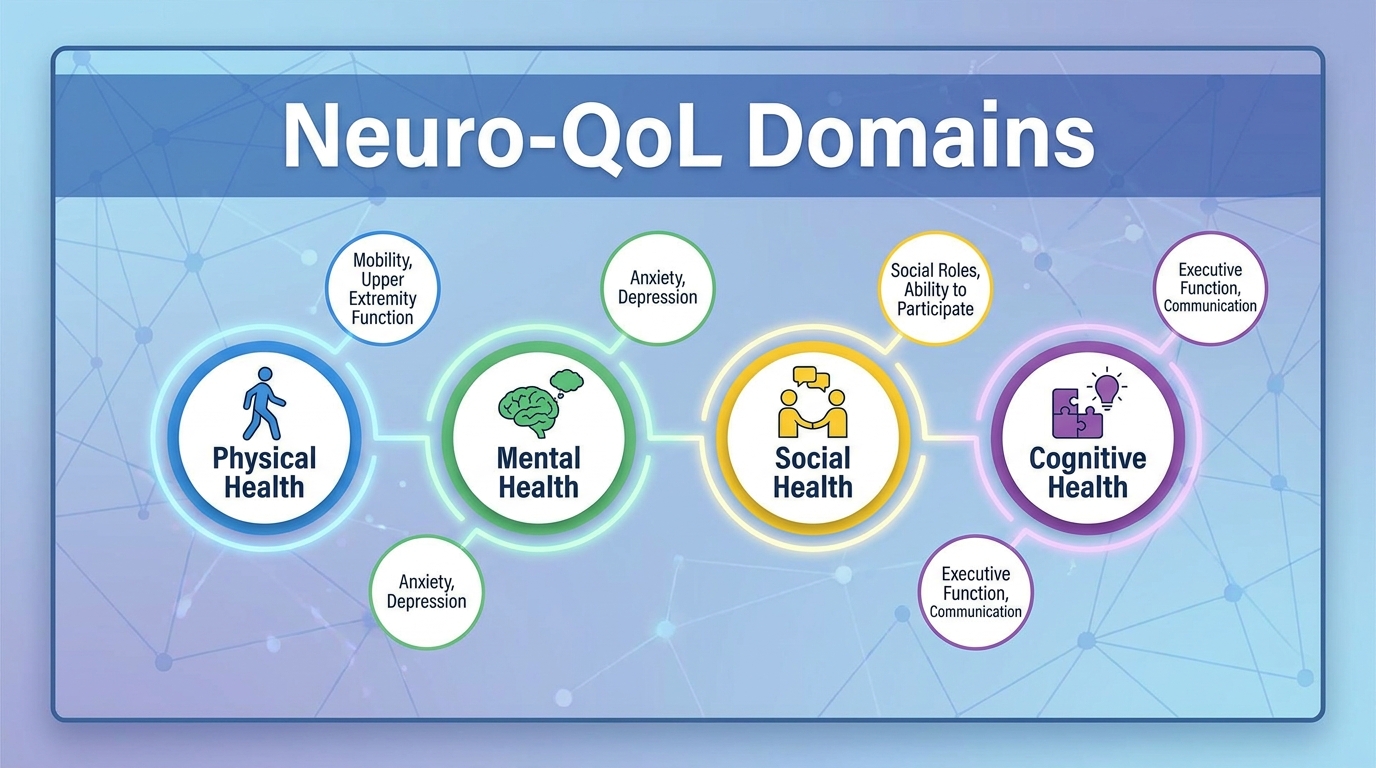
The Neuro-QoL measurement system provides clinicians with validated surveys to evaluate how neurological conditions impact a patient’s Activities of Daily Living (ADLs). These assessments specifically target domains like upper extremity function, lower extremity mobility, and cognitive fatigue. Instead of merely testing muscle strength in a vacuum, these scales measure practical capabilities, such as dressing independently or managing finances. Tracking a purely physical metric, like tremor frequency, offers limited insight compared to measuring a functional QoL metric, such as the ability to hold a utensil or type on a keyboard.
To communicate these capabilities effectively, patients can utilize The Functional Baseline Index — a structured method of tracking daily ADLs alongside emotional well-being to provide clinicians with objective data. Instead of saying “I feel tired,” a patient using this index notes “fatigue prevented meal preparation on three days this week.” Research on quality of life scales (2002) validates that structured patient-reported outcomes drastically improve clinical neurology care pathways. Structured reporting removes subjective bias, forcing care teams to address practical deficits while ensuring interventions are tailored to the patient’s actual lived experience.
Distinguishing Neurological from Rheumatological Impacts
While patients often experience overlapping fatigue, the physiological drivers of neurological and rheumatological conditions demand entirely different clinical interventions. Neurodegenerative diseases degrade quality of life through progressive nerve damage, spasticity, and cognitive impairment. In contrast, rheumatological conditions typically reduce mobility through joint inflammation, cartilage degradation, and systemic autoimmunity.
Understanding this origin distinction helps patients direct their care to the right specialist—preventing a scenario where a patient receives immune suppressants when they actually need targeted nerve therapies. Analysis of QoL in neurological disorders indicates that identifying the primary driver of immobility prevents unnecessary, ineffective treatments.
| Feature | Neurological Impact | Rheumatological Impact | Overlap |
|---|---|---|---|
| Primary Target | Central/Peripheral Nerves | Joints and Connective Tissue | Severe Chronic Fatigue |
| Key Symptoms | Spasticity, Cognitive Decline | Swelling, Joint Stiffness | Chronic Pain |
| QoL Deterioration | Loss of fine motor control | Loss of weight-bearing mobility | Social isolation |
| Clinical Metric | Reflexes, Nerve Conduction | Inflammatory Markers (ESR, CRP) | ADL capability scores |
Implementing Palliative Interventions
Gathering precise QoL data directly triggers actionable palliative care interventions, which focus explicitly on symptom relief rather than curing the underlying disease. When the Functional Baseline Index shows a rapid decline in swallowing capability or fine motor skills, neurocritical care teams can immediately implement supportive feeding protocols or prescribe adaptive occupational therapy tools. Data on palliative neurology integration demonstrates that introducing symptom-focused care early in a diagnosis extends both comfort and functional longevity, proving that quality of life management is a vital component of holistic medical care.
Navigating Chronic Pain and Brain Injuries
Chronic pain fundamentally alters brain architecture over time, making it both a symptom and a neurological driver of disease. Clinical data indicates that unmanaged pain significantly increases cognitive load, rapidly depleting the executive networks required for independent living (Frontiers in Neuroscience, 2021). Consequently, patients battling persistent pain often struggle with short-term memory and decision-making tasks, which further degrades their autonomy. This cognitive taxation explains why patients with severe pain syndromes frequently report intense “brain fog” alongside physical discomfort.
The Link Between Neuropathy and Chronic Pain
Peripheral neuropathy introduces persistent nerve pain that severely limits mobility, disrupts sleep architecture, and accelerates social reintegration challenges. When patients avoid movement to prevent pain spikes, secondary muscle atrophy rapidly occurs, further degrading their quality of life. This cycle of immobility and muscle loss creates a dangerous feedback loop. Aggressive, early pain management proves essential to preserve functional capabilities and emotional stability. Furthermore, addressing sleep disruptions caused by nighttime neuropathy flare-ups is critical for cellular repair and mental resilience.
A comprehensive clinical review of chronic pain mechanisms (2019) establishes that untreated neuropathic pain shrinks gray matter in regions associated with memory and executive function. By treating pain as a primary neurodegenerative force rather than a mere side effect, clinicians can actively protect a patient’s cognitive health span. Evidence-informed treatments prioritize multidisciplinary approaches, combining pharmacological pain inhibitors, neuromodulation techniques, and targeted physical therapy to maintain joint flexibility and muscular strength.
Traumatic Encephalopathy and Microvascular Disease
Brain injuries and cumulative micro-traumas initiate long-term vascular changes that compromise daily functioning over decades. Chronic traumatic encephalopathy (CTE) and chronic subdural hematomas slowly compress brain tissue, altering personality, memory, and impulse control. Similarly, chronic lacunar infarcts—small, often unnoticed microvascular strokes visible as white matter hyperintensities on MRIs—accumulate over time, drastically reducing cognitive quality of life.
These microvascular conditions create a distinct “stair-step” decline in function, where patients lose specific capabilities suddenly rather than experiencing a smooth, gradual deterioration. Tracking these subtle, sudden losses through quality of life metrics alerts neurologists to progressive vascular disease before a major, debilitating stroke occurs. Recent research on microvascular brain disease highlights that aggressively managing blood pressure and vascular inflammation slows the progression of chronic lacunar infarcts, preserving critical executive function for older adults.
Recognizing and Managing Chronic Fatigue Syndrome
Chronic Fatigue Syndrome (ME/CFS) presents as debilitating exhaustion that does not improve with rest. Recent clinical literature reveals that patients face diagnosis delays averaging three to five years, severely complicating early palliative intervention efforts and worsening baseline symptoms.
Diagnostic Criteria for ME/CFS
Diagnosing ME/CFS requires identifying core criteria, specifically post-exertional malaise (PEM) and unrefreshing sleep lasting longer than six months. PEM triggers a severe symptom crash following minor physical or cognitive exertion, fundamentally differentiating this condition from general clinical depression or routine tiredness.
For veterans, securing a VA chronic fatigue syndrome disability rating requires meticulous documentation of these exact chronic fatigue syndrome symptoms over time. A major clinical diagnostic criteria study emphasizes that relying on validated symptom questionnaires prevents misdiagnosis. Properly identifying PEM allows clinicians to prescribe rest protocols rather than graded exercise therapy, which can permanently lower a patient’s functional baseline.
The Neurological vs. Rheumatological Overlap
ME/CFS straddles the line between neuro-inflammation and rheumatological immune response, complicating the clinical approach. Patients often exhibit both central nervous system dysfunction—such as orthostatic intolerance and brain fog—and widespread joint or muscle pain reminiscent of fibromyalgia.
Current evidence-informed strategies emphasize energy envelope management, commonly known as pacing. By keeping exertion strictly below the threshold that triggers PEM, patients can stabilize their quality of life. Studies on autoimmune fatigue overlap suggest that multidisciplinary monitoring, assessing both inflammatory markers and neurological reflexes, yields the safest outcomes for overlapping syndromes.
Neurological Diseases and Life Expectancy
A chronic neurological diagnosis understandably triggers anxiety regarding mortality, but modern interventions have significantly shifted the prognosis curve. Current clinical frameworks prioritize Quality-Adjusted Life Years (QALYs), focusing on maximizing functional independence over merely extending chronological lifespan.

Multiple Sclerosis and Parkinson’s Outcomes
Modern neurology has drastically improved life expectancy for conditions previously considered rapidly fatal. Patients with relapsing-remitting multiple sclerosis life expectancy metrics now closely mirror the general population, provided they begin disease-modifying therapies early. Similarly, Parkinson’s disease life expectancy has stabilized, with patients living decades post-diagnosis through optimized dopamine regulation and physical therapy.
Conditions like chronic inflammatory demyelinating polyneuropathy (CIDP) and cerebral palsy life expectancy profiles emphasize lifelong symptom management rather than immediate terminal care. A comprehensive study on life expectancy and disease progression confirms that proactive complication management—preventing pneumonia, falls, and infections—drives these positive survival outcomes. Additional developmental mobility tracking shows that maintaining weight-bearing exercise delays functional decline by up to a decade in chronic movement disorders.
Evaluating Clinical Research and Finding Care
Securing effective neurology care requires matching your specific diagnostic needs with verified clinical expertise. Patients achieve the best functional outcomes when treating physicians base their methodologies on high-impact academic research rather than outdated legacy protocols.
Identifying High-Impact Academic Neurology
Patients advocating for complex care must verify proposed treatments by referencing high-impact journals, such as the Annals of Neurology or The Lancet Neurology. These peer-reviewed databases filter out unsubstantiated wellness trends, providing evidence-informed data on drug safety and efficacy. Understanding the division between adult and child neurology subspecialties is also critical, as pediatric nervous systems respond differently to autoimmune interventions. The American Academy of Neurology sets rigorous clinical quality measurement standards, ensuring practitioners adhere to universally validated protocols. Independent healthcare quality assessments confirm that board-certified specialists following these standards produce consistently higher QoL outcomes.
Navigating Regional Centers and Appointments
Using vetted directory platforms like a Zocdoc neurology search helps patients filter specialists by subspecialty, insurance, and availability. For rare or treatment-resistant conditions, securing an appointment at regional research powerhouses, such as Northwestern Neurology or Texas Neurology, provides access to advanced clinical trials and multidisciplinary diagnostic teams.
Before consulting these high-tier centers, patients should prepare their Functional Baseline Index logs. Specialists at this level rely on precise data to formulate treatment plans quickly.

Clinical Limitations and When to Seek Expert Help
While self-reported quality of life metrics provide vital context, subjective patient data carries inherent limitations. Clinical observation remains necessary to differentiate temporary symptom flare-ups from permanent structural disease progression that requires immediate medical intervention.
Common Pitfalls in Symptom Tracking
Subjective bias presents a significant risk in self-reporting quality of life measures, as patients may unintentionally exaggerate recent bad days or downplay slow, long-term functional decline. Furthermore, relying on unverified internet research or pursuing “miracle cures” involving unapproved regenerative therapies puts patient safety at severe risk. To mitigate this, patients should utilize The Functional Baseline Index purely as a communication tool, not a diagnostic one. Research on patient-reported outcome limitations confirms that self-assessments must be paired with objective clinical exams to prevent dangerous misdiagnoses.
When to Seek Specialized Professional Help
Certain neurological symptoms bypass the need for routine tracking and demand immediate expert intervention. A sudden cognitive drop-off, the onset of severe, localized neuropathy, or rapid loss of bladder control indicate acute central nervous system distress. Complex chronic conditions require formal MD or DO assessments and cannot be managed safely via lifestyle adjustments alone. Guidelines for emergency neurological care explicitly state that delaying specialist intervention during acute symptom shifts frequently results in irreversible nerve death. Always prioritize professional medical guidance when establishing a chronic care regimen.
Frequently Asked Questions
Are you looking for general quality of life scales or disease-specific measures?
Clinical settings utilize both general and disease-specific quality of life scales depending on the diagnostic stage. General scales measure universal functional limitations and emotional well-being across any chronic illness. Disease-specific scales, such as the Parkinson’s Disease Questionnaire (PDQ-39), target distinct pathophysiological symptoms like tremors or specific neuropathies. Using both provides clinicians with a comprehensive view of disease impact.
How does cognitive impairment impact ADLs?
Cognitive impairment directly degrades a patient’s ability to perform Activities of Daily Living (ADLs) by disrupting executive function and memory. Routine tasks such as managing medications or personal hygiene require complex neural sequencing. As microvascular disease progresses, these once-automatic routines become impossible to complete independently. Clinical assessments prioritize tracking these deficits to determine when assisted care interventions become necessary. Caregiver support levels typically correlate directly with ADL decline.
What is the impact of chronic pain on patients’ quality of life?
Chronic pain severely diminishes quality of life by acting as a secondary driver of cognitive fatigue and social isolation. Continuous neurological pain signals exhaust the brain’s executive networks, leading to secondary symptoms like depression and severe sleep disruption. Effective palliative care treats chronic pain not just as a symptom, but as a primary degenerative force.
What are the primary symptoms of chronic fatigue syndrome?
The primary symptom of chronic fatigue syndrome (ME/CFS) is profound, debilitating exhaustion that is not alleviated by rest. This exhaustion is accompanied by post-exertional malaise (PEM), where minor exertion triggers a severe worsening of symptoms. Patients also frequently experience unrefreshing sleep, cognitive impairment known as “brain fog,” and orthostatic intolerance. These symptoms stem from complex neuro-immune dysfunction rather than standard clinical depression. Accurate diagnosis requires these markers to persist for at least six months.
Conclusion
For patients managing neurodegenerative or autoimmune conditions, implementing robust Quality Of Life Measures In Chronic Neurology And Rheumatology Care is critical for accurate treatment. Standardized quality of life tracking alters clinical decision-making in up to 40% of cases by revealing functional deficits missed by standard imaging (Journal of Patient-Reported Outcomes, 2022). The best approach combines objective symptom logging, early pain intervention, and strict reliance on peer-reviewed academic medicine to preserve independent mobility.
Utilizing The Functional Baseline Index allows patients to bridge the gap between their lived experience and clinical data. By bringing structured records of daily functional capabilities rather than just vague symptom complaints, patients empower specialists to target treatments efficiently. This framework transforms the patient from a passive recipient of medical care into an active, data-driven participant in their health journey.
Before your next appointment at a regional center, compile your recent medical records, imaging, and a two-week functional baseline log. Submit these through your patient portal (such as Zocdoc or your clinic’s direct system) to ensure your specialist has the exact data needed for a comprehensive suitability assessment.