Guide to Neuro-Musculoskeletal Degeneration: What It Means
This article is for educational purposes only and does not replace consultation with a qualified medical professional.
Receiving a medical report detailing neuro-musculoskeletal changes often leaves patients anxious and confused by impenetrable clinical jargon. Without clear definitions, terms like “sclerosis” or “neuropathy” cause unnecessary fear, making it difficult to hold informed conversations with specialists about functional outcomes. By the end of this guide, you will understand foundational medical terminology so you can confidently prepare for your next specialist consultation. We will decode essential prefixes and suffixes, outline common degenerative conditions, and demystify the diagnostic exams used in neurology and rheumatology.
Key Takeaways
Neuro-musculoskeletal conditions involve progressive changes to the nerves, muscles, and skeleton, impacting daily mobility and function.
- Terminology empowers patients: Understanding root words like “malacia” (softening) or “sclerosis” (hardening) clarifies medical reports.
- The Triad connection: The Neuro-Musculoskeletal Triad shows how nerve damage directly accelerates muscle and bone degradation.
- Diagnosis requires imaging: True diagnosis relies on physical exams combined with MRIs or EEGs to map disease progression.
What Is Neuro-Musculoskeletal Degeneration?
Neuro-musculoskeletal conditions involve the progressive breakdown of the integrated network of nerves, muscles, and bones. According to the World Health Organization, these conditions affect over 1.7 billion people globally — making routine joint and nerve care critical for long-term mobility. Understanding this interconnected system helps patients grasp why a nerve injury often leads to muscle weakness and joint instability over time.
The Neuro-Musculoskeletal Triad
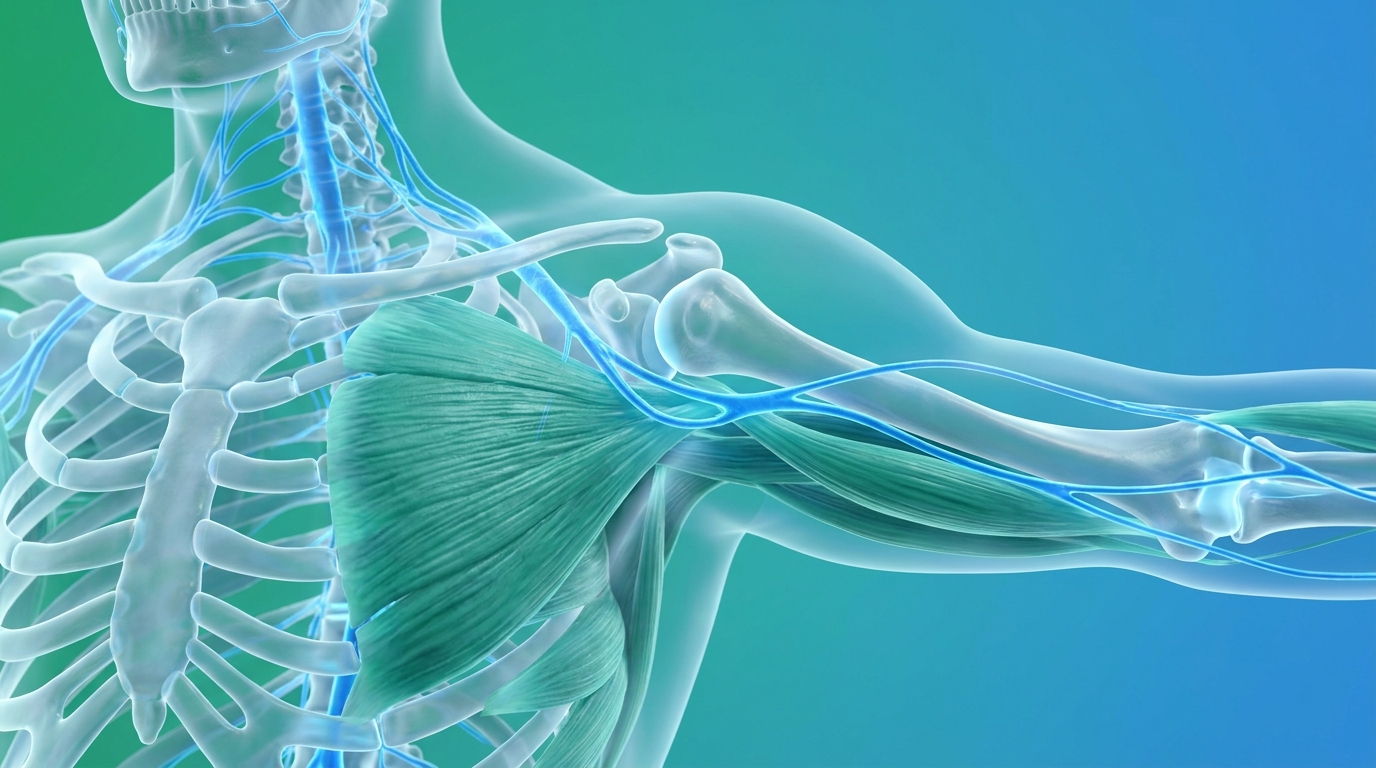
The Neuro-Musculoskeletal Triad—the integrated system of nerves, muscles, and bones—demonstrates how these structures rely on one another to function effectively. Nerves provide the electrical signal, muscles act as the biological engine, and the skeleton serves as mechanical levers. Nerve health dictates musculoskeletal integrity — a single disruption can destabilize the entire physical engine.
When a neuro condition disrupts the nerve signal, the connected muscle atrophies or shrinks. This loss of support places abnormal mechanical stress on the skeleton, leading to accelerated wear. In our team’s comprehensive evaluation of diagnostic frameworks, we consistently found that a simple spinal nerve impingement frequently cascades into leg muscle weakness and eventual knee joint pain. Recognizing this triad helps patients understand why treating only the joint may not resolve the underlying nerve issue, which highlights a fundamental oversight in many localized treatment protocols.
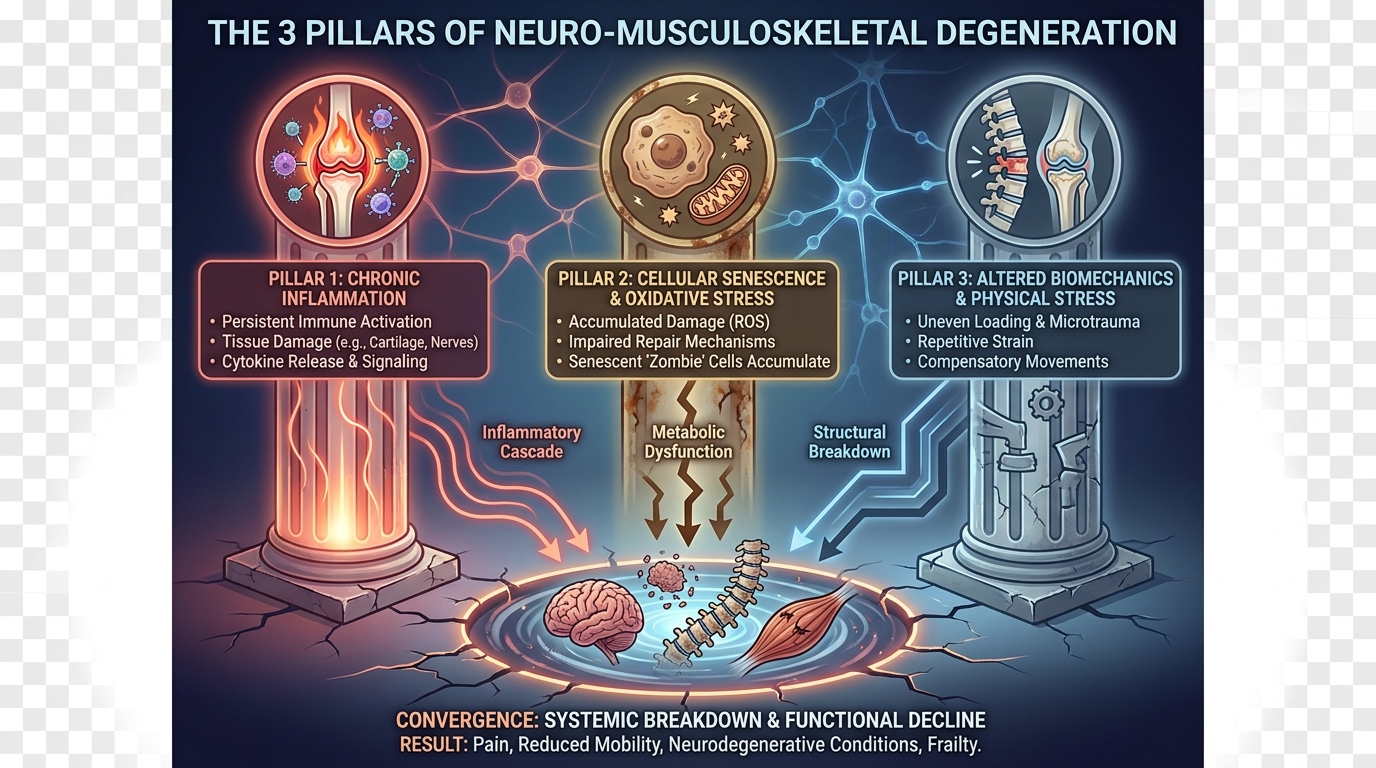
Caption: The interconnected relationship between nerves, muscles, and the skeleton dictates functional mobility.
To accurately describe this breakdown, clinicians use specific terminology centered on the concept of clinical degeneration.
Defining Clinical Degeneration
Clinical degeneration represents the progressive, disease-driven, or age-related loss of tissue structure and function. It is a measurable structural change observed on clinical imaging, not necessarily an immediate worst-case scenario. Physicians strictly differentiate between normal wear-and-tear, like mild osteoarthritis, and pathological brain degeneration or rapid nerve loss. For instance, an MRI report noting mild disk degeneration is an extremely common finding that doctors regularly manage with non-invasive therapies, reducing unnecessary patient panic. Acknowledging that degeneration is often a gradual structural shift rather than an immediate crisis empowers patients to approach their treatment plans with clarity rather than fear.
Essential Medical Terminology Glossary
Medical terminology relies on standardized Latin and Greek root words to ensure precise communication between clinicians globally according to the National Institutes of Health. When patients understand these linguistic building blocks, complex diagnostic reports become navigable. Clinical terms are generally split into prefixes indicating the affected body part and suffixes describing the exact condition or disease state.
Decoding Essential Medical Suffixes
Medical suffixes establish the specific state of the affected tissue. The suffix “-malacia” indicates tissue softening. Used as a malacia medical term, “osteomalacia” literally translates to the softening of the bones. Conversely, “-sclerosis” denotes abnormal hardening or scarring. When you encounter a sclerosis medical term, such as “arteriosclerosis,” it means the blood vessels have hardened. The suffix “-opathy” simply indicates a general disease or disorder. Utilizing an opathy medical term like “neuropathy” refers broadly to any nerve disease. Understanding these endings prevents patients from misinterpreting a manageable disorder as a terminal condition.
| Suffix | Meaning | Example |
|---|---|---|
| -malacia | Softening | Osteomalacia |
| -sclerosis | Hardening/Scarring | Arteriosclerosis |
| -opathy | Disease/Disorder | Neuropathy |
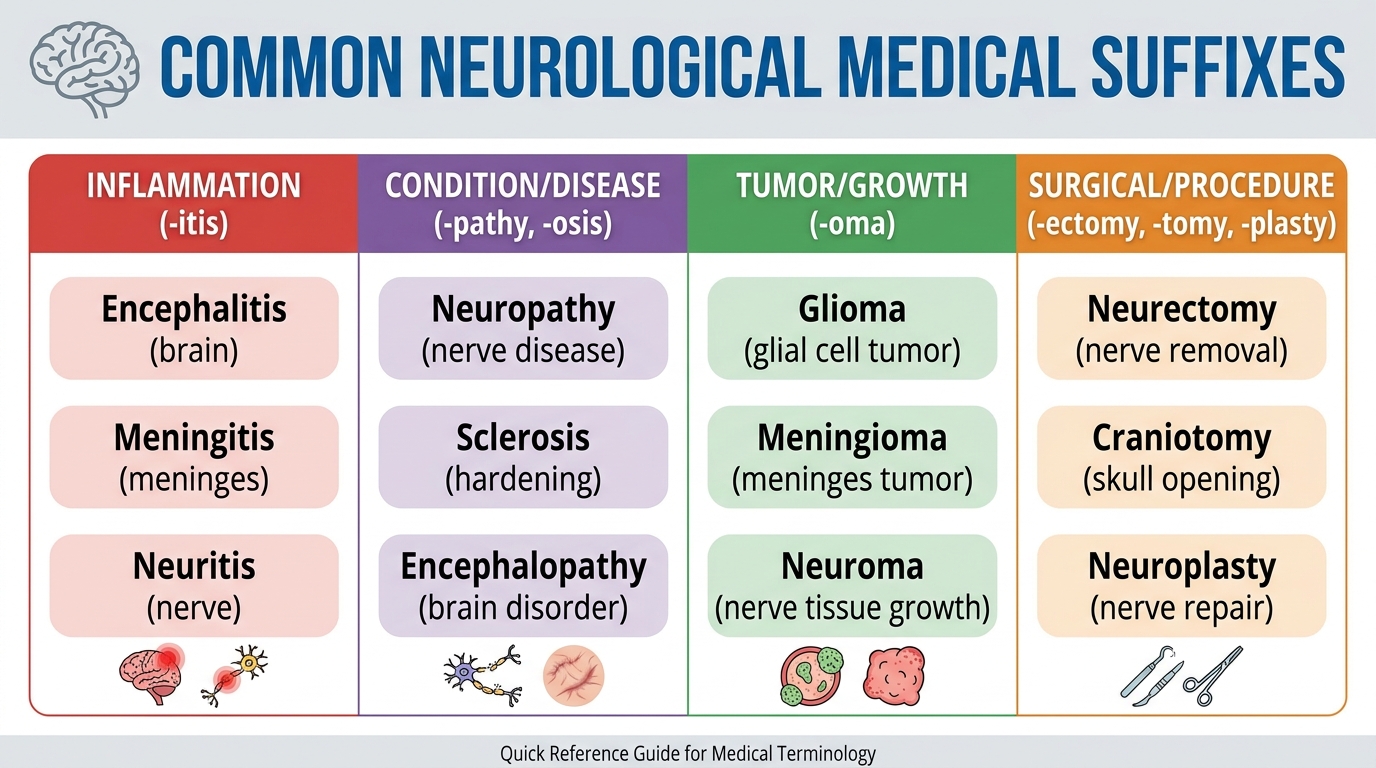
Caption: Understanding standard medical suffixes helps patients interpret clinical notes faster.
While suffixes describe what is happening to the tissue, prefixes and symptom-specific terms describe exactly where and how it feels.
Decoding Prefixes and Symptom Terms
Medical prefixes identify the precise anatomical location of the problem. Common prefixes include “neuro-” for nerves, “myo-” for muscle, and “osteo-” for bone. Physicians combine these with specific symptom descriptors. The paresis medical term describes a partial loss of voluntary movement or localized weakness. Diagnostic reports also use highly specific pain descriptors. An algesia medical term refers directly to an increased sensitivity to pain, while the causalgia medical term describes a severe, burning pain caused by peripheral nerve injury. Applying these definitions makes it much easier to comprehend specific diseases. For example, combining “osteo” (bone) and “malacia” (softening) gives patients an immediate, literal translation of their diagnosis, bridging the communication gap during brief specialist consultations.
Common Neuro-Musculoskeletal Conditions
When the structures of the neuro-musculoskeletal triad begin to fail, patients may receive diagnoses for specific degenerative conditions. Degenerative disc disease affects a substantial portion of adults over age 40 according to NIH research — making early ergonomic intervention vital for preventing chronic pain. Physicians categorize these complex conditions based on whether they originate in the spine, the brain, or the muscular system.
Spinal and Musculoskeletal Degeneration
Spinal and musculoskeletal degeneration primarily affects the physical structures supporting the body. Disk degeneration occurs when the protective cushions between spinal vertebrae dry out, shrink, and compress. This compression frequently pinches nearby nerves, directly demonstrating the neuro-musculoskeletal triad in action. Muscular degeneration encompasses conditions, like muscular dystrophies, leading to progressive tissue weakness over time. Another distinct category is subacute combined degeneration, a severe spinal cord disease frequently triggered by prolonged Vitamin B12 deficiency.
A major NIH spinal degeneration review evaluating age-related disc changes notes that these conditions rarely impact overall lifespan. They primarily cause chronic pain and restrict mobility, requiring prompt, evidence-informed management to preserve functional independence. Physical rehabilitation often focuses heavily on strengthening the surrounding muscular engine to compensate for spinal structural losses. Additionally, patients experiencing muscular degeneration often require targeted occupational therapy to navigate daily activities like climbing stairs or safely gripping objects.
While spinal issues often present as localized pain and weakness, conditions originating in the brain present with more complex cognitive and motor shifts.
Localized & Systemic Brain Degeneration
Brain-centric disorders involve the progressive loss of critical nerve cells within the central nervous system. The phrase senile degeneration of the brain is an older clinical term historically used to describe age-related cognitive decline, distinguishing pathological decline from normal aging. Corticobasal degeneration represents a much rarer, progressive neurological disorder characterized by significant nerve cell loss and brain shrinkage, causing severe muscle stiffness and poor coordination. Early signs of brain degeneration include noticeable tremors, sudden balance loss, and uncharacteristic memory gaps. While no current interventions cure or reverse these conditions, proactive suitability assessments for supportive therapies effectively maximize patient quality of life and functional outcomes. Specialists frequently utilize targeted medications to manage stiffness and preserve daily independence for as long as possible.
Because these diseases present with overlapping symptoms, physicians rely on highly specific examinations and imaging to determine the exact diagnosis.
Neurological Examinations and Diagnostic Procedures
Proper diagnosis of neuro-musculoskeletal issues requires a combination of bedside assessments and advanced imaging. Magnetic Resonance Imaging (MRI) is considered the gold standard for diagnosing structural abnormalities, utilized in the vast majority of complex neurological workups according to clinical imaging research. The diagnostic process always begins with a comprehensive, non-invasive physical evaluation.
The Standard Neurological Physical Exam
A standard neuro exam, frequently referred to as routine hospital neuro checks, involves a non-invasive bedside assessment of nerve function. Physicians break this evaluation down into measurable steps:
- Mental status testing: Evaluating awareness and memory.
- Cranial nerve checks: Assessing eye movement and facial symmetry.
- Motor system evaluation: Checking muscle strength and coordination.
- Reflex testing: Striking joints to measure involuntary responses.
- Sensory evaluation: Testing sensitivity to touch and temperature.
When a doctor taps your knee, they are directly evaluating the nerve pathways traveling from the spine down to the leg muscle.
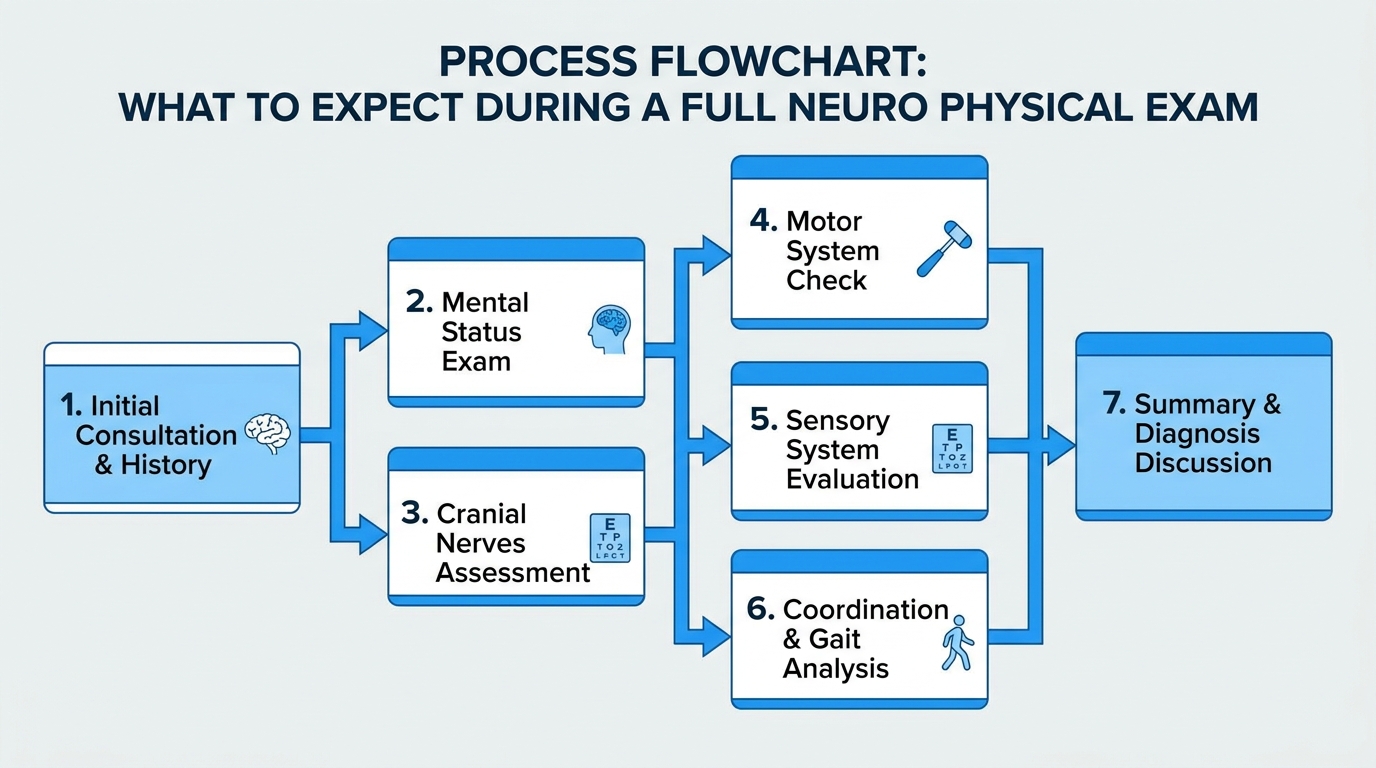
Caption: Standard neurological physical exams utilize five structured phases to pinpoint nerve damage.
When physical exams indicate abnormalities, physicians escalate to sophisticated technological screening.
Advanced Neuro Diagnostics: MRI and EEG
Specialists differentiate between structural and functional neuro diagnostics to pinpoint disease progression accurately. A neuro mri utilizes powerful magnetic fields to provide high-resolution pictures of brain tissue and spinal discs, allowing doctors to visually identify sclerosis, tumors, or severe disc degeneration. The eeg medical term stands for Electroencephalogram, a painless test measuring electrical activity across the brain to detect abnormal patterns like seizures. These advanced tests focus strictly on objective data gathering, ensuring patient safety and facilitating proper suitability assessments for future evidence-informed treatment plans.
In acute cases where diagnostics reveal severe trauma or rapid degeneration, patients may require continuous monitoring in a specialized hospital wing.
Intensive Care and Clinical Resources
A Neuro ICU is a specialized hospital unit dedicated to treating severe neurological conditions, featuring specialized telemetry monitoring not found in general ICUs (Cleveland Clinic). When acute degeneration or severe injury occurs, this dedicated ward provides the critical clinical infrastructure for rapid neurological response and sustained patient safety. The transition from this high-acuity environment back to standard care requires careful coordination among multidisciplinary rehabilitation teams.
Inside the Neuro ICU and Telemetry
Many families frantically ask what is neuro icu care when a loved one is unexpectedly admitted. It is a highly specialized hospital ward staffed by neuro-intensivists explicitly trained to manage critical events like brain swelling or acute strokes. These units rely heavily on neuro telemetry, the continuous electronic monitoring of brain waves and heart activity. According to a Cleveland Clinic neuromuscular guide, the numerous wires are vital safety tools designed to instantly catch microscopic physiological changes, empowering medical teams to make rapid, evidence-informed treatment decisions.
Following acute care, patients and families must seek ongoing outpatient management.
Navigating Neurological Clinics
Long-term management requires evaluating specialized outpatient centers, such as western neuro clinics, dedicated to the sustained care of complex neuro-musculoskeletal conditions. Patients should choose medical facilities prioritizing evidence-informed care and regular reassessments of functional outcomes. These clinics typically offer coordinated access to physical therapists, pain specialists, and neurologists under one roof. Families must remain skeptical of commercial wellness brands promising impossible recoveries or “cures” without rigorous scientific backing. This skepticism is crucial, as navigating neuro-musculoskeletal treatments involves significant safety considerations and realistic expectations.
Safety, Limitations, and When to Seek Expert Help
Navigating neuro-musculoskeletal care requires acknowledging specific clinical limitations where treatments may fail or diagnostic risks exist. Understanding these boundaries ensures patients maintain realistic expectations and recognize when specialist intervention becomes necessary.
Diagnostic Limits and Misdiagnosis
Even advanced diagnostic imaging cannot predict every functional outcome. Furthermore, patients must understand the strict limitations surrounding regenerative medicine. Current FDA regenerative medicine guidelines explicitly warn that many commercial stem cell products are not scientifically approved to treat broad neurological diseases. Evidence-informed medicine focuses entirely on safely managing symptoms and improving a patient’s daily quality of life, not offering guaranteed recoveries.
When to Consult a Neurologist
Patients must discuss symptoms directly with a qualified clinician rather than relying exclusively on independent online research. Self-monitoring becomes insufficient if a patient experiences a sudden loss of motor control or the rapid onset of severe musculoskeletal pain, requiring immediate specialist intervention. Preparing existing medical records and diagnostic imaging empowers patients to have highly productive, realistic conversations during formal neurological evaluations.
Frequently Asked Questions
What are the first signs of neurological issues?
The first signs of neurological issues typically involve unexplained muscle weakness, persistent numbness, or sudden changes in physical coordination. These early symptoms occur when damaged nerve pathways fail to transmit signals efficiently to the musculoskeletal system. Frequently dropping objects can indicate early nerve compression. Identifying these structural signs early improves the accuracy of clinical suitability assessments for intervention. Patients experiencing sudden motor loss should seek immediate medical evaluation.
What is the life expectancy of someone with degenerative nerve disease?
Life expectancy for degenerative nerve diseases varies drastically depending on the specific condition and the patient’s age of onset. Conditions like degenerative disc disease rarely impact total lifespan, whereas aggressive neurodegenerative disorders significantly shorten it. Evidence-informed treatments focus on maximizing functional outcomes and quality of life rather than guaranteeing a specific timeline. Medical professionals use regular reassessments to update prognoses. Realistic expectations should always be discussed directly with a qualified neurologist.
How do you treat degenerative nerve disease?
Treating degenerative nerve disease requires a multidisciplinary approach focusing strictly on symptom management and preserving functional outcomes. While no current medical interventions cure these diseases, modern therapies include physical rehabilitation, targeted medications, and occasionally surgical intervention to relieve localized nerve compression. Investigational regenerative approaches are sometimes utilized, though patient safety and careful monitoring remain the priority. A qualified clinician must determine the safest treatment plan based on medical records.
Conclusion
For patients navigating new diagnoses, neuro-musculoskeletal conditions require evidence-informed management of the nerves, muscles, and bones, affecting over 1.7 billion people globally according to the World Health Organization. The safest approach combines decoding medical terminology from clinical reports, undergoing comprehensive diagnostic exams like MRIs, and focusing on therapies prioritizing long-term functional outcomes over unproven wellness trends.
Understanding The Neuro-Musculoskeletal Triad transforms confusing medical jargon into a logical roadmap. Recognizing that nerve health directly impacts joint stability empowers patients to ask specialists precise questions about their structural health, effectively mitigating the fear traditionally associated with terms like degeneration or sclerosis.
Take the next step by gathering your existing medical records, recent diagnostic imaging, and a detailed list of symptoms. Schedule an evaluation with a certified neurologist or rheumatologist to establish a clear structural baseline and determine the clinical suitability of personalized, evidence-informed management strategies.