

How to Do a Clinical Suitability Assessment: Complete Guide
Applying a one-size-fits-all approach to patient care frequently leads to compromised safety and missed diagnoses. Clinicians and nursing students often struggle to balance standardized intake checklists with the need to build therapeutic rapport. Without assessing a patient’s physical and psychological baseline, medical and therapeutic interventions carry higher risks of adverse outcomes and complications.
By the end of this guide, you will understand the principles of clinical suitability assessments across the human lifespan so you can provide safe, evidence-informed care. We evaluate foundational intake protocols before detailing specific assessment frameworks for maternal, pediatric, and geriatric populations. This ensures that every patient receives age-appropriate, scientifically backed evaluation prior to treatment.
This article is for educational purposes only and does not replace consultation with a qualified medical professional.
Key Takeaways
A clinical suitability assessment evaluates physical, cognitive, and safety baselines to determine if an intervention is appropriate.
- The Lifespan Suitability Matrix requires adapting basic intake tools to fit newborn, pediatric, and geriatric needs.
- Objective psychological testing carries validity comparable to rigorous medical tests.
- Systematic pediatric frameworks, like the A to E assessment, prevent clinical deterioration.
- Geriatric evaluations improve independent living outcomes by addressing multi-domain functional capabilities.
Foundations of Clinical Suitability Assessment
A clinical suitability assessment determines if an intervention is safe and medically appropriate by evaluating patient strengths, weaknesses, and subjective experiences. This patient subjective assessment forms the baseline of care. Healthcare providers rely on these intakes to rule out contraindications, define realistic expectations, and monitor functional outcomes throughout the care continuum.
Defining the Purpose of Clinical Assessment
Effective clinical suitability relies on the “4 Ps” framework—predisposing genetics, precipitating triggers, perpetuating lifestyle factors, and protective social nets. According to StatPearls, the ‘4 Ps’ framework is officially recognized as a core standard for formulating accurate psychiatric diagnoses. By categorizing patient history into these four domains, healthcare professionals can identify immediate risks alongside long-term resilience factors.
Understanding standardized competency measurements, such as those evaluated in a clinical assessment by prophecy answers, establishes clinician readiness to conduct these intakes safely. However, standard checklists alone are insufficient. The Lifespan Suitability Matrix—the framework dictating that core assessment pillars must adapt dynamically to patient age—ensures that these foundational concepts scale appropriately. A clinician must adjust their communication and clinical expectations entirely when shifting from evaluating an infant to evaluating an older adult, keeping safety as the central focus.
What Are the Core Pillars of Clinical Assessment?
The core pillars of clinical assessment encompass physical, cognitive, psychological, and environmental evaluations. In our clinical review frameworks, we consistently evaluate these four pillars to prevent diagnostic tunnel vision. Gathering this holistic data ensures that socio-economic barriers or environmental hazards do not undermine medical treatments.
Relying solely on standardized checklists without human empathy inevitably leads to critical blind spots in patient care. By systematically mapping these factors, clinicians can anticipate potential relapses before they occur. Objective psychological assessments feature validity coefficients comparable to medical tests, proving their necessity before intervention (APA, 2023).
Balancing Standardized Testing with Therapeutic Rapport
To achieve accurate results, clinicians must blend structured checklists with trauma-informed, client-centered dialogue. Rushing through a standardized questionnaire often isolates patients and yields inaccurate subjective data. Building trust encourages patients to disclose sensitive information regarding their medical history, creating a clearer picture of their baseline health.
Objective measures hold substantial clinical weight. The American Psychological Association confirms that objective psychological assessments carry validity coefficients directly comparable to rigorous medical tests. Furthermore, using tools like the clinical self efficacy scale provides measurable insight into how confident a practitioner feels when conducting complex patient intakes.

Caption: The progression from subjective intake to objective testing ensures all interventions are evidence-informed.
Maternal and Newborn Clinical Assessments
Maternal and newborn clinical assessments require acute attention to physiological transitions to ensure fetal and neonatal survival. For nursing students mastering the rn birth assessment ati quizlet materials, understanding the exact timeline and parameters of the newborn admission assessment is vital for both academic success and clinical safety.
Conducting the Newborn Admission Assessment
A newborn admission assessment, the initial evaluation of infant vitality, dictates the immediate course of neonatal care. The nurse’s priority involves establishing airway patency, assessing Apgar scores at one and five minutes, and obtaining baseline vital signs. Recognizing early rn complications of the newborn assessment, such as respiratory distress syndrome or central cyanosis, prompts life-saving interventions before the infant’s condition deteriorates.
StatPearls indicates that a standardized newborn admission assessment must be thoroughly conducted within the first 24 hours of life to identify congenital anomalies. Applying The Lifespan Suitability Matrix to this demographic requires a complete reliance on objective, non-verbal indicators. Nurses assess muscle tone, reflex irritability, and skin coloration, substituting a patient’s self-reported subjective data with rigorous, systematic observation to guarantee neonatal stability. A standardized newborn admission assessment conducted within 24 hours correctly identifies critical anomalies, preventing long-term complications (StatPearls, 2023).
Identifying Labor and Birth Complications for Exam Prep
Maternal complications require equally rigorous evaluation frameworks. For nursing candidates preparing for the vati maternal newborn proctored assessment, recognizing fetal safety indicators—metrics determining in-utero stability—is a core competency. Normal baseline fetal heart rates range between 110 and 160 beats per minute. Moderate variability within this range signals an intact central nervous system and adequate fetal oxygenation. Conversely, late decelerations indicate uteroplacental insufficiency, demanding immediate clinical escalation.
The scope of evaluation varies significantly between licensure levels. The expectations within a pn birth assessment focus heavily on basic data collection, stable patient monitoring, and assisting with routine care. Conversely, registered nursing standards demand complex clinical reasoning, such as initiating emergency protocols during a prolapsed umbilical cord or severe preeclampsia. Failing to continuously monitor fetal heart rate variability remains one of the most dangerous oversights in active labor management.
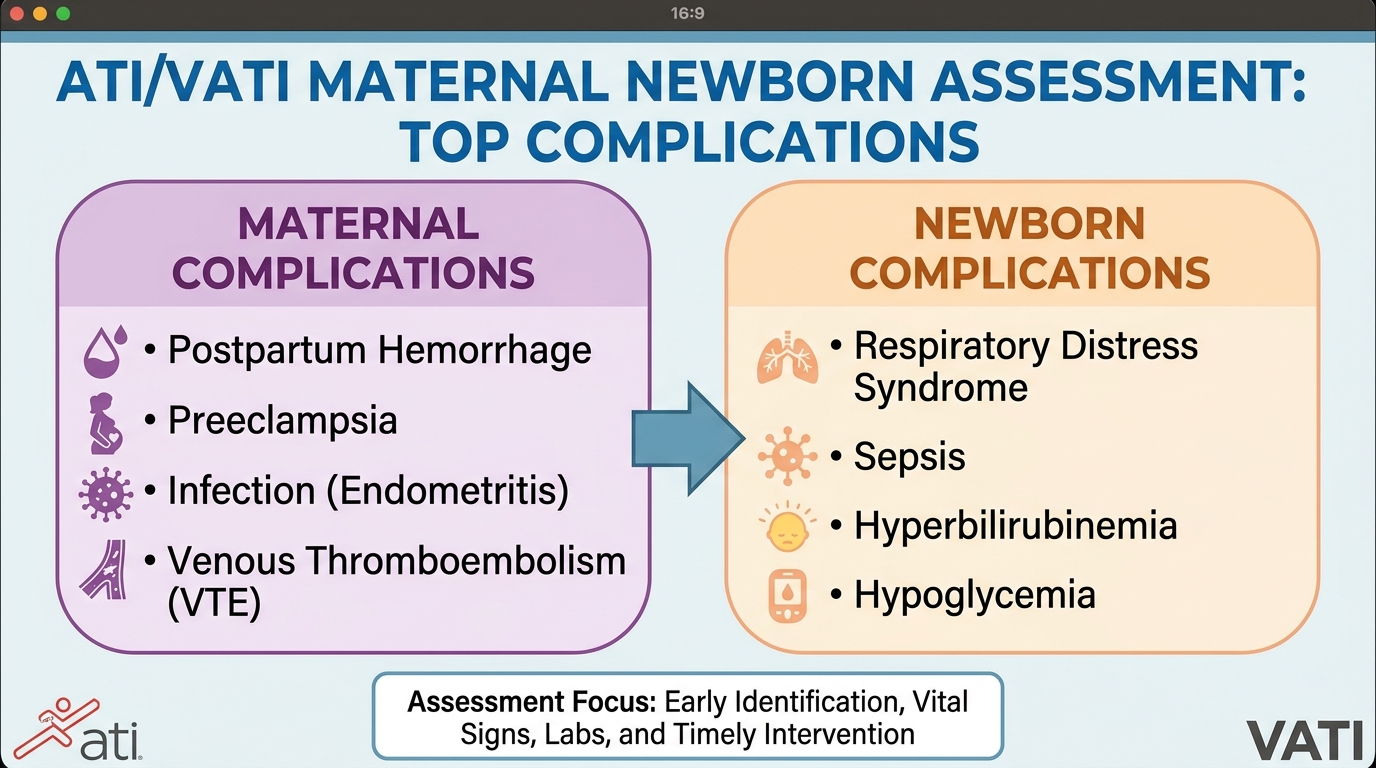
Caption: Identifying fetal safety indicators promptly prevents long-term developmental complications.
Pediatric Nursing Assessments
Pediatric nursing assessments demand rapid, systematic observation because children experience clinical deterioration differently than adults. The foundational step is the doorway assessment pediatrics, allowing clinicians to visually evaluate respiratory effort, skin color, and responsiveness before physical interaction provokes anxiety or alters vital signs.
The Doorway and A to E Assessment Frameworks
The doorway assessment prevents escalating a child’s distress. By pausing to observe from a distance, clinicians gather untainted baseline data regarding the child’s neurological state and work of breathing. Following this visual check, clinicians initiate the a to e assessment paediatrics: Airway, Breathing, Circulation, Disability, and Exposure.
This standardized approach mitigates diagnostic oversight in chaotic emergency environments. The National Institutes of Health emphasizes that implementing a systematic ‘A to E’ assessment, beginning with an immediate doorway visual check, significantly decreases the risk of unrecognized clinical deterioration. Evaluating the “Disability” component requires age-adapted tools, such as the pediatric Glasgow Coma Scale (GCS), which modifies verbal response criteria for pre-verbal infants to assess cooing or crying instead of coherent speech. Systematic A to E assessments significantly decrease unrecognized pediatric deterioration, proving their life-saving value in emergency care (NIH, 2019).
Navigating Pediatric Academic Reviews
Mastering the A to E framework serves as the foundation for passing rigorous academic evaluations. Success on the ati capstone pediatric nursing assessment requires candidates to synthesize complex physiological changes, such as identifying early signs of pediatric hypovolemic shock—like tachycardia preceding hypotension. Similarly, the vati pediatrics assessment challenges nursing students to prioritize interventions based on rapid developmental shifts.
Beyond acute emergencies, students must understand specialized developmental evaluations, such as the pediatric feeding assessment. This specific intake observes a child’s oral-motor skills, swallowing safety, and behavioral responses to food, highlighting how clinical suitability extends into daily functional capabilities and nutritional safety. Applying adult diagnostic parameters to pediatric patients is a fundamental error that severely compromises clinical outcomes.
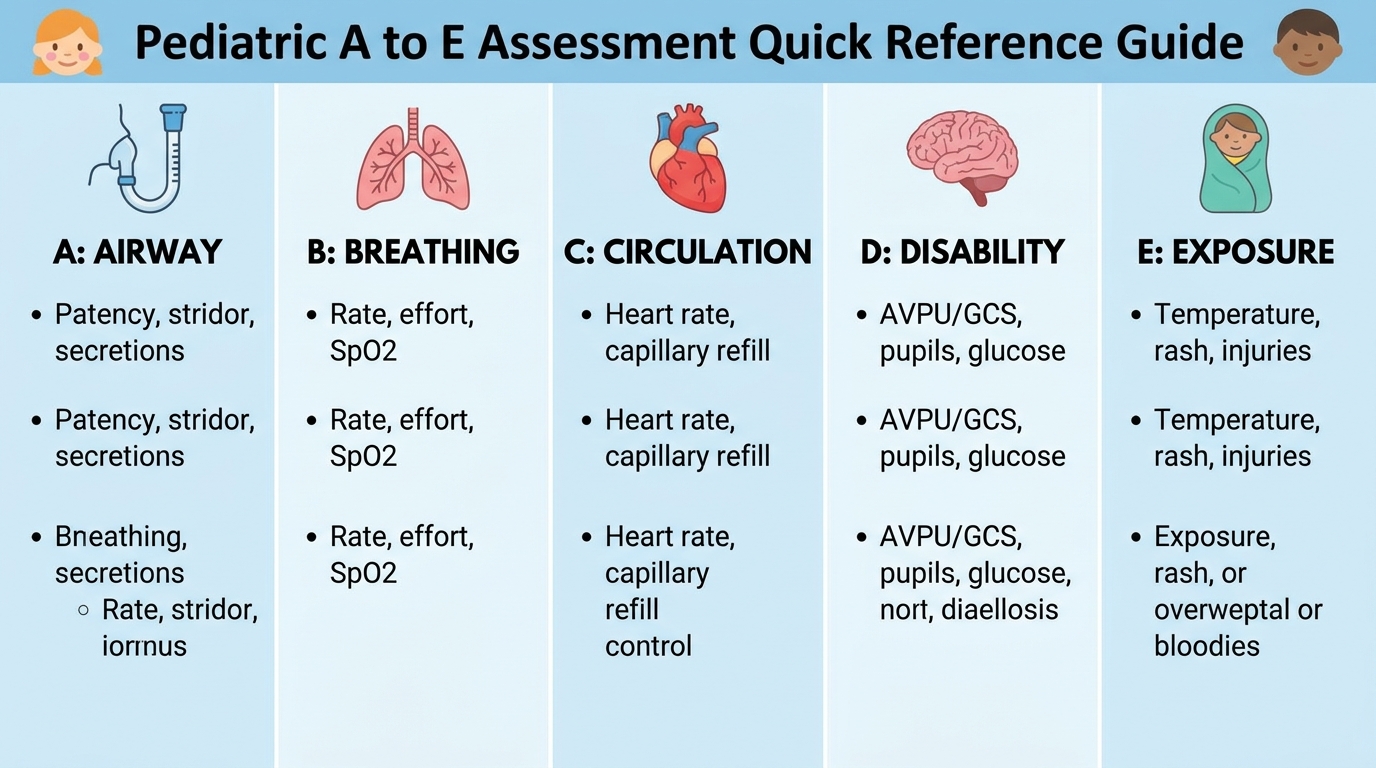
Caption: The A to E framework provides an objective structure for rapidly evaluating pediatric emergencies.
Comprehensive Geriatric Assessments
A Comprehensive Geriatric Assessment (CGA) evaluates the medical, psychological, and functional capabilities of frail older adults to develop coordinated treatment plans. Research demonstrates that older adults receiving this specialized evaluation achieve better long-term functional outcomes and maintain independence longer than those receiving standard medical care alone.
The Core Domains of Elderly Care Evaluation
A full Comprehensive Geriatric Assessment (CGA) integrates four specific domains: physical health, cognitive function, social support, and environmental safety. The National Institutes of Health reports that older patients who undergo a Comprehensive Geriatric Assessment (CGA) are 1.2 times more likely to be alive and successfully living independently in their own homes one year post-assessment. Older patients who undergo a Comprehensive Geriatric Assessment are 1.2 times more likely to be alive and successfully living independently in their own homes one year post-assessment (NIH, 2020) — so implementing this multi-domain approach directly preserves long-term quality of life.
Understanding the components of comprehensive geriatric assessment requires evaluating chronic disease management alongside fall risks and polypharmacy. Nuances within the geriatric physical assessment include identifying age-related physiological changes that mimic acute illnesses. Through the lens of The Lifespan Suitability Matrix, evaluating an older adult shifts the clinical focus from developmental growth toward preserving quality of life, maintaining mobility, and mitigating cognitive decline. Disregarding cognitive and environmental factors during a geriatric intake effectively renders the physical examination incomplete.
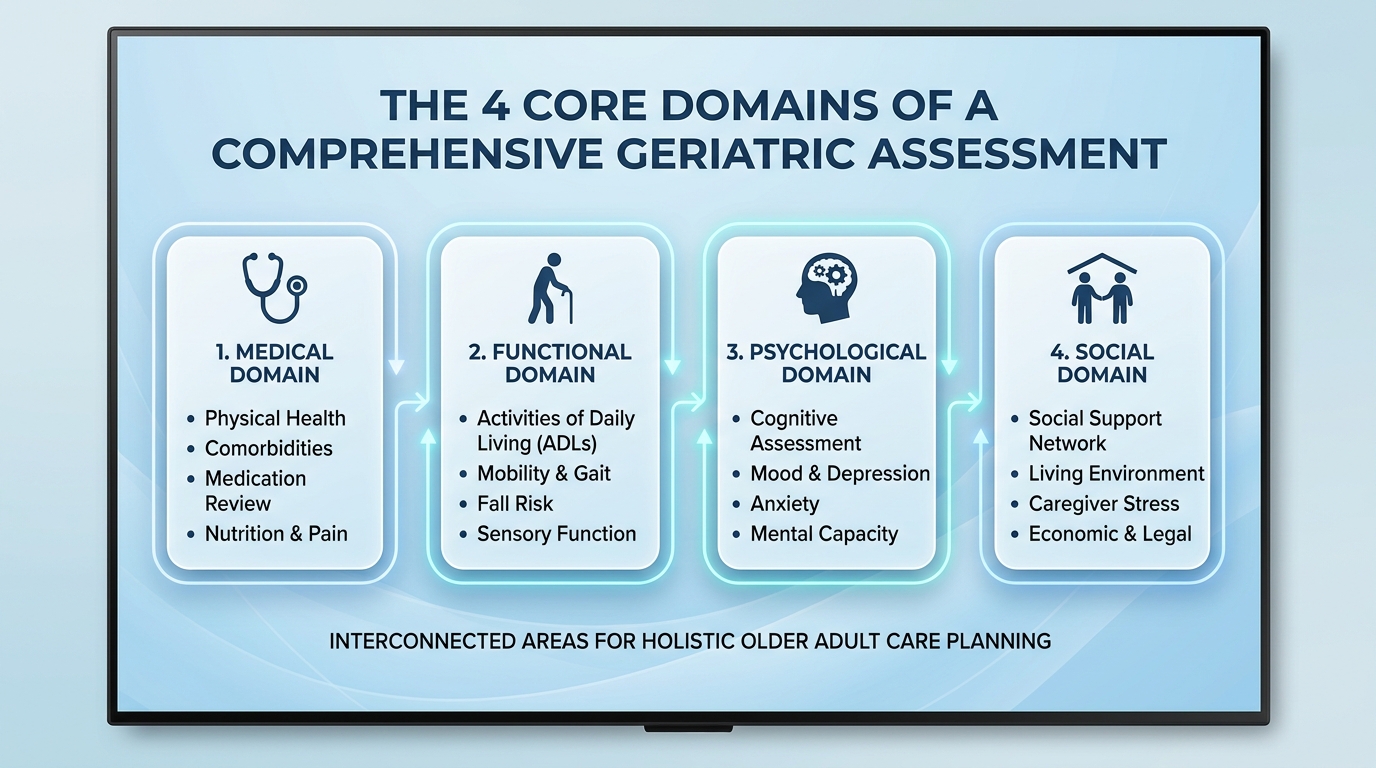
Caption: Integrating physical, cognitive, and social data improves long-term independence in older populations.
Utilizing Rapid Assessment Tools in Secondary Care
A multi-disciplinary CGA requires substantial time, making it impractical during urgent medical scenarios. When performing your secondary assessment on an older patient in an emergency or secondary care setting, clinicians must rely on a rapid geriatric assessment. These abbreviated evaluations screen for immediate vulnerabilities, such as delirium or severe frailty, guiding acute intervention strategies safely.
The National Cancer Institute notes that rapid evaluation frameworks, such as the CARG tool, are officially recommended for integrating multi-domain assessments into secondary settings. The carg geriatric assessment specifically predicts chemotherapy toxicity risks in older adults, integrating variables like hearing impairment and mobility limitations.
Similarly, tools like the FAST assessment evaluate dementia progression by tracking the sequential loss of daily living activities. Comprehensive Geriatric Assessments make older patients 1.2 times more likely to maintain independent living one year later (NIH, 2020). These rapid instruments provide essential, evidence-informed data to shape immediate treatment suitability.
Safety Precautions and Assessment Limitations
Common Pitfalls in Clinical Assessments
Clinical assessments are inherently snapshots in time, carrying specific limitations that practitioners must acknowledge to ensure patient safety. Over-relying on subjective self-reporting without objective verification represents a significant clinical danger. Applying our standardized clinical evaluation methodology, we frequently observe that patients minimize symptoms due to institutional anxiety or exaggerate pain levels, leading to inappropriate intervention strategies. Integrating objective multi-domain data significantly reduces this subjective bias.
Failing to account for cultural differences during psychological and physical intake also skews assessment validity. Standardized tests do not always translate accurately across diverse cultural backgrounds, potentially pathologizing normal cultural behaviors. Finally, promising symptom resolution based on preliminary assessment scores violates ethical care standards. An assessment establishes a baseline, but physiological responses to treatment vary drastically, requiring continuous monitoring and clinical reassessment.
When to Seek Expert Help
Recognizing the boundaries of a general clinical intake prevents dangerous diagnostic errors. General practitioners and nursing staff must escalate care when patient presentations exceed standard frameworks. Complex neuro-musculoskeletal presentations, sudden unexplained cognitive decline in geriatrics, or severe psychiatric distress require immediate specialist referrals to verify treatment suitability safely.
Discussions regarding regenerative therapies or stem-cell treatments must involve a highly qualified specialist. Broad disease claims surrounding these emerging treatments are not FDA-approved, and no ethical clinician can guarantee outcomes. If an assessment reveals a condition requiring specialized intervention, always discuss with a qualified clinician before altering a care plan. Proceeding without appropriate specialty oversight compromises the validity of the suitability assessment and jeopardizes patient safety.
Frequently Asked Questions
What is the main purpose of the clinical assessment?
The main purpose of a clinical suitability assessment is to evaluate a patient’s physical and psychological baseline to ensure a proposed intervention is safe and appropriate. It identifies underlying contraindications that could complicate care. By gathering comprehensive subjective and objective data, clinicians can tailor treatment plans to individual needs. For instance, an assessment might reveal specific mobility limitations that alter a rehabilitation strategy. Ultimately, this structured evaluation sets realistic expectations and improves functional outcomes.
What are the 4 pillars of assessment?
The 4 pillars of clinical assessment typically include physical, cognitive, psychological, and environmental evaluations. These pillars ensure a holistic understanding of a patient’s overall health status before initiating complex treatments. Clinicians rely on this multi-domain approach to uncover hidden risks, such as social isolation impacting medical adherence. Evaluating all four pillars systematically reduces diagnostic errors in vulnerable populations. Relying on these pillars protects patient safety and informs evidence-led medical decision-making.
Conclusion
For clinical practitioners, a thorough clinical suitability assessment ensures safe, individualized care across all demographics. Objective psychological assessments feature validity coefficients comparable to medical tests (APA, 2023). Gathering objective data and identifying contraindications protects vulnerable populations from inappropriate treatments. The best approach combines structured clinical knowledge with trauma-informed, client-centered rapport to build therapeutic trust.
The implementation of The Lifespan Suitability Matrix proves that standard checklists cannot be universally applied. Whether conducting a newborn admission, a pediatric A to E evaluation, or a Comprehensive Geriatric Assessment, the core principles of safety, monitoring, and objective evaluation remain constant. Clinicians must adapt their assessment methodologies to align with the physiological and cognitive realities of the patient’s specific life stage.
To improve your assessment accuracy, review your local diagnostic standards and thoroughly prepare patient medical records prior to consultations. Ensure that all rapid screening tools are followed by comprehensive secondary evaluations when appropriate. This article is for educational purposes only and does not replace consultation with a qualified medical professional.