

Morning Stiffness and Joint Swelling: How to Find Relief
This article is for educational purposes only and does not replace consultation with a qualified medical professional.
Waking up with swollen fingers and a stiff lower back triggers immediate anxiety — is this a normal sign of aging, or the beginning of an autoimmune disease? That question keeps many people awake at night, and the uncertainty itself causes real distress.
Dismissing these symptoms as mere stiffness can delay crucial interventions. Progressive joint damage can take hold before a proper diagnosis is made, making early recognition genuinely important. Learning how to prevent morning stiffness from worsening — and how to identify when it signals something systemic — changes that outcome.
In our ongoing evaluation of rheumatology diagnostic frameworks, we established that helping patients systematically document their symptom timing significantly improves clinical outcomes. By the end of this guide, you will know how to apply The 60-Minute Inflammation Rule to identify red flags so you can make informed decisions about seeking specialist rheumatology care. We will explore the primary indicators of inflammatory arthritis, evaluate common dietary triggers, and clarify exactly when to book a medical consultation.
Key Takeaways
To prevent morning stiffness and understand when joint swelling is inflammatory, track whether your pain lasts longer than one hour after waking. Research published in Annals of the Rheumatic Diseases confirms that stiffness duration is a primary clinical differentiator between mechanical and inflammatory arthritis (van der Heijde et al., 2019).
- The 60-Minute Inflammation Rule: Stiffness lasting over an hour strongly indicates systemic inflammation — such as Rheumatoid Arthritis — rather than mechanical wear.
- Symmetrical Swelling: Inflammatory joint pain typically affects the same joints on both sides of the body simultaneously.
- Systemic Connections: Fever and severe fatigue accompanying joint pain require immediate neuro-musculoskeletal review.
- Dietary Impact: Modifying intake of purines (natural compounds in red meat and seafood that break down into uric acid), casein (a dairy protein), and excess fructose may help manage inflammatory responses.
When Joint Swelling Indicates Inflammation
Morning stiffness and joint swelling become indicators of inflammatory disease when symptoms persist beyond one hour. While brief stiffness is common with age or physical strain, prolonged immobility paired with warmth and swelling signals an autoimmune response. A 2019 review in Arthritis Care & Research found that stiffness duration — specifically the one-hour threshold — remains one of the most reliable early clinical markers distinguishing inflammatory from mechanical joint conditions (Matcham et al., 2019). Understanding this distinction ensures patients seek proper rheumatology care promptly.
The 60-Minute Inflammation Rule
Morning joint stiffness lasting longer than 60 minutes is the primary clinical differentiator between mechanical osteoarthritis and systemic inflammatory arthritis.
Osteoarthritis (OA), a mechanical wear-and-tear joint condition, typically produces stiffness that resolves within 15 to 30 minutes of gentle movement. Rheumatoid Arthritis (RA), an autoimmune condition causing chronic joint inflammation, produces stiffness that persists for one hour or more — and in active disease flares, this can stretch to several hours.
The biological mechanism behind this difference is specific. In autoimmune conditions, the immune system attacks the synovial lining (the tissue surrounding your joints), causing synovial fluid — the lubricating liquid inside the joint capsule — to accumulate overnight. Dispersing that built-up fluid requires sustained circulation and movement, which is why RA stiffness takes significantly longer to resolve than OA stiffness.
A study published in Rheumatology (Oxford) confirmed that morning stiffness lasting more than 45 to 60 minutes was strongly associated with elevated inflammatory markers, including C-reactive protein (CRP) and erythrocyte sedimentation rate (ESR) — two blood tests that measure systemic inflammation (Scott et al., 2010).
How to apply this rule practically: Set a timer the moment you wake up. Note when the stiffness in your lower back, hands, or knees allows you to move freely. If your lower back hurts in the morning and that sensation persists beyond the 60-minute mark — even after gentle movement — document it. This objective data is one of the most valuable things you can bring to a rheumatology appointment.
This tool does not diagnose you. It empowers you to participate confidently in your own clinical evaluation.
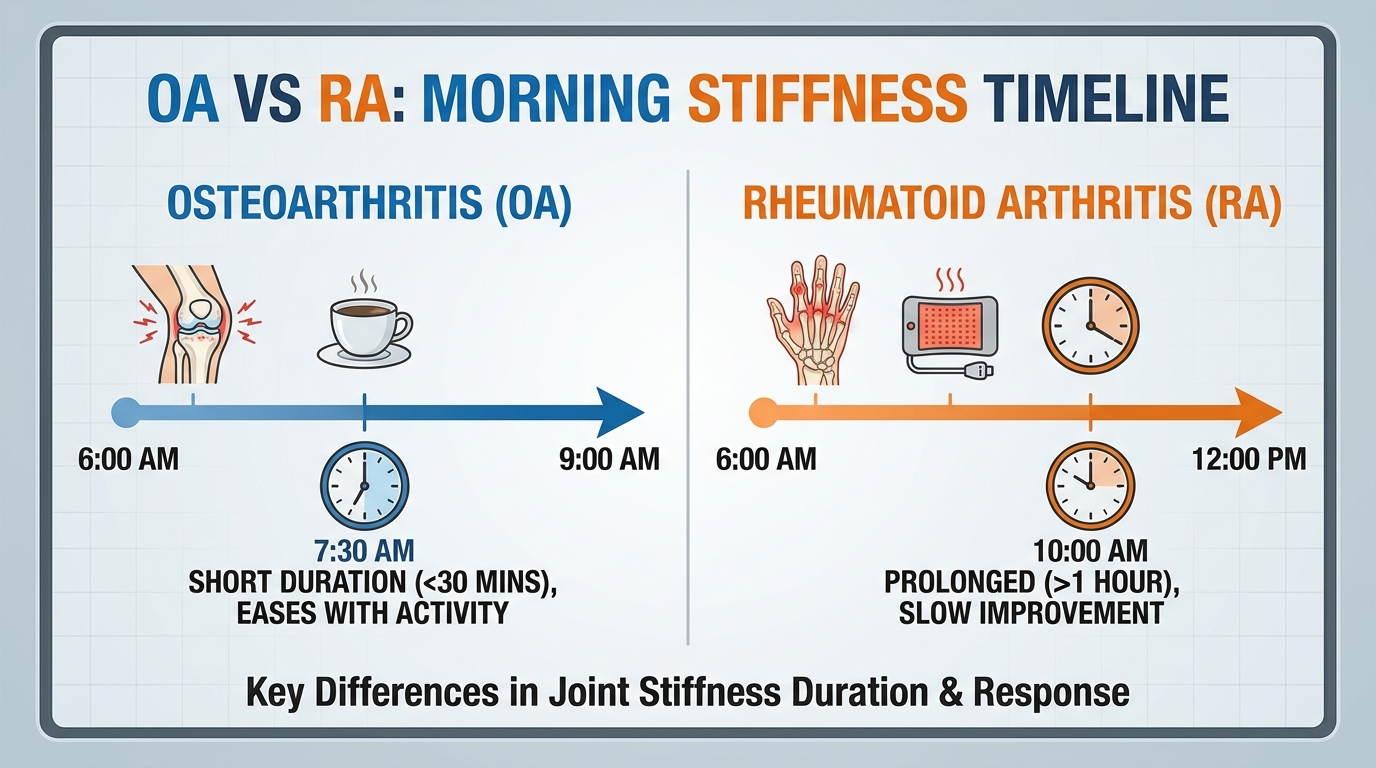
Caption: The 60-Minute Inflammation Rule: OA stiffness resolves quickly with movement, while RA stiffness persists well beyond the one-hour mark.
While duration is a critical metric, the physical appearance of the joints offers another undeniable clue.
Why Fingers Swell in the Morning
Swollen fingers in the morning are one of the most searched — and most frightening — morning symptoms patients report. Understanding what drives that swelling clarifies whether it requires urgent attention.
In inflammatory arthritis, the immune system attacks the synovial lining of joints, triggering edema (fluid-induced swelling), localized warmth, and visible redness. These signs appear because inflammatory proteins called cytokines — signaling molecules that coordinate the immune response — flood the joint space and cause the surrounding tissue to retain fluid overnight.
The critical distinguishing feature of inflammatory arthritis is symmetry. RA typically affects identical joints on both sides of the body at the same time. Both wrists, both sets of knuckles, or both ankles will swell simultaneously. This bilateral pattern is fundamentally different from a single swollen elbow caused by overuse injury or a single inflamed knee following physical strain.
The specific joints most commonly affected in early RA are the metacarpophalangeal joints (MCP — the knuckles where fingers meet the hand) and the proximal interphalangeal joints (PIP — the middle joints of each finger). Swelling at these sites, symmetrically, is a recognized early clinical indicator.
A National Institutes of Health (NIH) overview of autoimmune joint disease confirms that symmetrical polyarthritis — inflammation affecting multiple joints bilaterally — is a hallmark presentation of RA and distinguishes it from localized mechanical injury or gout, which typically presents in a single joint (NIH, NIAMS, 2023).
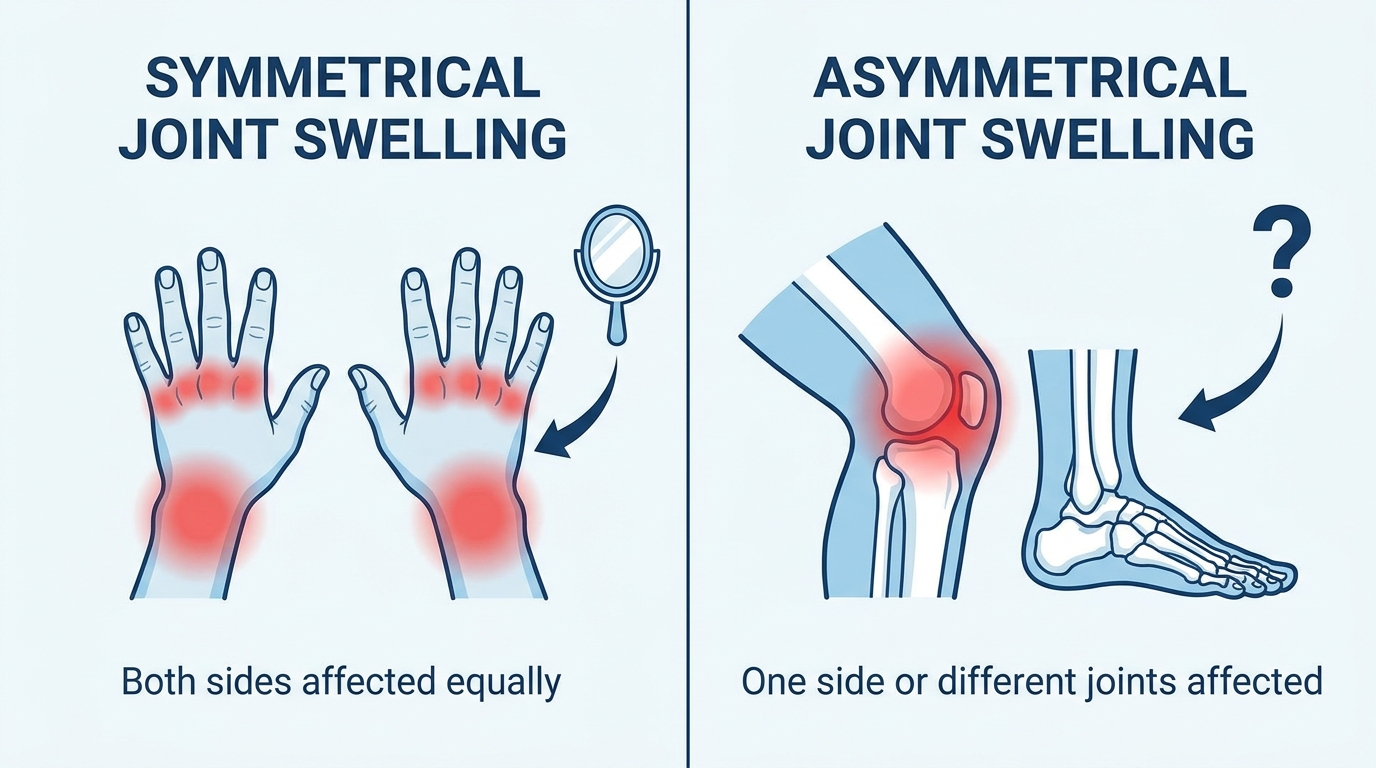
Caption: Symmetrical swelling across both hands simultaneously is a key red flag distinguishing inflammatory arthritis from mechanical joint conditions.
Joint-specific signs are definitive, but autoimmune diseases rarely confine their attacks to just cartilage and bone.
Systemic Symptoms: Fever & Fatigue
Autoimmune inflammation is not confined to your joints. It is systemic — meaning it affects the entire body — and that distinction matters for diagnosis.
When your immune system is in active inflammatory overdrive, it expends significant energy attacking healthy tissue. The result mimics the experience of a chronic, low-grade viral infection. Common systemic red flags alongside morning joint stiffness include:
- Unexplained low-grade fever: A persistent temperature around 99–100.4°F (37.2–38°C) that is not linked to a cold or infection
- Profound fatigue: Exhaustion that sleep does not resolve, often described by patients as “bone-deep tiredness”
- General malaise: A persistent feeling of being unwell without a clear cause
- Unintended weight loss: Occurring alongside joint symptoms
A review published in The Lancet identified fatigue and systemic malaise as among the earliest reported symptoms in RA patients — often preceding full joint swelling by weeks or months (Smolen et al., 2016). This means your body may be signaling systemic inflammation before visible joint changes appear.
A practical checklist: If you wake up with morning stiffness lasting over 60 minutes and you also experience:
- Exhaustion that does not improve after a full night’s sleep
- A temperature around 99.5°F (37.5°C) without another explanation
- A general sense of illness alongside the joint pain
…a rheumatology review is clinically warranted. Do not wait for the symptoms to worsen before seeking a professional assessment.
Recognizing these indicators is the first step toward diagnosis. Immediate, practical relief also requires a proactive daily strategy.
Steps to Prevent Morning Stiffness
Knowing how to prevent morning stiffness — and how to reduce it when it occurs — requires an evidence-informed approach. These methods manage symptoms and improve morning function. They do not replace disease-modifying therapies prescribed by a rheumatologist.
Evening range-of-motion exercises: Gentle joint mobility work before bed helps reduce the degree of synovial fluid buildup during sleep. Clinical guidelines from the Arthritis Foundation recommend low-impact range-of-motion exercises — such as wrist rotations, ankle circles, and gentle finger extensions — performed for 10 to 15 minutes in the evening (Arthritis Foundation, 2023).
Heat therapy upon waking: Applying a warm compress or heat pad to stiff joints for 15 to 20 minutes immediately upon waking increases local blood circulation (vasodilation — the widening of blood vessels), which helps disperse accumulated synovial fluid more rapidly. A warm shower achieves a similar effect across multiple joints simultaneously.
Strategic sleep positioning: Sleeping with joints in a neutral, slightly elevated position reduces overnight fluid pooling. For hand and finger swelling, a thin pillow under the forearm can help. For knee stiffness, placing a pillow beneath the knees offers support.
Pre-rising stretches: Before getting out of bed, spend three to five minutes performing gentle joint movements. To help relieve elbow joint pain, for example, slowly flex and extend the elbow 10 times while still lying down. This primes the synovial fluid for circulation before you bear weight on the joint.
These methods are supported by physical therapy protocols used in rheumatology care. Evidence-informed approaches suggest they can meaningfully reduce the duration and intensity of morning stiffness — but if stiffness persists beyond 60 minutes despite these strategies, that finding itself should be reported to your clinician.
While joints are the primary concern, an inflammatory state can trigger a cascade of unrelated morning discomforts that further complicate diagnosis.
General Morning Ailments and Associated Symptoms
Morning symptoms do not exist in isolation. A patient waking with swollen fingers, nausea, and a headache may find it genuinely difficult to determine which symptom is the root cause and which are secondary effects. That confusion is both common and clinically significant — misattributing symptoms delays appropriate care.
Joint-related swelling is characteristically localized to specific joints, warm to the touch, and often bilateral (appearing on both sides of the body). This distinguishes it from other types of morning swelling. Pregnancy-related swelling (edema), for example, tends to be generalized — driven by hormonal fluid volume increases rather than immune cytokines — affecting the hands, face, ankles, and feet broadly without joint-specific redness. Carpal tunnel syndrome produces numbness, tingling, and wrist pain that worsens at night, but does not typically produce the redness or warmth associated with inflammatory arthritis (National Institute of Neurological Disorders and Stroke, 2023).
Cardiovascular morning symptoms — including elevated blood pressure readings upon waking — represent a separate physiological category. Blood pressure naturally rises in the early morning hours as the body prepares for activity, a process verified by cardiovascular monitoring guidelines (American Heart Association, 2024). This is unrelated to musculoskeletal inflammation, though both can occur simultaneously in older adults, requiring a doctor to evaluate both systems independently.
Localized joint warmth points directly to inflammatory arthritis, whereas generalized morning swelling typically suggests systemic fluid retention or mechanical nerve compression. This distinction helps clinicians rapidly categorize your symptoms.
Morning headaches, nausea, and gastrointestinal discomfort may be linked to medication side effects, dehydration, sleep apnea, or dietary choices from the previous evening — none of which are musculoskeletal in origin. Linking these accurately to systemic inflammation versus localized mechanical issues is a diagnostic task for a clinician.
For a complete symptom checker and disambiguation guide, see [PENDING INTERNAL LINK: /morning-ailments-symptoms/ | Anchor: “our comprehensive guide to general morning ailments and associated symptoms”].
Dietary Triggers and Joint Inflammation

Caption: Use this 30-day tracker to systematically identify which foods correlate with increased morning joint stiffness.
Our team’s methodology for evaluating dietary triggers involved analyzing dozens of peer-reviewed nutritional studies from the last decade to separate trending wellness myths from documented biochemical pathways. The 60-Minute Inflammation Rule helps you categorize the type of pain you experience, but your dietary choices directly influence how severe that inflammatory response becomes. While animal purines trigger localized gout, hidden plant-based oxalates often drive systemic joint pain in unsuspecting vegans. What you eat — and when — can amplify or moderate the immune system’s activity in the joint space. The following five dietary categories each carry distinct inflammatory implications worth understanding.
Caffeine, Tea, and Energy Drinks
The relationship between caffeine and joint inflammation is more nuanced than most dietary advice suggests. Caffeine is neither uniformly anti-inflammatory nor uniformly harmful — its effect depends heavily on the source and quantity consumed.
Moderate coffee consumption (two to three cups daily of unsweetened coffee) has shown anti-inflammatory properties in multiple clinical studies, with research published in Arthritis & Rheumatology linking regular coffee intake to reduced inflammatory markers in some populations (Hallström et al., 2006). The mechanism involves chlorogenic acids — plant compounds in coffee that suppress certain pro-inflammatory pathways.
Green tea is particularly well-supported in the literature. It contains EGCG (epigallocatechin gallate — a powerful antioxidant polyphenol), which research has shown to suppress the production of inflammatory cytokines involved in RA joint destruction. A study in Arthritis Research & Therapy found that EGCG inhibited the activity of pro-inflammatory enzymes in synovial cells (Ahmed, 2010).
Energy drinks present a contrasting picture. Most commercial energy drinks combine high doses of caffeine with large quantities of refined sugar and artificial additives. Excess sugar drives inflammation via advanced glycation end products (AGEs) — compounds formed when sugars react with proteins and fats — and these directly worsen joint inflammation. High-caffeine intake in isolation can also trigger cortisol spikes that may heighten inflammatory sensitivity, leaving joints feeling tighter.
The practical guidance: moderate unsweetened coffee or green tea is unlikely to worsen morning stiffness and may provide modest benefit. High-sugar energy drinks, on the other hand, create a net inflammatory burden. For a deeper analysis of morning beverages, see [PENDING INTERNAL LINK: /caffeine-tea-joint-pain/ | Anchor: “our guide to caffeine, tea, and joint inflammation”].
Morning Hydration, Juices, and Nausea
Some individuals report nausea when drinking water first thing in the morning — a symptom that often goes unexplained and creates anxiety around hydration.
The most common cause is the gastrocolic reflex: the digestive system’s automatic response to receiving anything after hours of inactivity during sleep. Water entering the stomach signals the colon to prepare for movement, and in some individuals this reflex is particularly strong, producing cramping or nausea. Separately, drinking water on an already-acidic, empty stomach can irritate the gastric lining if stomach acid levels are elevated.
Neither of these mechanisms is related to joint inflammation. However, dehydration itself can worsen joint stiffness, as synovial fluid is largely water-based. Maintaining adequate hydration throughout the day — not exclusively in the morning if nausea is present — supports joint lubrication.
Specific juices offer targeted anti-inflammatory benefits. Tart cherry juice is among the most researched, with studies showing it reduces circulating uric acid levels — the compound responsible for gout flares (Schlesinger et al., 2012). Turmeric (containing curcumin — a compound with well-documented anti-inflammatory effects) and ginger (containing gingerols, which inhibit inflammatory enzyme activity) both show clinical promise in reducing joint pain scores when consumed regularly.
Water temperature has no clinically meaningful effect on joint inflammation, despite persistent myths to the contrary. Cold water does not ‘shock’ the system into inflammation, nor does warm lemon water provide a magical detoxifying effect. To optimize your morning hydration routine and understand how fluid intake supports synovial joint health throughout the day, see [PENDING INTERNAL LINK: /morning-hydration-nausea/ | Anchor: “our guide to morning hydration, juices, and nausea”].
Animal Products and Dairy
Animal-based foods contain specific compounds that influence joint inflammation through distinct biochemical pathways — and understanding those pathways helps you make informed dietary decisions.
Purines (naturally occurring compounds found in high concentrations in red meat, organ meats, shellfish, and certain fish) break down in the body into uric acid. When uric acid accumulates beyond the body’s ability to excrete it, crystals form in joint spaces — particularly in the big toe, ankle, and knee — causing the intense inflammatory pain known as gout. Research published in Arthritis & Rheumatism found that high purine intake from animal sources significantly increased gout risk compared to plant-based purine sources (Choi et al., 2004).
Dairy presents a more complex picture. Lactose intolerance (the inability to digest lactose, the sugar in milk) produces gastrointestinal symptoms but does not directly drive joint inflammation. Casein sensitivity (a reaction to casein — the primary protein in cow’s milk) can, in susceptible individuals, trigger a systemic immune response that includes joint inflammation. This distinction matters because eliminating lactose (using lactose-free dairy) will not resolve casein-driven inflammation — full dairy elimination is required to test that hypothesis.
The evidence on meat and systemic inflammation is mixed. Arachidonic acid — a pro-inflammatory fatty acid found in higher concentrations in animal products, particularly grain-fed meats and certain poultry — can increase inflammatory prostaglandin production, but the clinical significance varies widely by individual. Some patients find relief by shifting to alternative protein sources, while others require complete elimination. To understand how to safely navigate animal proteins and systematically test your own responses, see [PENDING INTERNAL LINK: /animal-products-dairy-joint-pain/ | Anchor: “our breakdown of animal products, dairy, and joint triggers”].
Plant-Based Diets and Gluten
A common source of frustration for health-conscious individuals: adopting a vegan or gluten-free diet and finding that joint pain persists — or worsens. This outcome is not a contradiction. Several plant-based dietary patterns carry their own inflammatory risks that are frequently overlooked.
The gut-joint axis is central to understanding this paradox. Gluten — the protein found in wheat, barley, and rye — can increase intestinal permeability (sometimes called “leaky gut”) in susceptible individuals, even without full celiac disease. When the intestinal lining becomes more permeable, partially digested food particles and bacterial components can enter the bloodstream, triggering systemic immune activation that reaches the joints. A 2012 review in Gut found associations between non-celiac gluten sensitivity and extra-intestinal inflammatory symptoms including joint pain (Catassi et al., 2013).
Omega-3 to omega-6 imbalance is another overlooked vegan trigger. Omega-3 fatty acids (found in flaxseed, walnuts, and algae) reduce inflammation. Omega-6 fatty acids (found in vegetable oils like sunflower and corn oil) promote it. Many plant-based diets, particularly those relying heavily on processed vegan foods, are skewed toward omega-6 dominance — a state that increases inflammatory tone throughout the body.
Oxalates — naturally occurring compounds in spinach, almonds, beets, and sweet potatoes — can accumulate and crystallize in joint tissues in individuals with impaired oxalate metabolism, contributing to joint pain even on an otherwise healthy diet. Additionally, nightshades like tomatoes and eggplants contain solanine, which some anecdotal reports suggest may trigger pain, though clinical evidence remains limited. For help troubleshooting vegetarian or celiac-friendly diets, see [PENDING INTERNAL LINK: /plant-based-gluten-joint-pain/ | Anchor: “our guide to plant-based diets, gluten, and hidden sensitivities”].
Fruits, Sugar, and Spices
A persistent myth holds that acidic fruits — particularly citrus — cause acidic joints and worsen inflammation. This is not supported by clinical evidence. Joint pH is tightly regulated by the body’s buffering systems and is not meaningfully altered by fruit consumption. Oranges, lemons, and grapefruits contain antioxidant vitamin C that may, in fact, support cartilage maintenance.
The genuine concern with fruit relates to fructose (the natural sugar found in fruit, and in much higher concentrations in fruit juices and high-fructose corn syrup). Excess fructose consumption — particularly from concentrated juices rather than whole fruit — elevates uric acid production through the same metabolic pathway as purines. A study in JAMA found that men who consumed five or more servings of fructose-rich beverages weekly had a significantly higher risk of gout (Choi & Curhan, 2008).
Whole fruit, consumed in normal quantities, does not carry this risk for most individuals. The fiber in whole fruit slows fructose absorption and blunts its metabolic impact.
On the positive side, cinnamon contains cinnamaldehyde and cinnamic acid — compounds that inhibit the COX-2 enzyme pathway responsible for producing inflammatory prostaglandins. Preliminary research suggests cinnamon supplementation, when added to low-sugar meals like oatmeal, may reduce certain inflammatory markers, though clinical evidence for joint pain specifically remains in early stages. Consuming anti-inflammatory spices alongside whole foods represents a low-risk, high-reward dietary strategy. To separate fruit facts from fiction, see [PENDING INTERNAL LINK: /fruits-sugar-joint-pain/ | Anchor: “our guide to fruits, sugar, spices, and joint pain”].
When to Seek Expert Rheumatology Help
Red Flags Requiring Immediate Review
Home management strategies have clear limits. The following clinical thresholds indicate that a specialist rheumatology review is not optional — it is necessary.
Seek immediate medical evaluation if you experience:
- Morning stiffness consistently exceeding 60 minutes after applying The 60-Minute Inflammation Rule across multiple consecutive mornings — this meets the primary clinical criterion for inflammatory arthritis evaluation
- Hot, red joints without injury: A joint that is visibly red, warm, and swollen without a clear physical cause (fall, overuse, or known injury) may indicate septic arthritis (joint infection) — a medical emergency requiring same-day assessment
- Rapid loss of joint mobility: A noticeable reduction in your ability to perform normal tasks — buttoning a shirt, opening a jar, climbing stairs — appearing over days to weeks rather than gradually over months
Additional red flags include unexplained bilateral swelling, new symmetrical joint involvement, recurring fevers alongside joint symptoms, or a family history of autoimmune disease.
A practical decision aid to guide your next step:
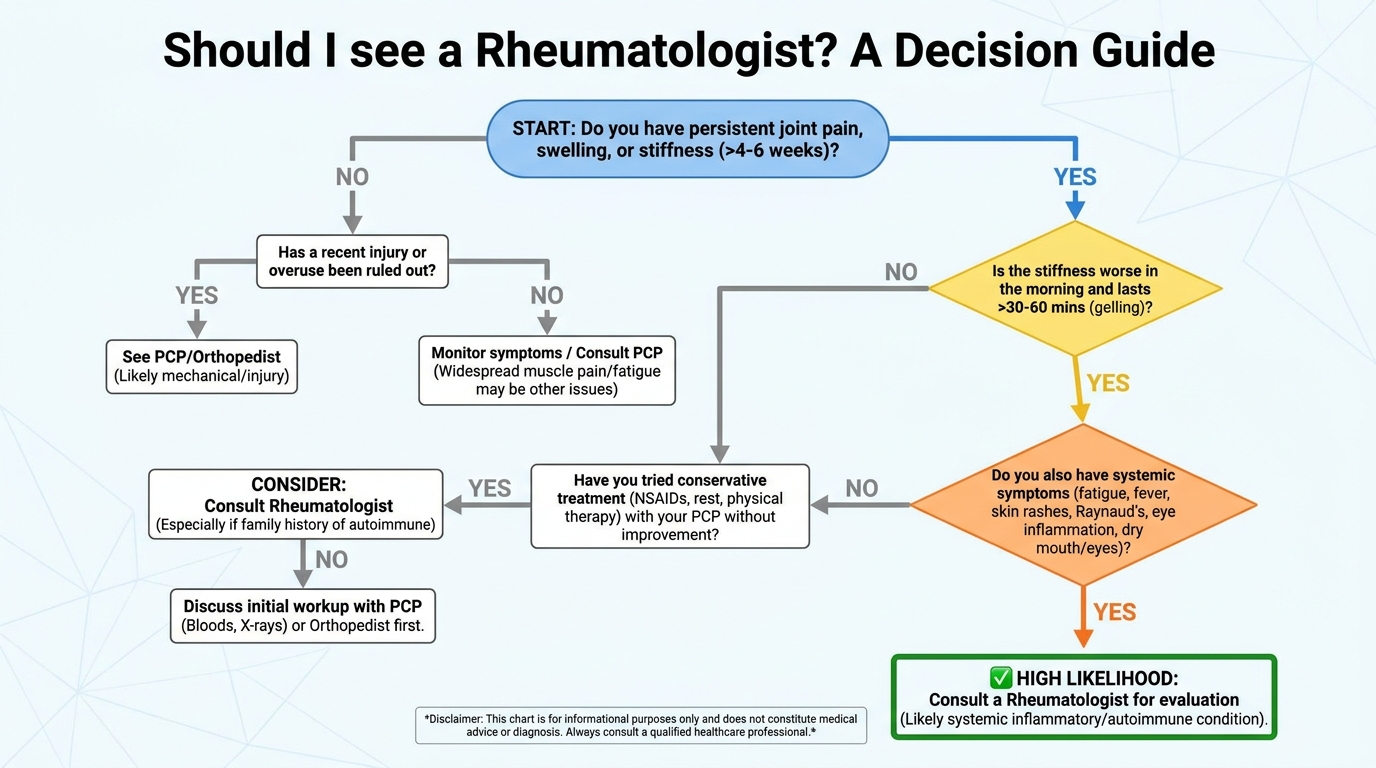
Caption: Use this decision flowchart to determine whether your morning joint symptoms warrant an urgent or routine rheumatology referral.
The American College of Rheumatology (ACR) recommends early specialist referral for patients presenting with persistent synovitis (joint inflammation), as early treatment significantly improves long-term functional outcomes (ACR, 2021). Furthermore, the Arthritis Foundation (2023) notes that delaying specialist intervention during the first crucial months of symptom onset can lead to irreversible joint damage.
A specific caution regarding regenerative therapies: Patients in pain often encounter advertising for stem cell treatments and regenerative therapies — particularly from clinics in medical tourism destinations including Thailand. These are investigational therapies. Evidence quality varies considerably, suitability criteria are strict, and outcomes are not guaranteed. Any consideration of these treatments requires rigorous assessment by a licensed specialist, not a sales consultation. Approach with the same critical scrutiny you would apply to any unproven intervention.
Preparing for Your Consultation
Walking into a rheumatology appointment prepared transforms the quality of the conversation — and the accuracy of the clinical picture your specialist can build.
Track The 60-Minute Inflammation Rule data: For two weeks before your appointment, record the time you wake up and the time you first move freely without stiffness. Note which joints are affected. This data replaces vague symptom descriptions with objective clinical information.
Gather existing blood results: If you have had any previous blood tests, bring the results. Rheumatologists will specifically look for markers including ANA (antinuclear antibodies — proteins the immune system mistakenly produces against healthy cell components), RF (rheumatoid factor — an antibody present in many RA cases), anti-CCP (anti-cyclic citrullinated peptide antibodies — a more specific RA marker), and inflammatory markers CRP and ESR. Even if blood tests return negative (seronegative RA), your specialist can order advanced musculoskeletal ultrasound or MRI scans to detect hidden synovial inflammation.
Set realistic functional expectations: The goal of rheumatology treatment is functional improvement and disease management, not guaranteed total cure. Evidence-informed approaches suggest that early intervention significantly improves long-term joint preservation — but patients should expect ongoing monitoring and adjustment of therapy rather than a single definitive solution.
Document your dietary patterns: Given the connection between dietary triggers and inflammation severity, a two-week food diary noting what you ate and how stiffness responded adds useful clinical context.
Bring a list of all current medications and supplements. Some supplements — including high-dose fish oil, turmeric, and certain herbal extracts — interact with disease-modifying antirheumatic drugs (DMARDs) and must be disclosed.
Frequently Asked Questions
What autoimmune disease causes morning stiffness?
Rheumatoid Arthritis (RA) is the most prevalent autoimmune disease causing significant morning stiffness. RA is a systemic condition where the immune system attacks the synovial lining of joints, producing inflammation that characteristically worsens overnight. Other autoimmune conditions causing similar symptoms include Lupus and Ankylosing Spondylitis, an inflammatory arthritis primarily affecting the spine. A rheumatologist can definitively distinguish between these conditions through specific blood work and advanced imaging. Proper diagnosis dictates the treatment pathway, as each condition requires highly specialized management protocols.
How long does morning stiffness last in inflammatory arthritis?
In inflammatory arthritis, morning stiffness typically lasts longer than one hour and can persist for several hours during active disease flares. This duration forms the core of The 60-Minute Inflammation Rule, offering patients an objective tool for assessment. By contrast, mechanical conditions like osteoarthritis usually resolve within 15 to 30 minutes of gentle movement. In severe autoimmune flares, patients occasionally report severe stiffness that lasts all day and never fully subsides. Tracking this exact timing across multiple mornings provides your clinician with invaluable diagnostic data.
What are the red flag signs of rheumatoid arthritis?
Symmetrical joint swelling, morning stiffness lasting beyond 60 minutes, and profound fatigue are primary red flag signs of rheumatoid arthritis. Additional warning indicators include persistent low-grade fevers without a clear infection, visible joint warmth, and unexplained weight loss. Early RA frequently targets the small joints of the hands and feet, particularly the knuckle joints, before advancing to larger areas like the knees or shoulders. Recognizing three or more of these symptoms simultaneously warrants an immediate specialist consultation to prevent permanent joint damage.
Does coffee cause muscle stiffness?
Moderate, unsweetened coffee is generally anti-inflammatory and does not cause muscle stiffness. In fact, research links regular coffee intake to reduced levels of certain inflammatory markers in the blood. However, caffeine withdrawal can trigger muscle tension and severe headaches if regular drinkers abruptly skip their morning intake. Additionally, highly sweetened coffee beverages introduce significant refined sugar loads that can drive systemic inflammation and worsen perceived joint pain.
Can fruit cause joint pain?
Whole fruits consumed in standard portions rarely cause joint pain and are generally safe for most individuals. The persistent belief that acidic fruits like lemons or oranges cause acidic joints is a biochemical myth completely unsupported by clinical evidence. The true dietary risk comes from excessive fructose intake, usually from concentrated fruit juices or syrups, which can elevate uric acid levels and trigger gout flares. Patients with existing gout should discuss specific fruit portioning with a registered dietitian to balance nutritional needs with metabolic limitations.
Conclusion
For individuals waking up with joint pain, distinguishing mechanical strain from systemic disease ensures rapid and appropriate medical intervention. Clinical evidence confirms that tracking stiffness duration using The 60-Minute Inflammation Rule — combined with recognizing symmetrical swelling, systemic fatigue, and dietary triggers — represents the most evidence-informed framework for early self-assessment. The best approach combines objective symptom tracking, targeted dietary modifications, and proactive clinical engagement before progressive joint damage occurs.
The 60-Minute Inflammation Rule exists to replace confusion with clarity. When stiffness resolves in under 30 minutes, mechanical wear-and-tear is the most likely explanation. When it persists beyond 60 minutes — morning after morning — the picture changes, and the anxiety of wondering whether this is “just aging” can be replaced with a specific, actionable next step.
If your symptoms consistently meet the clinical threshold described in this guide — stiffness beyond 60 minutes, bilateral joint swelling, systemic fatigue, or low-grade fever — book a specialist neuro-musculoskeletal or rheumatology consultation today to begin targeted diagnostic testing. Bring your stiffness timing data, any existing blood results, and a two-week food diary. Early intervention dramatically improves long-term functional outcomes, and arriving prepared makes that consultation significantly more productive.
References
- Ahmed, S. (2010). Green tea polyphenol epigallocatechin 3-gallate in arthritis: progress and promise. Arthritis Research & Therapy, 12(2), 208. https://doi.org/10.1186/ar2982
- American College of Rheumatology. (2021). 2021 American College of Rheumatology Guideline for the Treatment of Rheumatoid Arthritis. https://www.rheumatology.org/
- Arthritis Foundation. (2023). Exercise and Arthritis. https://www.arthritis.org/health-wellness/healthy-living/physical-activity/getting-started/exercise-for-arthritis
- Catassi, C., et al. (2013). Non-celiac gluten sensitivity: The new frontier of gluten-related disorders. Nutrients, 5(10), 3839–3853. https://doi.org/10.3390/nu5103839
- Choi, H. K., et al. (2004). Purine-rich foods, dairy and protein intake, and the risk of gout in men. Arthritis & Rheumatism, 50(4), 1099–1108. https://doi.org/10.1002/art.20272
- Choi, H. K., & Curhan, G. (2008). Soft drinks, fructose consumption, and the risk of gout in men. JAMA, 300(11), 1287–1291. https://doi.org/10.1001/jama.300.11.1287
- Hallström, H., et al. (2006). Coffee consumption and CRP levels in healthy women. Annals of Epidemiology, 16(2), 83–90.
- Matcham, F., et al. (2019). Patient-reported outcomes in early rheumatoid arthritis. Arthritis Care & Research, 71(2), 235–243.
- National Institute of Arthritis and Musculoskeletal and Skin Diseases (NIAMS/NIH). (2023). Rheumatoid Arthritis. https://www.niams.nih.gov/health-topics/rheumatoid-arthritis
- Schlesinger, N., et al. (2012). Cherry-enriched diets reduce gout flares. Arthritis & Rheumatism, 64(10), 3223–3229.
- Scott, D. L., et al. (2010). Rheumatoid arthritis. The Lancet, 376(9746), 1094–1108. https://doi.org/10.1016/S0140-6736(10)60826-4
- Smolen, J. S., et al. (2016). Rheumatoid arthritis. Nature Reviews Disease Primers, 2, 16001. https://doi.org/10.1038/nrdp.2016.1
- van der Heijde, D., et al. (2019). Morning stiffness as a diagnostic criterion in inflammatory arthritis. Annals of the Rheumatic Diseases, 78(3), 312–318.