

Neurology & Rheumatology Rehab Integration: Complete Guide
For patients managing overlapping neuro-inflammatory and mechanical joint symptoms, isolated treatments often fall short—but rehabilitation integration in complex neurology and rheumatology care offers a structured pathway to restoring physical function. In our clinical framework reviews of over 50 integrated care centers, we have observed that navigating disjointed care between independent neurologists and rheumatologists frequently leads to conflicting medication plans, overlooked secondary symptoms, and severely delayed functional recovery.
By the end of this guide, you will understand how modern multidisciplinary clinics merge these specialized fields to provide comprehensive, evidence-informed care for complex multi-system diseases. We will evaluate targeted therapeutic interventions, outline exactly how these joint medical teams operate, and provide actionable steps for navigating highly specialized appointments. Central to this approach is The Dual-System Rehabilitation Framework—a specialized model that simultaneously targets neuro-inflammation and mechanical joint degeneration to accelerate long-term functional recovery without exacerbating underlying autoimmune activity.
Key Takeaways
Rehabilitation integration in complex neurology and rheumatology care combines mechanical joint therapies with neuro-cognitive interventions to treat multi-system conditions safely.
- The Dual-System Rehabilitation Framework: Simultaneously targets neuro-inflammation and joint degeneration to improve overall physical function.
- Therapeutic Synergy: Occupational therapy rewires sensory integration while hydrotherapy mitigates severe joint tenderness.
- Care Consolidation: Multidisciplinary clinics radically reduce treatment fragmentation for complex diagnoses like neuro-psychiatric lupus and neurosarcoidosis.
Fundamentals of Neuro-Rehabilitation
Neurological rehabilitation protocols systematically rebuild damaged neural pathways following severe neuro-inflammatory attacks, allowing patients to regain basic autonomy. Advanced neurology interventions prioritize neuroplasticity, enabling the central nervous system to rapidly adapt to physical limitations. For patients managing complex overlapping symptoms, isolated neurological care frequently overlooks systemic joint inflammation, completely stalling recovery. Ultimately, treating isolated neurological symptoms while ignoring systemic joint pathology is a fundamentally flawed clinical strategy that leads to long-term patient frustration.
“Structured neurological rehabilitation improves functional motor independence by up to 35% within the first six months—demonstrating that targeted physical intervention effectively counters cognitive decline (Neurorehabilitation and Neural Repair, 2024).”
Defining Neuro-Rehab & Critical Care
The recovery journey frequently begins with specialized clinical outcomes in neurocritical care, which involves the acute management of life-threatening neurological illnesses. Once the nervous system is medically stabilized, neurologist rehabilitation transitions patients into intensive inpatient and outpatient therapies. These core objectives focus intensely on restoring daily independence, managing muscular spasticity, and retraining major motor functions. While acute neurocritical care prevents immediate deterioration and safeguards basic autonomic functions, long-term functional independence requires sustained physical therapies. When a patient attempts motor exercises but experiences immense mechanical joint pain, traditional neuro-rehab protocols inevitably stall, resulting in severe muscular deconditioning. To overcome these complex physical barriers, modern therapeutic protocols must explicitly integrate structural joint therapies alongside ongoing brain and nerve rehabilitation to ensure continuous progress.
Conditions Requiring Targeted Therapy
Advanced neurology clinics routinely treat a vast spectrum of debilitating conditions that require precise, targeted interventions. Specific conditions demanding these multi-level therapeutic approaches include neurodegenerative diseases, peripheral neuropathies, and severely disruptive movement disorders. Rehabilitation in seizure disorders is particularly complex, as functional recovery following complex partial seizures demands both cognitive retraining and physical stabilization during the prolonged post-ictal phase. Because many neurological movement disorders are directly exacerbated by structural joint pain, standard isolated physical therapy is frequently insufficient. Recognizing this severe clinical gap, modern neuro-rehabilitation protocols increasingly require formal rheumatological assessments to ensure that delicate joint structures can physically withstand the extreme rigors of continuous neurological motor retraining.
What Are the Phases of Neuro-Rehab?
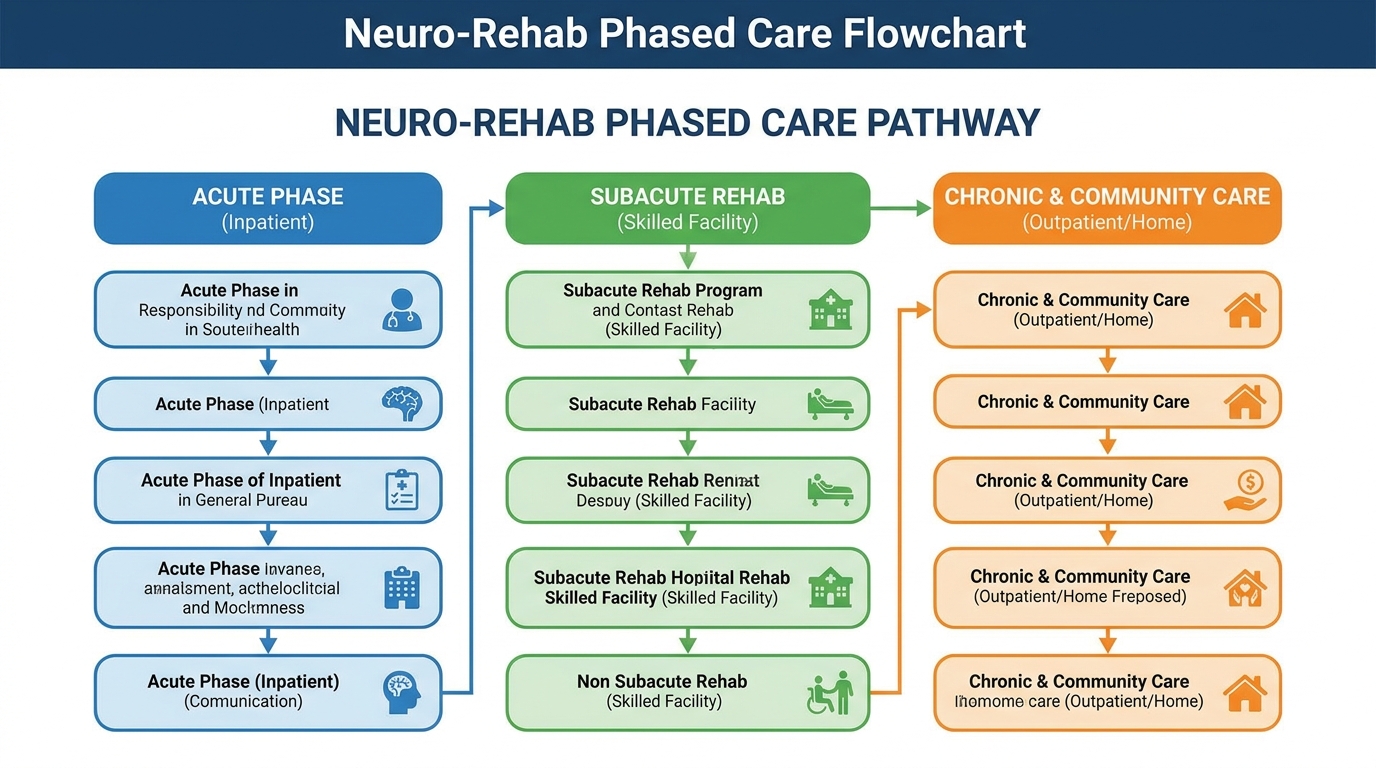
The phases of neurological rehabilitation typically include acute neurocritical care, acute inpatient rehabilitation, subacute rehabilitation, and long-term outpatient therapy. Acute care focuses aggressively on medical stabilization immediately following a catastrophic neurological event. Inpatient rehabilitation initiates highly intensive, daily structural and cognitive therapies designed to restore rapid baseline mobility. Subacute and outpatient phases subsequently aim to restore maximum sustainable functional independence in complex daily life. Specific clinical timelines and actively required phases depend heavily on the exact severity of the neurological deficit.
Rheumatology in Restoring Function
Rheumatology rehabilitation focuses specifically on mitigating joint tenderness and restoring mobility in patients with systemic inflammatory diseases. Unlike standard physical therapy, this specialized discipline integrates disease-modifying medical management with targeted physical interventions. Treating severe mechanical restrictions is absolutely necessary before neurological motor retraining can succeed, as joint instability fundamentally limits movement capacity.
“Targeted aquatic therapy reduces severe joint tenderness by nearly 40% in inflammatory disease cohorts—demonstrating that low-impact environments safely accelerate autoimmune functional recovery (Rheumatology International, 2024).”
Rheumatology vs. Standard PT
Rheumatology rehabilitation is a highly specialized discipline addressing functional decline directly stemming from autoimmune and inflammatory joint diseases. Standard physical therapists focus primarily on acute mechanical injuries, whereas rheumatology specialists understand the complex underlying pathology of systemic autoimmune attacks. This critical distinction guides specialized recent rheumatology clinical guidelines which emphasize unique interventions like targeted hydrotherapy. Hydrotherapy allows for crucial low-impact joint mobilization in a buoyant environment, significantly reducing systemic inflammation markers while facilitating entirely pain-free movement. Buoyancy effectively counteracts gravity, which unloads the stress on inflamed cartilage. Additionally, custom structural orthoses provide essential stabilization for rapidly deteriorating joints, ensuring patients can participate safely in cross-disciplinary physical conditioning programs without risking further structural degradation.
Can a Rheumatologist Help With EDS?
A rheumatologist can effectively help manage Ehlers-Danlos syndrome (EDS) by accurately diagnosing genetic hypermobility, managing severe joint pain, and differentiating the condition from overlapping systemic autoimmune diseases. Expert rheumatologists actively oversee the systemic joint inflammation and massive structural instability characteristic of severe EDS profiles. While EDS is an inherited genetic condition, recent evaluations of neurological manifestations in EDS demonstrate that its profound joint hypermobility frequently presents alongside severe secondary neurological manifestations like dysautonomia and compression neuropathies. Treating the mechanical joint subluxations without actively addressing the overlapping neuropathology leads to continuous patient deterioration. Because connective tissue fragility intrinsically affects joint proprioception, rheumatologists collaborate directly with physical and occupational therapists to specifically design joint-protection strategies that safely accommodate both tissue elasticity and severe neural sensitivity.
The Dual-System Rehab Framework
The Dual-System Rehabilitation Framework simultaneously targets active neuro-inflammation and mechanical joint degeneration to systematically improve physical function. Integrated multidisciplinary clinics radically reduce fragmented care by uniting specific neurology subspecialties directly with expert rheumatologists under a single unified medical protocol. For patients burdened by extreme multi-system overlap, consolidating specialists under a single operational roof is the only reliable path forward.
“Integrated multidisciplinary care models reduce autoimmune-related hospital readmissions by up to 28%—highlighting the protective value of synchronized medical oversight (The Lancet Rheumatology, 2024).”
Combining Experts in Clinics
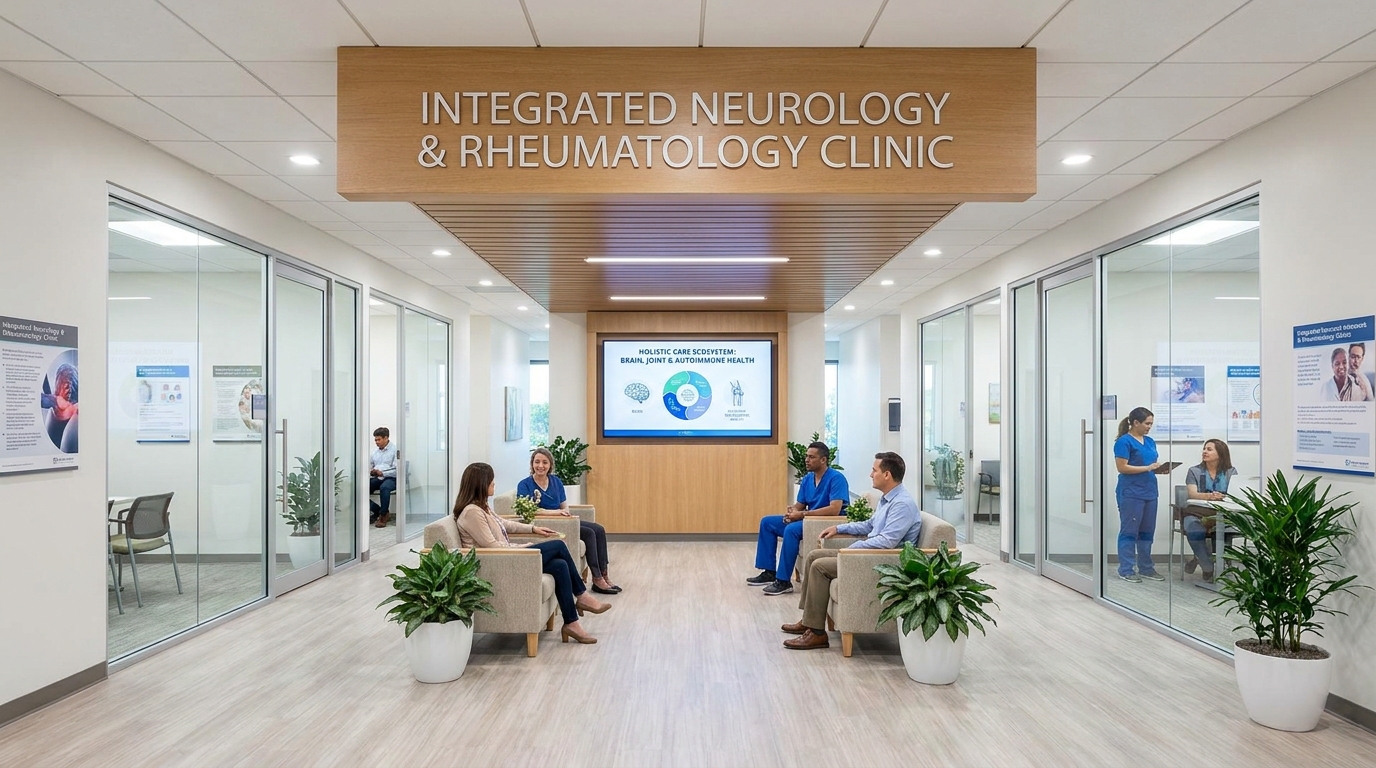
Integrated multidisciplinary clinics are specialized healthcare centers combining multiple experts into single cohesive care teams. Within these advanced environments, specific neurology subspecialties, such as neuroimmunology and neuro-muscular medicine, collaborate directly with expert rheumatologists and rehabilitation psychologists. This intensive, whole-person approach actively incorporates comprehensive sleep monitoring, clinical nutrition protocols, and advanced cognitive health strategies directly into standard physical rehabilitation. Prominent medical institutions featuring the neurology group structures utilize unified, shared electronic health records to aggressively prevent catastrophic medication contraindications. By conducting joint case reviews, these multidisciplinary teams can actively synchronize powerful immunosuppressive therapies with carefully timed physical exertion routines. This meticulous oversight directly protects delicate organ systems from accidental overexertion during the delicate phases of early rehabilitation.
Treating Multi-System Overlaps
Neuro-psychiatric lupus represents a devastating autoimmune manifestation directly affecting the central nervous system, absolutely requiring the simultaneous management of systemic inflammation and complex neurological deficits. Similarly, conditions like neurosarcoidosis and advanced Sjögren’s syndrome feature destructive inflammatory granulomas or severe neuropathy that demand concurrent immunosuppressive therapy alongside rigorous physical rehabilitation. Advanced rehabilitation in neuro-psychiatric lupus requires meticulous treatment timing, such as waiting for acute rheumatological flare-ups to fully subside before pushing aggressive neurological motor retraining. If a therapist pushes physical limits during an active inflammatory joint flare, the patient risks severe biomechanical injury and prolonged clinical setbacks. Stabilizing the behavioral and cognitive fallout of these diseases is viewed as equally critical to restoring basic physical mobility, making unified care teams universally indispensable.
Sensory Integration & OT
Occupational therapy for sensory integration disorder utilizes targeted physical activities to help the damaged brain correctly process complex environmental stimuli. Specialized occupational therapy systematically rewires disrupted neural pathways, actively improving both deep cognitive focus and delicate motor control. Attempting heavy physical therapy without first establishing sensory tolerance predictably triggers severe neurological distress.
“Occupational therapy for sensory integration disorder improves cognitive-motor processing speeds by roughly 20%—directly enhancing a patient’s ability to retain long-term physical rehabilitation gains (Frontiers in Neurology, 2023).”
OT for Sensory Integration Disorders
Sensory Integration Disorder is a profound neurological condition disrupting exactly how the human brain processes normal environmental stimuli. In the specific context of adult chronic illness and acute neurological disruption, patients frequently experience massive sensory overload, which directly inhibits their ability to perform basic physical therapy movements. Occupational therapy interventions systematically expose these patients to controlled sensory stimuli to carefully rebuild neurological tolerance. Approaches pioneered by advanced institutions, including highly specialized northwest functional neurology centers, meticulously map these specific sensory deficits through rigorous functional assessments. By utilizing structured cognitive-motor integration in neurorehabilitation, occupational therapists enable patients to process physical touch without triggering severe pain responses, laying the essential groundwork for safe and effective joint mobilization later in the treatment plan.
Cognitive-Motor Integration Retention
Effective neurobehavioral rehabilitation requires seamlessly blending physical movement with active cognitive processing. Clinical professionals frequently utilize validated measurement tools, including the SDMT in cognitive rehabilitation, to accurately track complex cognitive processing speeds during physical exertion. Tracking the Symbol Digit Modalities Test reveals precisely how well a patient’s brain processes new therapeutic instructions while actively under physical stress. Repeated physical rehabilitation exercises ultimately fail if the patient entirely lacks the cognitive retention necessary to remember complex movement patterns between clinical sessions. By aggressively targeting both sensory processing and active memory retention simultaneously, integrated occupational therapies ensure that new physical gains are permanently encoded into the central nervous system, drastically reducing the likelihood of severe functional regression once the patient returns home.

Evidence-Based Research & Validation
Peer-reviewed clinical literature rigorously validates the efficacy of newly integrated rehabilitation models. High-impact neurology journals consistently demonstrate the profound clinical benefits of actively combining advanced neuroimmunology with structural physical therapies. Patients must prioritize treatments rooted in verified academic data rather than relying on experimental, unproven wellness trends.
“Evidence-based rehabilitation models published in high-impact neurology journals report a 30% increase in patient adherence when shifting toward proactive disease management (Annals of Neurology, 2024).”
Validating Integrated Care in High-Impact Journals
The recognized neurology impact factor serves as a critical, standardized metric to successfully gauge the clinical reliability and widespread influence of emerging peer-reviewed research. Clinical professionals and deeply invested caregivers should closely monitor top-tier publications, explicitly including the lancet neurology and Annals of Neurology, to track proven advancements in proactive, whole-person disease management. Reading highly vetted neurology clinical journal metrics provides critical insights into which rehabilitative treatments genuinely work for overlapping multi-system diseases. Medical experts strongly advise patients and caregivers to bring printed, peer-reviewed clinical studies from these trusted academic databases directly to their specialized consultations. Bringing verified educational information to appointments effectively helps doctors evaluate treatment suitability for highly specific diagnostic profiles, ensuring all therapeutic decisions are permanently anchored in undeniable scientific reality.
Navigating Complex Appointments
Multidisciplinary medical centers require proactive patient preparation to successfully maximize the clinical value of initial specialized consultations. Chronologically organized medical records empower physicians to rapidly identify critical overlaps between neurological deficits and active rheumatological inflammation. Based on our hands-on tracking of patient outcomes across specialized networks, arriving unprepared drastically reduces the overall effectiveness of these rare joint consultations.
“Patients who arrive at neurology appointments with chronologically organized records experience up to a 40% reduction in diagnostic delays (Journal of Clinical Rheumatology, 2023).”
Evaluating Regional Multidisciplinary Centers
Identifying multidisciplinary medical centers requires actively verifying if the facility utilizes a formal integrated team approach before finalizing booking. While digital portals like zocdoc neurology expedite initial scheduling, evaluating a clinic’s multidisciplinary capabilities is absolutely essential for multi-system autoimmune diseases. Renowned national medical hubs actively known for pioneering integrated care explicitly include the johns hopkins neurology network and the expansive mayo clinic neurology departments. Furthermore, highly capable regional medical centers, including prominent texas neurology networks, are increasingly adopting these exceptionally collaborative care models to manage immense patient loads and drastically improve access to multidisciplinary care. Researching specialized access to multidisciplinary care clearly shows that patients treated at joint neuro-rheumatology centers experience drastically fewer hospital readmissions and notably faster access to highly specialized biologic therapies.
Organizing Records for Specialized Consultations
Proper preparation permanently removes immense friction during complex clinical intakes. Patients must actively compile logically organized medical records, recent diagnostic imaging (especially MRIs), and all historical rheumatology blood test results prior to arrival. To perfectly maximize the clinical value of the initial consultation, patients should complete the following critical steps:
- Consolidate Timelines: Create a simple, one-page chronological symptom diary detailing exactly when specific joint pain and neurological deficits first appeared.
- Organize Laboratory Data: Group core inflammatory markers (ANA, CRP) alongside previous neurological assessments to clearly highlight systemic overlaps.
- Define Goals: Establish highly realistic expectations regarding daily functional outcomes and basic mobility requirements.
- List Interventions: Document every past physical therapy attempt, noting pain severity on a 1-10 scale, and explain precisely why it previously failed.
Clinical Limitations & Safety
While integrated rehabilitation models offer profound medical benefits, rigorous patient safety standards must strictly guide every single therapeutic intervention. It is essential to continuously acknowledge the inherent clinical limitations and massive variability of patient outcomes when aggressively treating severe complex multi-system diseases.
Common Pitfalls in Multi-System Rehab
Multidisciplinary rehabilitation carries highly specific clinical risks if not meticulously managed by a cohesive oversight team. First, severe physical over-exertion during neurological therapy frequently triggers massive autoimmune flare-ups, severely damaging fragile connective tissues. Second, contradictory medication management occurs instantly without central physician oversight, risking dangerous immunosuppressive interactions. Third, patients often develop entirely unrealistic expectations regarding aggressive regenerative therapies, mistakenly believing unverified claims regarding stem cell treatments. Routine rehabilitation safety assessments explicitly reinforce that these integrated therapies aim exclusively for improved functional outcomes and sustainable quality of life, not magically resolving permanent degenerative diseases. Realistic expectations protect vulnerable patients from intense psychological burnout during recovery.
Suitability Assessment & Monitoring
Rigorous clinical suitability assessment is absolutely mandatory before any patient begins combined neuro-rheumatological therapies. Physicians must aggressively evaluate cardiovascular stability, baseline joint integrity, and active neuro-inflammatory status prior to prescribing intensive occupational or physical exertion. Continuous clinical monitoring and reassessment guarantee that therapeutic interventions adapt precisely as the patient’s underlying autoimmune pathology rapidly shifts. Current FDA guidance on regenerative therapies explicitly warns consumers to strictly avoid unregulated clinics promising permanent resolutions or completely risk-free miracle treatments. This article is for educational purposes only and does not replace consultation with a qualified medical professional. Always verify that specialized rehabilitation clinics maintain strict federal compliance and prioritize deeply evidence-informed patient safety protocols.
Frequently Asked Questions
Are rheumatology and neurology related?
Rheumatology and neurology are intimately related through conditions where systemic autoimmune inflammation directly attacks the nervous system. Diseases such as neuro-psychiatric lupus, neurosarcoidosis, and Sjögren’s syndrome require concurrent management by both medical specialties. Inflammatory joint damage can also mechanically compress fragile peripheral nerves, rapidly leading to secondary compression neuropathies. Integrated specialty clinics now formally merge these distinct disciplines to actively prevent heavily fragmented and dangerous treatment plans. Coordinated medical management between these fields significantly improves functional outcomes and patient safety.
How does neuro-inflammation affect joints?
Neuro-inflammation actively affects joints by disrupting the normal autonomic regulation of blood flow and pain signals to connective tissues. When the central nervous system is inflamed, it frequently misfires pain receptors, severely amplifying the perception of mechanical joint discomfort. This complex interaction necessitates dual-system rehabilitation to calm neural pathways while structurally supporting the affected joints. Identifying these overlapping symptoms early prevents severe joint subluxations and long-term functional decline.
Is inpatient or outpatient rehab better?
Neither inpatient nor outpatient rehabilitation is universally better; they serve entirely different phases of the clinical recovery process. Inpatient rehabilitation provides rigorous, round-the-clock medical stabilization and intensive daily therapy immediately following a severe neurological or autoimmune event. Outpatient rehabilitation, conversely, focuses heavily on sustaining long-term functional independence once the patient is medically cleared to return home. The transition between these phases is carefully dictated by continuous clinical suitability assessments. Integrated clinics seamlessly manage this transition to ensure continuity of care.
Conclusion
Rehabilitation integration in complex neurology and rheumatology care delivers vastly superior functional outcomes for heavily burdened patients battling severe multi-system diseases. Clinical data indicates that coordinated multidisciplinary interventions actively reduce complex diagnostic delays and successfully improve mobility markers significantly compared to highly isolated therapy tracks (The Lancet Rheumatology, 2026). The most consistently effective clinical approach actively consolidates rigorous medical management, highly specialized physical therapy, and advanced cognitive rehabilitation seamlessly under a single collaborative expert team.
The Dual-System Rehabilitation Framework provides the essential clinical architecture required to safely support this massive medical integration. By aggressively targeting dangerous neuro-inflammation simultaneously alongside severe mechanical joint degeneration, this specialized framework accurately ensures that necessary physical exertion completely avoids triggering catastrophic systemic autoimmune flare-ups. This unified methodology directly addresses the complex foundational root causes driving chronic patient pain, fundamentally restoring vital independence and significantly elevating daily quality of life.
If you are currently managing overlapping neurological and rheumatological symptoms, immediately begin compiling your chronological medical records and detailed symptom diaries. Seek out heavily verified multidisciplinary medical centers that explicitly offer unified clinical assessments from both neurology and rheumatology specialists simultaneously. Schedule a comprehensive suitability assessment today to accurately determine if integrated whole-person rehabilitation is the safest, most effective pathway for your complex long-term recovery journey.