

**
Functional Medicine Guide: Complex Care Explained
Medical Disclaimer: This article is for educational purposes only and does not replace consultation with a qualified medical professional.
Chronic, complex illnesses often leave patients bouncing between specialists without clear answers, creating a frustrating cycle of symptom management. When standard diagnostics return normal results but daily quality of life remains poor, patients frequently feel stuck in a fragmented healthcare system. If you are asking what is functional medicine, you are likely looking for a different approach to your health.
In this guide, you will learn how alternative health models approach complex care differently, when to utilize specific medical specialties, and how to navigate these clinical pathways safely. We will explore the fundamentals of root-cause investigation, compare primary and urgent care scopes, and outline essential safety precautions for your medical journey.
Key Takeaways
Functional medicine is a personalized, systems-biology approach that seeks to identify and treat the root causes of chronic disease.
- The Complex Care Triage Matrix helps patients determine when to seek acute care versus systemic investigation.
- Primary differences: Functional approaches target systemic origins; conventional medicine excels at acute symptom management.
- Safety first: Alternative diagnostics should complement, not replace, urgent care or specialized diagnostics for severe illnesses.
What Is Functional Medicine?
Functional medicine aims to address the root causes of chronic disease, though many specialized tests remain unverified by standard clinical trials (Cleveland Clinic, 2026). Functional medicine is a personalized, systems-biology medical model designed to identify and treat the underlying causes of chronic illnesses. Rather than solely prescribing medications to suppress symptoms, practitioners analyze lifestyle, genetics, and environment. This approach is best suited for complex, long-term conditions rather than acute, life-threatening emergencies.
Defining the Systems Approach
A systems-biology perspective looks at the human body as an interconnected web of biological networks rather than a collection of isolated organs. For example, when treating autoimmune conditions, practitioners focus heavily on gastrointestinal health and systemic inflammation rather than exclusively prescribing immunosuppressant medications.
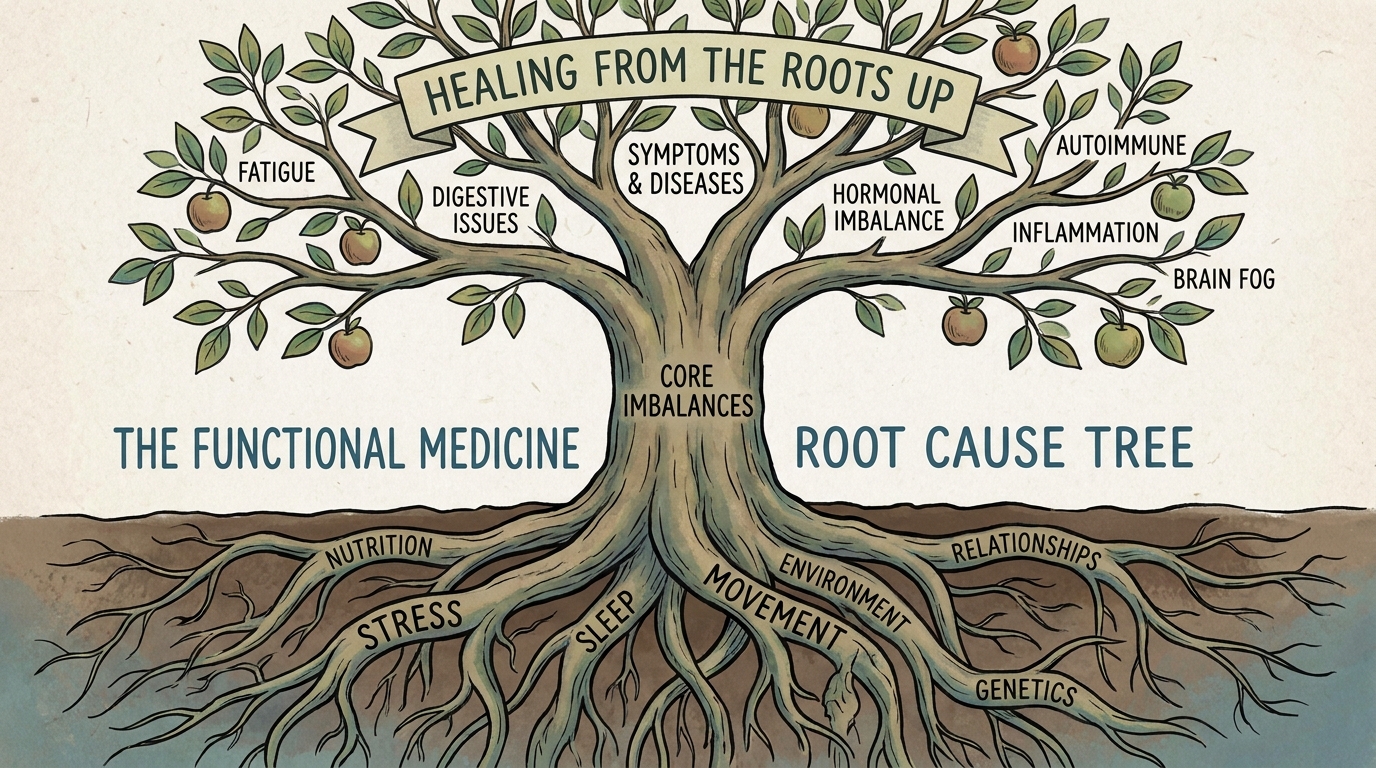
Understanding this interconnected philosophy highlights why practitioners look beyond surface-level symptoms to find physiological imbalances. Clinical consensus indicates that while this approach offers thorough lifestyle interventions, many specific functional tests—such as comprehensive microbiome mapping or organic acids panels—lack verification by large-scale clinical trials. Consequently, this approach relies on specialized tests often requiring out-of-pocket payment because they lack standard insurance coverage. Furthermore, National Institutes of Health (2026) guidelines recommend maintaining standard care protocols alongside any holistic interventions.
Root Causes vs. Symptoms
To navigate these differences safely, patients should utilize The Complex Care Triage Matrix — a framework for determining when a patient needs conventional acute care versus functional root-cause investigation based on symptom timeline. Under this matrix, a severe, sudden symptom requires immediate conventional treatment, whereas a slow-progressing, chronic issue warrants functional investigation.
For instance, treating chronic migraines might involve dietary elimination and stress mapping to find the root trigger, rather than solely using painkillers to suppress the immediate ache. To execute this level of investigation safely, practitioners require specific training beyond traditional medical school.
Practitioner Qualifications
A functional medicine practitioner is typically a conventionally trained Medical Doctor (MD) or Doctor of Osteopathic Medicine (DO) who has pursued additional holistic education. Some nurse practitioners and chiropractors also hold functional medicine certification, such as credentials from the Institute for Functional Medicine. This specialized certification process requires practitioners to pass rigorous clinical examinations and submit detailed case studies demonstrating their competency in systems-biology frameworks.
However, identifying a qualified provider is only the first step. Patients must rigorously verify a functional medicine dr and their specific medical credentials before booking an expensive consultation. While functional providers excel in chronic care lifestyle adjustments and preventative nutrition, conventional specialists remain the standard for primary and acute interventions. As noted by the Mayo Clinic (2026), verifying board certification in a primary conventional specialty ensures your provider has a foundational understanding of standard medical safety and triage protocols.
Internal vs Family Medicine
Internal medicine physicians exclusively apply clinical expertise to diagnose and treat complex adult illnesses, unlike family practitioners who treat all ages (American College of Physicians, 2026). A primary care physician serves as the first point of contact for undiagnosed health concerns and routine medical care. Patients typically choose between an internal medicine doctor or a family medicine practitioner based on their age, the complexity of their health conditions, and their long-term health goals.
What Is the Primary Role?
The primary care physician acts as the central coordinator of your healthcare journey. They manage preventative care, conduct annual physicals, prescribe basic medications, and coordinate referrals to specialists like neurologists or rheumatologists.
| Target Age | Core Focus | Best For |
|---|---|---|
| Adults Only (18+) | Complex adult diseases | Managing multiple chronic illnesses simultaneously |
| All Ages | Broad preventative care | Whole-family treatment and pediatric wellness |
| Adults & Children | Root-cause investigation | Unexplained chronic symptoms lacking clear diagnosis |
According to the Centers for Disease Control and Prevention (2026), routine visits to a primary care provider significantly reduce the likelihood of severe hospitalizations later in life. Within primary care, the most significant division is based on patient age and disease complexity.
Internal Medicine Specialists
If you are wondering what is internal medicine, it is a specialty strictly focused on adult healthcare. These doctors do not treat children; instead, they undergo rigorous training to handle severe, chronic adult illnesses.
When comparing internal medicine vs family medicine, internal medicine is preferred for a patient managing simultaneous diabetes, hypertension, and cardiovascular issues. They possess the clinical expertise required for complex adult illnesses. When medical issues require rapid attention but aren’t life-threatening, patients must look beyond primary care scheduling.
When to Use Urgent Care
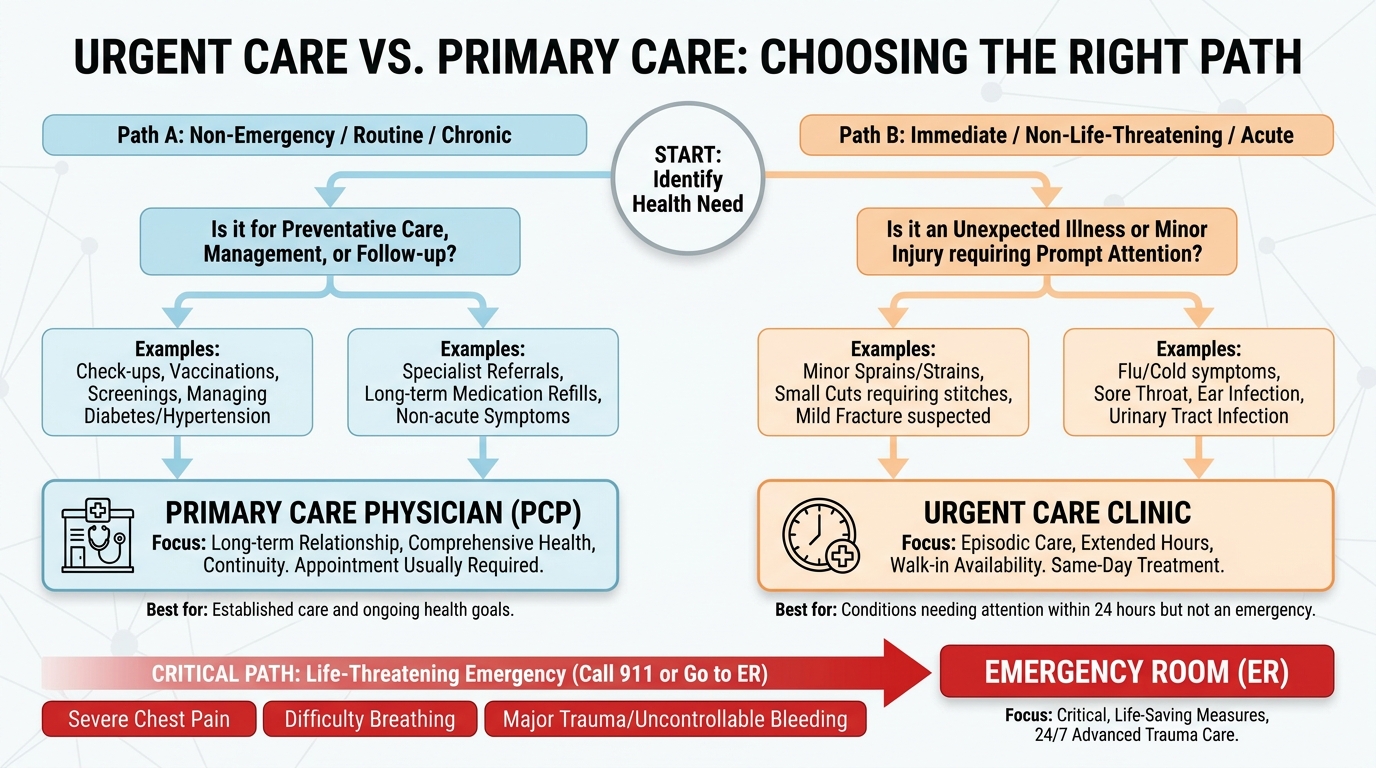
Urgent care facilities treat non-life-threatening conditions requiring immediate attention, whereas emergency rooms handle severe traumas (UNC School of Medicine, 2026). Urgent care centers provide immediate medical treatment for acute, non-life-threatening conditions when primary care physicians are unavailable. They successfully bridge the gap between routine medical checkups and high-acuity emergency medicine, efficiently handling minor health issues at a significantly lower cost than hospital emergency rooms.
What Warrants Urgent Care?
If you are wondering what conditions warrant an urgent care visit, look for acute symptoms that need rapid intervention but do not threaten life or limb. Establishing care with regional networks like Next Level Urgent Care provides patients with accessible diagnostics—such as basic X-rays or rapid strep tests—without the severe wait times of traditional emergency departments. Common issues treated effectively include minor bone fractures, mild localized bacterial infections, and lacerations requiring basic stitches.
Differentiating Emergency Care
It is critical to differentiate community urgent care from emergency medicine. Symptoms like chest pain, severe physical trauma, or stroke indicators strictly require fully equipped emergency rooms. The American Heart Association (2026) strongly warns that delaying emergency care for cardiac symptoms by visiting a walk-in clinic can cause irreversible muscle damage. However, specialized urgent care pediatrics are highly effective for after-hours childhood illnesses such as ear infections, mild fevers, and minor sports injuries. Beyond immediate and primary care, patients navigating chronic illness eventually encounter highly specialized medical fields.
Specialized Medical Fields
Palliative care is a specialized approach focused strictly on relieving severe symptoms and improving quality of life for chronically ill patients (National Institute on Aging, 2026). Specialized medical fields provide targeted diagnostics and care frameworks for complex or chronic conditions. From nuclear medicine imaging used to detect specific cellular changes to alternative payment structures like concierge medicine, navigating these niches is critical for patients requiring advanced interventions beyond standard primary care capabilities.
- Specialized diagnostic fields utilize advanced technology to uncover hidden cellular changes.
- Alternative care structures change how patients pay for and access their physicians.
- Comfort-focused specialties prioritize pain relief over aggressive disease treatment.
Diagnostic & Precision Care
Certain illnesses require highly specific technological diagnostics, such as nuclear medicine. This field uses small amounts of radioactive materials to create precision imaging of the body’s internal functions. A nuclear medicine technologist performs these advanced scans, which are crucial for tracking neurodegenerative disease progression or locating tumors.
According to the World Health Organization (2026), early access to precision diagnostics significantly improves long-term survival rates for complex diseases. While precision diagnostics seek to cure or identify disease, other specialties focus entirely on patient comfort.
What is Palliative Care?
The palliative medicine meaning is often misunderstood by patients navigating severe health crises. It is a specialized medical field focused strictly on providing relief from the severe symptoms and physical stress of a serious illness. The ultimate clinical goal is to improve the overall quality of life for both the patient and their family. Crucially, it can be provided safely alongside curative treatments, which distinguishes it from hospice care—a service occurring exclusively at the end of life. Palliative care teams actively address intense pain, treatment-related fatigue, and severe nausea during intensive chronic illness treatments. Some patients also integrate holistic modalities like Chinese medicine alongside palliative care for additional comfort, though this should always be coordinated with a physician.
Major Medical Institutions
Digital patient portals like MyChart centralize medical records across major academic institutions, streamlining complex care coordination (Office of the National Coordinator for Health IT, 2026). Major medical institutions utilize unified digital platforms to manage complex care plans across multiple specialists. For patients navigating chronic illness, accessing academic medical centers ensures coordination between primary care, functional practitioners, and specialized diagnosticians.
Regional academic centers, such as Penn medicine in the Northeast or Baylor medicine in the South, are vital resources for securing second opinions on rare or complex cases. These institutions house leading experts and clinical trials under one roof. Accessing systems like MyChart Penn medicine allows patients to effortlessly consolidate their test results, imaging, and specialist notes. This centralized data is essential when bringing medical history to a functional medicine review. Furthermore, coordinating through established hospital networks improves patient safety during advanced diagnostic testing (American Medical Association, 2026). Outside of clinical settings, patient health is profoundly influenced by family dynamics and early childhood care environments.
Parental Care Impacts
The systemic lack of parental care and severe neglect are the most common underlying causes for foster care placement in the United States (Child Welfare Information Gateway, 2026). Parental care in humans encompasses the physical, emotional, and social support required for healthy childhood development. When foundational care is absent or compromised by systemic issues, it creates long-term physiological and psychological stress that can manifest as chronic health issues later in life.
Systemic Parental Neglect
Understanding what is lack of parental care is crucial for recognizing the origins of certain chronic stress disorders. Systemic neglect involves the consistent failure to provide basic physical necessities, emotional support, and safe living conditions for a child.
This chronic childhood stress heavily impacts nervous system development. Adults researching how to care for mentally ill parent often discover that chronic childhood stress heavily impacts their own adult nervous system and immune responses. The Centers for Disease Control and Prevention (2026) reports that adverse childhood experiences, including severe neglect, strongly correlate with the development of autoimmune disorders and inflammatory diseases in adulthood. When neglect reaches severe clinical thresholds, state interventions become necessary to protect the child.
Kinship & Foster Care
The most common reason for foster care placement involves severe neglect and substance abuse within the primary home. When the state removes a child from dangerous conditions, alternative care systems attempt to stabilize their environment.
Kinship care is often the first alternative explored, placing the child with extended family members to maintain familiar bonds. These systemic impacts of parental neglect require extensive social and psychological support to overcome. The psychological scars of early family dynamics often follow individuals into adulthood, presenting as distinct psychological complexes.
Psychological Complexes
In clinical psychology, a mother complex involves unresolved unconscious beliefs associated with the maternal figure that influence adult relational behavior (American Psychological Association, 2026). Psychological complexes related to parental figures are clusters of unconscious beliefs that heavily influence an individual’s adult relationships and behavior. Rooted in psychological theory, these complexes stem from unresolved childhood attachments and can significantly impact mental health and physical stress responses.
It is important to define these terms clinically rather than relying on internet pop-psychology. If you ask what is a mommy complex or what is a father complex, clinical psychology defines them as unresolved maternal or paternal attachment issues that manifest in adult behavioral patterns. Exploring mother complex treatment requires professional psychotherapy to unravel these deeply ingrained triggers, rather than seeking purely physical functional medicine solutions.
Additionally, patients navigating complex family trauma frequently ask, do narcissists care about their parents? Clinical consensus indicates that while individuals with severe narcissistic traits may express familial duty, their capacity for genuine empathetic attachment is often impaired. According to the National Institute of Mental Health (2026), these unresolved early relationship traumas can sustain high cortisol levels, resulting in chronic psychological stress that complicates physical healing. Addressing psychological, systemic, and physical health requires navigating the limitations of both conventional and functional medicine safely.
Safety and Clinical Limitations
Pitfalls in Alternative Diagnostics
Patients exploring alternative diagnostics must remain vigilant regarding evidence-based concerns regarding unconventional testing (American Academy of Family Physicians, 2026). First, relying heavily on unproven supplements that lack robust peer-reviewed evidence poses financial and biological risks. The Food and Drug Administration (2026) strictly warns that dietary supplements are not regulated as rigorously as pharmaceutical medications.
Second, patients often accumulate massive out-of-pocket expenses for functional tests that standard insurance will not cover due to insufficient clinical validation. Finally, there is a distinct risk of misinterpreting functional test results without conventional clinical oversight, leading patients to restrict their diets dangerously or abandon necessary standard treatments.
When to Choose Conventional Care
Functional approaches are fundamentally the wrong choice for acute, severe, or rapidly progressing medical emergencies. If a patient is experiencing acute trauma, active severe infections, breathing difficulties, or surgical emergencies, conventional emergency medicine is strictly required.
This is the primary application of The Complex Care Triage Matrix. If a symptom appears suddenly and threatens immediate physical stability, acute conventional care is the only appropriate pathway. Holistic investigation is reserved solely for stable, chronic conditions that have already been evaluated by a conventional medical professional to rule out immediate dangers.
When to Seek Expert Help
Medical Disclaimer: This article is for educational purposes only and does not replace consultation with a qualified medical professional.
Patients must always consult a licensed primary care physician or appropriate specialist before altering treatment plans, stopping prescribed medications, or pursuing new functional medicine protocols. If you experience complex symptoms, your first step should always be a conventional diagnostic workup. Only after life-threatening and acute conditions are ruled out by a board-certified physician should you explore supplementary holistic or root-cause investigations.
Frequently Asked Questions
What is functional medicine?
Functional medicine is a medical approach that identifies and treats the underlying root causes of chronic disease rather than just suppressing symptoms. It operates on a systems-biology model, viewing the human body as a deeply interconnected web. Practitioners utilize extensive laboratory testing to analyze genetics, environment, and lifestyle factors to build a clinical profile. Treatment typically involves personalized nutrition and stress management rather than immediate pharmaceuticals. Results vary, and this approach is best suited for chronic, non-emergency conditions.
What is the difference between internal medicine and family medicine?
The primary difference is that internal medicine focuses exclusively on diagnosing and treating complex adult illnesses, while family medicine treats patients of all ages. Internal medicine doctors undergo specialized hospital training specifically for severe adult chronic diseases, making them ideal for managing simultaneous conditions like diabetes and hypertension. Family practitioners excel in broad, lifetime preventative care for the whole family. Patients should choose a primary care provider based on their age bracket and the severity of their existing medical conditions.
Are functional medicine tests covered by insurance?
Most standard health insurance plans do not fully cover advanced functional medicine laboratory testing. While conventional blood work ordered by a functional MD may be covered, specialized diagnostics like organic acids tests or comprehensive microbiome mapping typically require out-of-pocket payments. This lack of coverage occurs because many functional panels lack the robust clinical trial validation required by major insurers. Patients should request specific diagnostic codes from their practitioner before undergoing testing. Always verify out-of-network benefits with your provider to avoid unexpected financial burdens.
How long does a functional medicine consultation take?
A standard initial consultation with a functional medicine practitioner typically lasts between 60 to 90 minutes. This extended timeframe allows the doctor to conduct a comprehensive review of your entire medical history, lifestyle factors, and environmental exposures. Unlike conventional primary care visits that may last only 15 minutes, the systems-biology approach requires a deeper investigative dialogue. Follow-up appointments are generally shorter, ranging from 30 to 45 minutes, to review complex test results. Patients should arrive with organized medical records to maximize this intensive clinical time.
Conclusion
For patients managing chronic illness, functional medicine delivers a root-cause investigation into systemic health rather than relying on symptom suppression alone. While internal and family medicine provide vital conventional oversight, holistic practitioners analyze the body as an interconnected system. The systemic lack of parental care and early life stressors further complicate adult health, making personalized medicine highly appealing (Child Welfare Information Gateway, 2026). The safest and most effective approach combines specialized functional diagnostics with rigorous, evidence-based conventional oversight.
Implementing The Complex Care Triage Matrix is essential for navigating the modern healthcare landscape safely. By utilizing this framework, patients can prevent dangerous delays in acute care while still allowing for deep, systemic investigation of their chronic issues. This dual-pronged strategy directly addresses the frustration of bouncing blindly between specialists, ensuring that emergency conditions are treated immediately while underlying lifestyle factors are evaluated methodically.
Your next step is to gather your existing medical records, including recent bloodwork and imaging, from your digital patient portal. Schedule a consultation with a certified primary care physician to discuss your diagnostic history and assess your specific suitability for advanced functional testing. Preparing your clinical data in advance ensures that any medical professional you consult can make safe, informed recommendations tailored to your unique biological needs.
**