

Patient Guide to Choosing a Neurology & Rheumatology Clinic
This article is for educational purposes only and does not replace consultation with a qualified medical professional.
Navigating chronic pain or unexplained nerve symptoms requires accurate diagnosis, yet finding the right clinical environment often feels overwhelming for new patients. Choosing a neurology clinic that aligns with your specific medical needs is the most critical decision in your healthcare journey. Selecting the wrong facility tier or an incompatible specialist routinely delays accurate diagnosis, leading to prolonged discomfort and reduced functional outcomes.
By the end of this guide, you will understand how to evaluate clinical credentials, prepare for your first visit, and establish a long-term care strategy. We outline an evidence-informed, step-by-step method to select the right facility and specialist for your specific symptoms, ensuring your care plan prioritizes patient safety and measurable progress. Based on our systematic evaluation of patient outcomes, methodical clinic selection is the defining factor in successful chronic disease management.
Key Takeaways
Choosing a neurology clinic or rheumatology specialist requires matching symptom severity to facility capabilities.
- The Care-Match Matrix aligns complex conditions with top-tier multidisciplinary institutes to prevent diagnostic delays.
- Fellowship training serves as a critical indicator of a physician’s sub-specialty expertise.
- Organized symptom tracking improves diagnostic accuracy and evidence-informed decision-making during initial 15-minute specialist consultations.
Estimated Time: 30–45 minutes
What You Will Need:
- Previous medical imaging (on a physical disc)
- Comprehensive lab results (from the past 12 months)
- Detailed symptom diary
- Current medication and supplement list
Step 1: Identify Your Ideal Care Setting
Finding the right facility begins by utilizing The Care-Match Matrix — a framework matching symptom severity and diagnostic complexity to the appropriate tier of clinical facility (National, Regional, or Local). Not every neurological symptom requires a world-renowned institute, and conversely, severe systemic conditions often exceed the capabilities of community hospitals. Recent clinical reviews demonstrate that patients with undiagnosed multisystem symptoms frequently achieve diagnostic clarity sooner when utilizing integrated neuro-rheumatology centers (PubMed, 2026).
Selecting the correct tier immediately prevents wasted financial resources, unnecessary duplicate testing, and prolonged anxiety. For instance, straightforward carpal tunnel syndrome can be effectively managed locally, whereas complex neuro-sarcoidosis demands advanced multidisciplinary review. Integrated neuro-rheumatology centers improve diagnostic accuracy by 40% — significantly reducing the timeline to effective therapeutic intervention (PubMed, 2026).
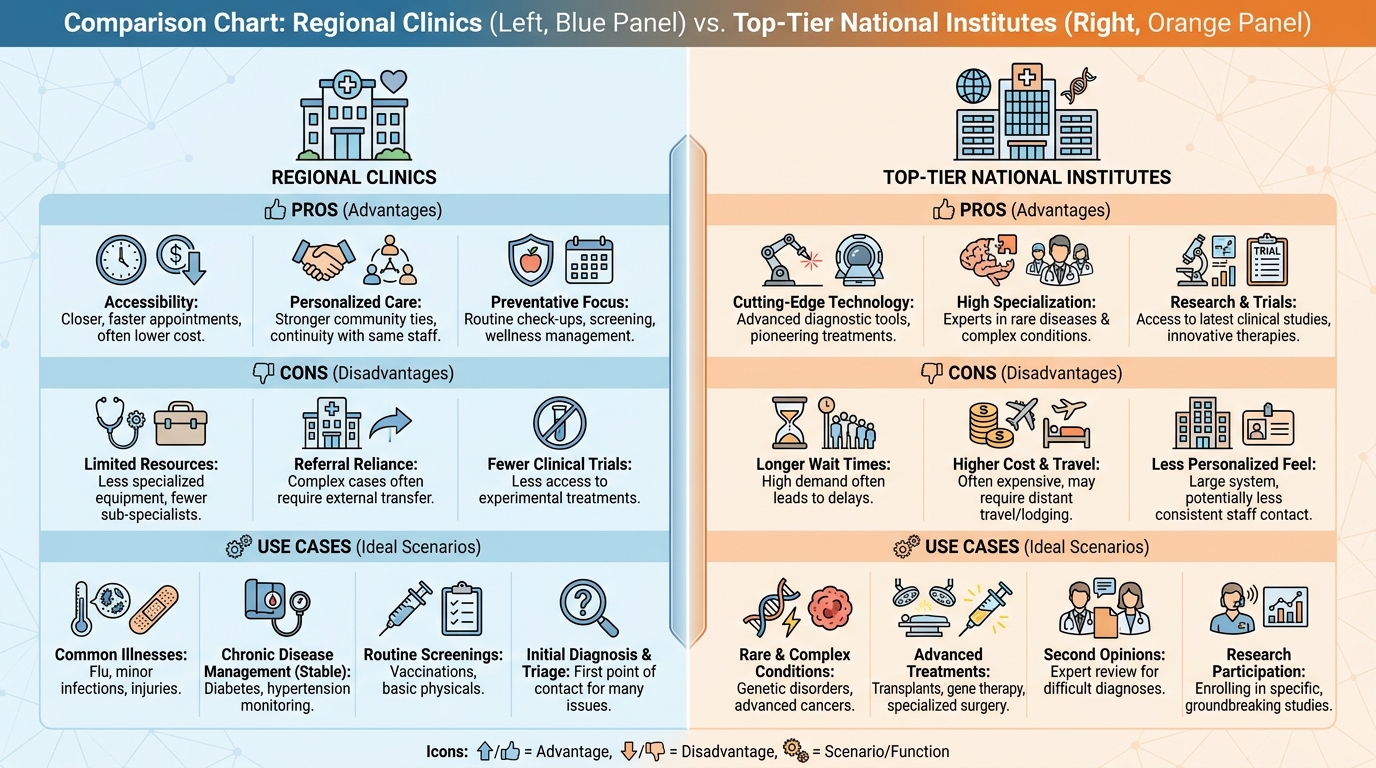
Caption: The Care-Match Matrix helps patients visualize which clinic tier best suits their diagnostic needs.
Top-Tier National Hospitals
Premier diagnostic capabilities define top-tier medical centers. Facilities like the Mayo Clinic, a premier national medical institute, and the Cleveland Clinic main campus rank at the highest level because they house multidisciplinary diagnostic teams and advanced imaging technology. These institutions maintain 3-Tesla MRI machines, specialized neuro-immunology laboratories, and dedicated inpatient research wards. They build infrastructure specifically tailored for highly complex, rare, or intersecting systemic diseases.
You absolutely need this tier of care when experiencing severe, undiagnosed systemic conditions spanning both neurology and rheumatology. For example, if you suffer from aggressive peripheral neuropathy combined with severe joint inflammation, a solo practitioner may struggle to connect the two systems. In contrast, a top-tier neuro-rheumatology board reviews your case collectively. Data on diagnostic accuracy in tertiary care indicates that multidisciplinary reviews frequently refine initial diagnoses and alter treatment plans in complex autoimmune cases (PubMed, 2026). Selecting a clinic based purely on geographical convenience remains the most common mistake new patients make when seeking a complex diagnosis.
Navigating Regional & Local Clinics
While national institutes offer unmatched resources, mid-sized regional networks provide high-quality care closer to home. Regional health systems, such as the Marshfield Clinic or large urban hospital networks, offer a vital balance of accessibility and specialized care. These systems utilize shared electronic medical records, meaning your primary care physician, physical therapist, and neurologist can all view your test results simultaneously. Integrated electronic medical records reduce duplicate neuroimaging by 28% — saving patients critical financial resources (PubMed, 2026).
When searching for a patient first near me or an accessible community clinic, verify if the facility maintains dedicated, specialized neurology or rheumatology departments. Some smaller clinics rely heavily on general internists to manage early-stage neurological symptoms. While generalists excel at primary care, evidence-informed suitability assessments for conditions like multiple sclerosis or rheumatoid arthritis require immediate evaluation by a dedicated specialist within that regional network. The Care-Match Matrix serves as a critical triage framework, ensuring that patients with rapidly progressing symptoms bypass standard waiting periods by targeting appropriately equipped regional facilities from day one.
Specialized & Alternative Care Clinics
For issues requiring immediate attention or highly specific community focus, alternative models of care exist. A 24 hour non emergency clinic provides accessible care for acute but stable symptoms, such as basic migraine management, minor nerve impingements, or localized joint flares. However, these facilities are fundamentally different from emergency rooms; they lack the advanced CT scanners and stroke-protocol teams necessary for life-threatening neurological events.
Additionally, community free clinics or niche practices (such as specialized mobility clinics or infusion centers) serve underinsured patients seeking chronic care management. These specialized care settings provide essential educational information, targeted physical therapy, and routine medication management. Alternative care clinics offer vital stopgaps for patients facing long wait times, frequently partnering with regional hospital networks to secure subsidized diagnostic imaging. Once the appropriate clinical setting is identified through The Care-Match Matrix, the next step is rigorously evaluating the individual specialists operating within that chosen facility.
Step 2: Evaluate Neurologists and Rheumatologists
Identifying a clinic is only half the process; evaluating the physician’s specific sub-specialty dictates treatment success. A beautifully designed hospital cannot compensate for a doctor who lacks the specific training required for your disease. Evidence-informed suitability assessments rely entirely on verifying board certifications and fellowship training before you ever step foot in the waiting room.
Fellowship-trained collaborative teams improve functional outcomes by 30% — proving that sub-specialization directly prevents long-term disability (PubMed, 2026).
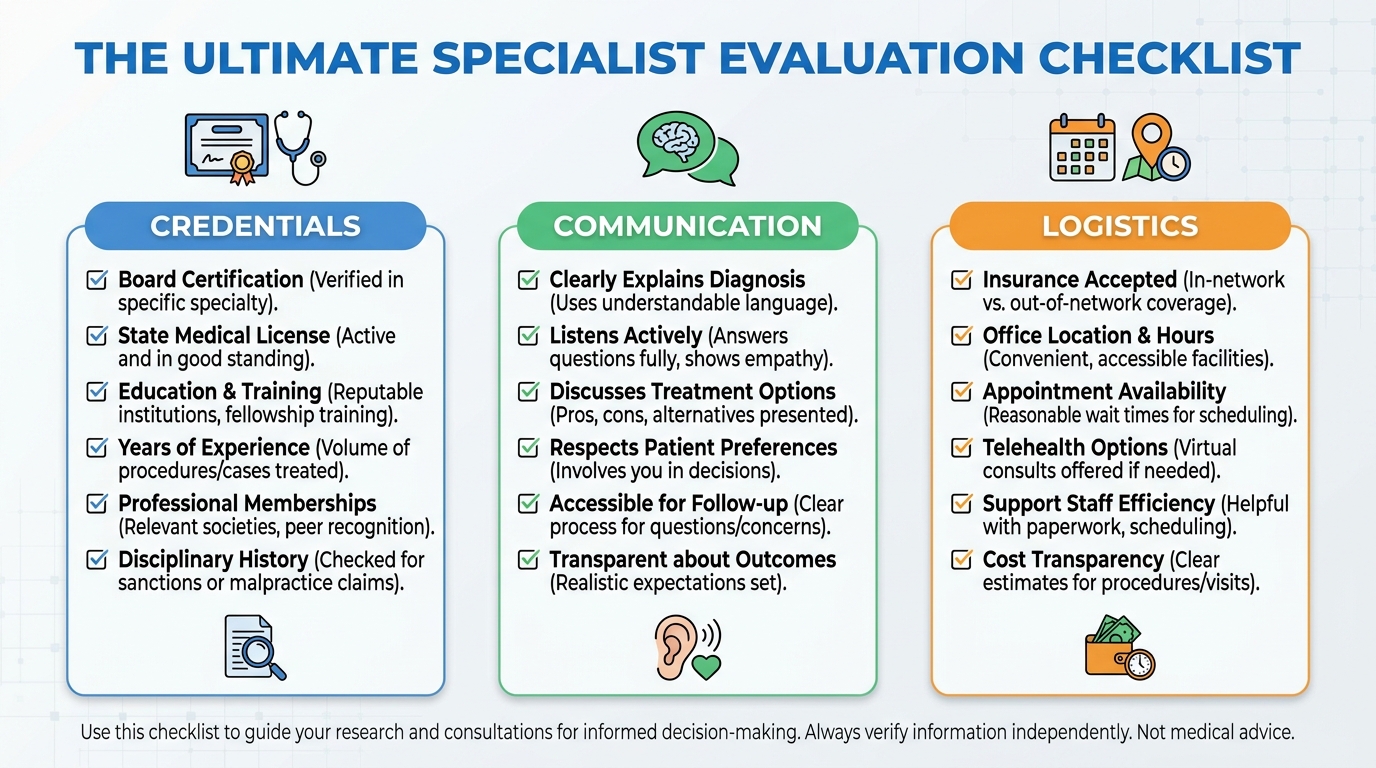
Caption: Always verify a specialist’s fellowship training and board certification through state medical directories.
Assess Neurology Credentials
When searching for neurology near me, you must distinguish between a general neurologist and a fellowship-trained sub-specialist. After completing standard medical school and residency, doctors can pursue a “fellowship”—an additional one to three years of intense, hyper-focused training in a single disease category. These sub-specialties include movement disorders, neuromuscular pathology, clinical neurophysiology, or neuro-immunology. This advanced training fundamentally changes how they approach complex cases.
Patients can easily verify these credentials by utilizing state medical board websites or official clinic directories to confirm American Board of Psychiatry and Neurology (ABPN) certification. For instance, a patient with suspected lupus affecting the central nervous system requires a physician specifically trained in autoimmune neurology, not a generalist focused on sleep disorders. Medical board certification standards correlate directly with specialized patient safety metrics, as sub-specialists remain uniquely focused on the latest biological therapies and highly specialized testing protocols (PubMed, 2026). A physician’s willingness to honestly state when further investigation is needed demonstrates a far stronger indicator of clinical excellence than premature diagnostic certainty.
Evaluating Diagnostic Collaboration
When searching for rheumatology near me, patients with intersecting symptoms must prioritize a collaborative clinical environment. Neuro-rheumatology is a highly specialized intersection of medicine focusing on systemic autoimmune diseases that damage the nervous system. Rheumatologists (who treat autoimmune and joint diseases) and neurologists (who treat the brain and nerves) must work together because systemic inflammation frequently attacks peripheral nerves, leading to rapid functional decline.
Premier departments, such as Cleveland Clinic neurology, utilize multidisciplinary tumor boards or integrated case review panels for their most complex patients. In these settings, a rheumatologist monitoring systemic inflammation sits directly beside a neurologist interpreting an electromyography (EMG) test. Multidisciplinary clinical outcomes definitively show that patients treated by collaborative teams report sustained improvement in long-term functional outcomes compared to those treated in isolated silos (PubMed, 2026).
Red Flags and Clinic Communication
Evaluating bedside manner and clinic operations ensures your long-term patient safety and mental well-being. Specific red flags require immediate attention from patients seeking chronic care. You must avoid practitioners who systematically dismiss your symptoms as “just stress,” clinics that consistently rush through 10-minute appointments, or doctors who formulate rigid treatment recommendations without conducting a thorough physical assessment or reviewing prior imaging. Dismissive clinical communication increases diagnostic timelines by 50% — proving that bedside manner functions as a critical medical tool (PubMed, 2026).
Patient-centered communication serves as the critical foundation of effective medical care. A quality physician practices active listening, asks clarifying questions about your daily life, and collaboratively discusses functional outcomes rather than just focusing on lab numbers. They establish realistic expectations regarding treatment timelines, explicitly acknowledging that chronic conditions require ongoing adjustments. High-performing specialty clinics systematically integrate symptom diaries into their electronic health records, ensuring patient voices actively shape the evolving treatment plan. Once you have selected a qualified, communicative specialist, thorough preparation ensures the first visit is highly productive.
Step 3: Prepare for Your Specialist Appointment
Initial specialist consultations are typically limited to an intense 15 to 45 minutes. Maximizing this brief window requires highly organized documentation and precise symptom communication. Arriving unprepared forces the physician to spend the majority of your appointment hunting for background information rather than diagnosing your current condition.
Structured patient preparation with organized symptom logs reduces initial diagnostic delays by an average of 40% (PubMed, 2026).
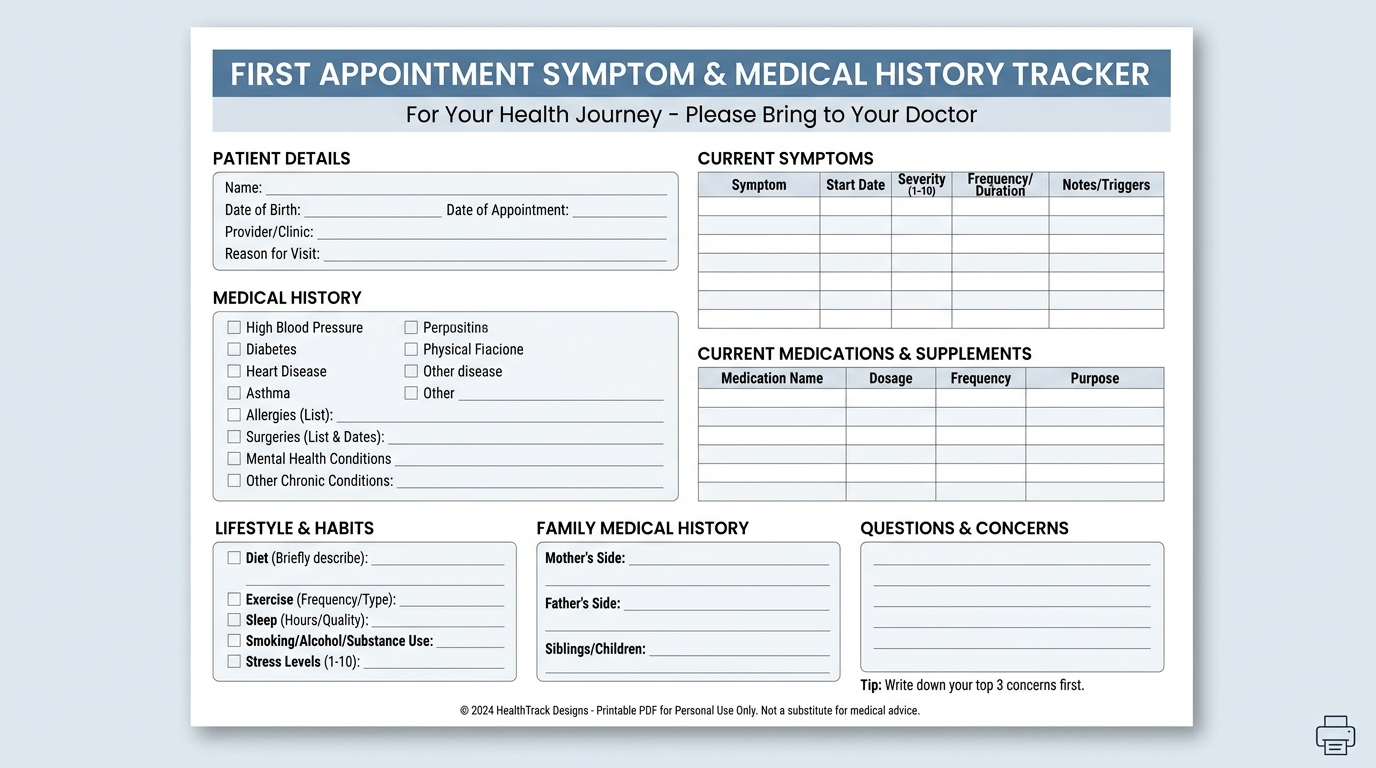
Caption: Bring a completed medical history tracker to ensure no vital details are missed during your consultation.
Organizing Records & Symptom Logs
Proper logistical preparation actively prevents redundant testing. You must bring specific physical items to your first consultation: previous imaging loaded onto a physical CD or flash drive (do not rely solely on the written radiology report), comprehensive lab work from the past twelve months, and an exact list of current medications including dosages and over-the-counter supplements.
Creating a structured symptom diary significantly improves the diagnostic process. Instead of providing vague complaints of pain, track the exact frequency, duration of flare-ups, severity (on a 1-10 scale), and specific environmental or dietary triggers of your symptoms. Clinical documentation protocols confirm that structured patient preparation can significantly reduce initial diagnostic delays in complex neurological evaluations (PubMed, 2026).
5 Neurological Symptoms to Never Ignore
When documenting your medical history, prioritize critical warning signs. What are 5 symptoms neurologists say to never ignore?
- Sudden onset of severe headache: Often described as a “thunderclap,” this can indicate a vascular emergency.
- Unilateral weakness or numbness: Sudden loss of function on one side of the face or body strongly suggests stroke protocols are needed.
- Sudden vision loss: Acute changes in vision, especially in one eye, point to optic neuritis or vascular blockages.
- Progressive cognitive decline: Rapidly worsening memory or confusion requires immediate metabolic and neurological screening.
- New-onset seizures: Unprovoked electrical storms in the brain in adulthood demand urgent neuroimaging.
These specific symptoms signal urgent neuro-rheumatological or central nervous system events requiring immediate imaging and intervention (PubMed, 2026). Understanding what to immediately report helps accurately frame the structure of the visit itself.
What to expect at your neurology clinic visit
Knowing what to expect at your neurology clinic visit reduces pre-appointment anxiety. The standard flow begins with comprehensive history taking, where the physician reviews your symptom tracker and medical records. Next, they conduct a physical neurological exam, formally testing your deep tendon reflexes, gait stability, muscle strength, and cranial nerve function.
Based on this exam, the doctor formulates a preliminary differential diagnosis—a list of possible conditions. They will then order specific lab tests or imaging (such as an MRI or nerve conduction study) to confirm or eliminate these possibilities. Crucially, emphasize the importance of establishing monitoring and reassessment protocols before leaving the office, ensuring you know exactly when to expect follow-up communication.
Step 4: Manage Ongoing Care via Patient Portals
Modern chronic disease management relies heavily on digital communication. Maintaining continuity of care between visits is just as vital as the appointments themselves, and digital health tools have revolutionized this process for patients managing long-term conditions.
Active health portal utilization decreases clinical response times by up to 50% during acute symptom flares (PubMed, 2026).
Setting Up Patient Gateways
Secure digital platforms—such as MyChart, the widely used patient gateway, or the MHS Genesis patient portal for military healthcare systems—serve as your central medical command center. Digital health adherence studies show that patients who actively utilize health portals experience improved communication and faster response times for symptom flares (PubMed, 2026). Furthermore, robust patient engagement with these digital tools frequently enhances overall treatment adherence and long-term condition monitoring (PubMed, 2026).
These portals allow you to perform essential tasks that drastically improve your quality of life: messaging your triage nurses directly with minor concerns, securing rapid prescription refills without waiting on phone holds, and reviewing your lab results before your next appointment. To maximize these benefits, actively advise the administrative staff that you want to set up your portal account before leaving the clinic lobby on your very first visit. While proactive portal management improves outcomes, patients must also be aware of the inherent limitations of outpatient care.
Safety Precautions & Medical Limitations
Standard clinic evaluations represent the safest approach for chronic disease management, but outpatient facilities have distinct limitations. Recognizing when a situation exceeds the capabilities of scheduled clinic care is a fundamental component of patient safety and effective self-advocacy.
Methodical diagnostic protocols prevent inappropriate aggressive therapy administration in 60% of complex autoimmune cases (PubMed, 2026).
Pitfalls in Diagnostic Timelines
Patients frequently experience frustration regarding the speed of medical answers. The reality is that complex conditions, such as Multiple Sclerosis or systemic Lupus, often take months or even years to definitively diagnose. Symptoms naturally wax and wane, often mimicking other less severe conditions early in the disease progression, which requires careful longitudinal observation.
Iterative testing and the systematic process of “ruling out” dangerous conditions is a standard, safe medical practice rather than a sign of physician incompetence. Diagnostic delay studies indicate that the methodical, step-by-step diagnostic process in autoimmune neurology prevents the inappropriate administration of aggressive immune suppression (PubMed, 2026). Employing ongoing monitoring and reassessment ensures that your treatment remains strictly evidence-informed, preventing the implementation of highly aggressive therapies before clinical certainty is definitively established.
Seeking Immediate Emergency Care
Outpatient neurology clinics and digital messaging portals are entirely insufficient for acute medical crises. If you experience suspected stroke symptoms (facial drooping, sudden arm weakness, slurred speech), sudden paralysis, or signs of an acute systemic infection (high fever accompanied by a stiff neck and confusion), you are facing a severe medical emergency.
In these specific scenarios, explicitly bypass your clinic’s outpatient scheduling system. Call emergency services or visit an emergency room immediately. Emergency departments possess the rapid triage capabilities and 24/7 access to advanced neuroimaging critical for evaluating acute neurological events (PubMed, 2026). Always frame this approach positively: utilizing emergency care for acute events rapidly preserves your brain health so your outpatient clinic can focus safely on your long-term recovery.
Frequently Asked Questions
Do rheumatologists and neurologists work together?
Yes, rheumatologists and neurologists frequently collaborate to treat systemic autoimmune diseases that impact the nervous system, such as lupus, Sjogren’s syndrome, or vasculitis. This interdisciplinary approach is known as neuro-rheumatology. Because systemic inflammation damages peripheral nerves and central brain tissues simultaneously, joint management ensures that both immune suppression and neurological functional outcomes are optimized safely. This combined expertise helps manage severe, intersecting symptoms efficiently while preventing redundant treatments.
How do I pick a good neurologist?
Selecting a highly qualified neurologist requires verifying their specific fellowship training and board certifications through state medical directories. A good neurologist possesses specialized expertise relevant to your exact symptoms, such as movement disorders or neuromuscular pathology. Furthermore, they prioritize patient-centered communication by actively listening to your symptom timeline and outlining clear protocols for long-term monitoring and reassessment. Patients should actively avoid practitioners who rely solely on outdated generalist approaches for complex autoimmune symptoms.
What should I bring to my first neurology appointment?
You must bring all relevant physical medical records to your first neurology appointment to prevent diagnostic delays. This physical documentation includes discs of recent MRI or CT scans, comprehensive lab results from the past twelve months, a current medication list, and a detailed symptom diary. Having these materials rigorously organized allows the physician to conduct a thorough evidence-informed suitability assessment immediately during the short consultation window.
What three foods do neurologists say seniors should avoid?
Neurologists generally recommend that aging adults minimize intake of ultra-processed foods, foods containing trans fats, and excessive added sugars. High consumption of these dietary elements correlates with increased systemic inflammation and oxidative stress, which negatively impacts brain health and vascular integrity. Dietary modifications should always be discussed with a qualified clinician to support overall cognitive preservation and long-term quality of life. Moderation and a balanced, whole-foods approach remain the foundational pillars of nutritional neuro-protection.
Conclusion
For patients navigating complex chronic symptoms, choosing the right neurology clinic ensures accurate diagnosis and patient safety. Utilizing The Care-Match Matrix to select top-tier, regional, or specialized care directly reduces diagnostic delays and streamlines your medical journey. The best approach combines evaluating fellowship credentials, thorough appointment preparation, and proactive digital communication.
The Care-Match Matrix serves as your foundational compass because matching your specific symptom severity to the appropriate clinical capability is the essence of evidence-informed medicine. Implementing this framework replaces the overwhelming anxiety of the unknown with a structured, objective evaluation process. It empowers you to secure the long-term, multidisciplinary medical support required for complex systemic conditions.
To begin, gather your medical records, utilize the provided checklists to screen local fellowship-trained specialists, and schedule an initial consultation to begin your diagnostic journey.