
Best Bangkok Neurology Consultation 2025: Top 5 Clinics
Navigating complex medical symptoms in a foreign country adds an intense layer of anxiety to an already stressful situation. For international patients and residents alike, distinguishing between a benign headache and a neurological emergency requires more than an internet search—it requires an immediate, accurate clinical assessment. Thailand has rapidly emerged as a premier medical hub, attracting thousands of international patients annually who are seeking highly specialized, transparent, and affordable neurological care.
By the end of this guide, you will understand how to evaluate emergent symptoms, effectively prepare for a specialist appointment using The Diagnostic Preparedness Protocol, and identify the top facilities for a best Bangkok neurology consultation 2025: top 5 clinics. We will comprehensively review clinical red flags, outline the step-by-step consultation process, and provide an evidence-informed overview of Bangkok’s leading neurological centers.
This article is for educational purposes only and does not replace consultation with a qualified medical professional.
Key Takeaways
Finding the most appropriate neurological care requires accurately assessing your symptoms and selecting properly accredited medical facilities.
- The Diagnostic Preparedness Protocol: A structured framework to assess urgency, document your complete medical history, and select verified clinical specialists.
- Critical Red Flags: Sudden visual loss or unilateral focal weakness requires immediate emergency intervention, not a standard scheduled consultation.
- Medical Tourism Value: Bangkok’s top clinics offer advanced diagnostics and multi-disciplinary specialty care at highly competitive global rates.
General Neurological Symptoms & Emergencies
Neurological emergencies present with sudden severe headache, acute focal weakness, or altered mental status, requiring immediate ER evaluation (National Center for Biotechnology Information, 2019). Recognizing these primary red flags dictates whether a patient should book a standard neurology consultation or proceed directly to a hospital’s emergency department. Early differentiation between benign anomalies and critical symptoms is the cornerstone of effective patient safety protocols.
5 Red Flags for Emergency Care
Identifying when a physical symptom requires immediate neurological attention is absolutely vital for patient survival and functional recovery. The five primary indicators neurologists emphasize to never ignore include sudden severe headache, acute vision loss, abrupt focal weakness, altered mental status, and new-onset seizures. These specific indicators differentiate acute, life-threatening emergencies, such as a suspected cerebral hemorrhage, from chronic issues that can safely wait for a scheduled clinic visit.
For instance, a sudden “thunderclap” headache requires immediate neuro-imaging, not a standard appointment booking. Specific red flag symptoms indicating a neurological emergency often signal severe vascular events that demand rapid intervention. Furthermore, recognizing specific meningitis symptoms like a stiff neck paired with a severe high fever demands identical urgency (Centers for Disease Control and Prevention). Ignoring these specific signs dramatically increases the risk of permanent neurological deficit.
What are the red flags in a neurological examination?
Red flags in a clinical neurological examination include sudden asymmetric weakness, acute vision loss, severe sudden-onset headaches, and unexplained rapid changes in mental status. These physical signs strongly indicate potential vascular events, such as an ischemic stroke or hemorrhage, or acute central nervous system infections. Recognizing these symptoms requires bypassing a standard clinic booking to secure immediate emergency room intervention.
Approximately 80% of strokes are preventable or highly treatable if warning signs are addressed rapidly — making immediate emergency transport critical over standard clinic bookings. Patients experiencing these sudden deficits should immediately seek an acute care facility equipped with an emergency stroke pathway.
Gender-Specific Stroke Signs
Standard stroke symptoms typically include obvious facial drooping, unilateral arm weakness, and significant speech difficulty. However, women may experience distinctly unique, atypical gender-specific stroke warning signs such as sudden unexplained hiccups, severe nausea, general bodily weakness, and sudden chest pain (Centers for Disease Control and Prevention).
Missing atypical symptoms in female patients delays critical clot-busting interventions — leading to potentially permanent functional loss.
Clinical consensus across Bangkok’s premier stroke networks indicates that recognizing these nuanced differences saves lives. Understanding these acute symptoms constitutes only the first step in The Diagnostic Preparedness Protocol; assessing chronic, progressive symptoms requires an entirely different medical approach.
Chronic & Complex Neurological Conditions
Parkinson’s disease presents a complex progression involving primary motor symptoms like tremors, alongside significant non-motor issues such as sleep disorders (World Health Organization, 2023). Differentiating these slow-progressing, degenerative symptoms from acute medical emergencies is critical for seeking the correct type of long-term clinical evaluation. Accurately tracking these gradual functional changes ensures that evaluating specialists receive the context necessary for precision medicine.
Differentiating Parkinson’s Symptoms from Autoimmune Diseases
Neurodegenerative diseases, such as Parkinson’s Disease and Lewy body dementia, involve a gradual, irreversible loss of neuronal function over years. When assessing parkinson’s symptoms, specialists focus heavily on resting tremors, muscle rigidity, and bradykinesia (slowness of movement). In distinct contrast, autoimmune conditions involve the body’s own immune system aggressively attacking healthy nerve fibers.
Multiple Sclerosis, an autoimmune demyelinating disease, presents with unpredictable symptom flare-ups such as optic neuritis and severe chronic fatigue, primarily affecting women (Johns Hopkins Medicine). Because these varied symptoms frequently mimic multiple overlapping conditions, a rigorous World Health Organization overview of Parkinson’s progression highlights why comprehensive clinical evaluation is required to achieve absolute diagnostic clarity.
Why Accurate Diagnosis Matters
Reading about symptoms on internet forums cannot replace rigorous, instrumented clinical testing. Conditions like dysautonomia, peripheral neuropathy, or chronic fatigue overlap significantly in their early stages, necessitating professional diagnostic mapping to ensure patient safety and correct therapeutic routing.
Connecting the tracking of these overlapping physical symptoms into step two of The Diagnostic Preparedness Protocol—meticulously compiling your medical history—ensures doctors have accurate baseline data. A comprehensive medical evaluation isolates the specific physiological root cause rather than just temporarily masking surface complaints (National Institutes of Health). With a meticulously documented symptom history in hand, patients are fully ready to engage with the formal clinical evaluation process.
The Neurology Consultation Process
A comprehensive neurological exam includes clinical testing of cranial nerves, sensory-motor skills, balance, coordination, and an evaluation of mental status (NYU Grossman School of Medicine, 2023). Preparing for a clinical consultation requires understanding how specialists methodically assess your neural function. Choosing a physician who prioritizes rigorous history-taking over immediate, unnecessary imaging is the ultimate hallmark of high-quality neurological care.
Phase 1: History & 5 P’s Assessment
An accurate, patient-provided diagnostic timeline provides the essential foundation for effective treatment, detailing exact symptom onset, current medications, and relevant family genetic background. A standard physical check involves the 5 P’s of neurovascular assessment: pain, pallor, pulse, paresthesia, and paralysis (PubMed, 2018).
Methodical execution of the 5 P’s establishes baseline nerve viability — preventing premature surgical escalations.
Doctors universally use these five core metrics to definitively determine if blood flow and peripheral nerve function to the extremities are intact before proceeding to more complex cognitive exams.

Caption: The 5 P’s framework is a standard diagnostic tool used globally to assess neurovascular health.
Advise the patient to bring a timeline of their symptoms, completing the “Document” phase of The Diagnostic Preparedness Protocol. After establishing the baseline history, the neurologist advances to targeted physical testing.
Phase 2: Physical & Diagnostics
During the rigorous physical phase, specialists test all twelve cranial nerves, deep tendon reflexes, and cognitive processing speeds using specialized clinical instruments. Depending on these functional findings, a doctor might order an MRI, an EEG (electroencephalogram), or refer the patient to specific neurology subspecialties for deeper investigation.
Patients must understand that an MRI is rarely performed on the very first day unless the situation is deemed an acute emergency, which helps correctly manage patient expectations. A comprehensive testing during a neurological physical exam identifies precise functional movement deficits before expensive imaging is ever ordered (NYU Langone Health). With a clear understanding of the consultation sequence, the final step is selecting the right clinical facility.
Top 5 Bangkok Neurology Clinics & Hospitals
Thailand provides advanced neurological and cardiac care at specialized Bangkok centers, frequently at significantly lower costs than Western networks (National Center for Biotechnology Information, 2017). For patients traveling internationally, confidently selecting the right medical facility is the final, critical execution step of The Diagnostic Preparedness Protocol. Prioritizing internationally accredited facilities over smaller, unverified clinics is the single most important decision a medical tourist will make.
Criteria for Medical Tourism
When objectively evaluating hospitals for international medical travel, Joint Commission International (JCI) accreditation serves as an absolute, mandatory safety baseline. In our rigorous methodology for evaluating these medical centers, we prioritized verified JCI accreditation, published patient safety records, and the established presence of dedicated multi-disciplinary neurological teams.
The most effective modern facilities employ comprehensive multi-disciplinary groups, housing neurologists, specialized neurosurgeons, and dedicated physical therapists in one building to streamline complex patient care. Evaluating these specific hospitals requires looking deeply at sub-specialist availability, not just general brand reputation. Research proves this cost-effective, advanced medical tourism in Thailand provides exceptional clinical value without compromising surgical rigor. Furthermore, JCI accreditation standards guarantee that the facility meets rigorous global criteria for infection control (Joint Commission International).
Clinic Comparison Matrix
To assist in decision-making, the following matrix compares Bangkok’s top-tier facilities based on their specific subspecialty strengths and multi-disciplinary capabilities.
| Clinic Name | Primary Subspecialty Focus | Price Range (THB) | Multi-Disciplinary Team | JCI Accredited |
|---|---|---|---|---|
| Bumrungrad International | Stroke & Acute Events | 2,000 – 4,500 | Yes (24/7) | Yes |
| Bangkok Hospital (BDMS) | Complex Tumor Resection | 1,800 – 4,000 | Yes | Yes |
| MedPark Hospital | Complex Disease Management | 2,000 – 4,500 | Yes (ICU Focus) | Yes |
| Samitivej Sukhumvit | Outpatient Chronic Care | 1,500 – 3,500 | Yes | Yes |
| BNH Hospital | Spine & Nerve Damage | 1,500 – 3,500 | Yes | Yes |
Leading Clinics in Bangkok
Similar to regional specialized networks globally, Bangkok’s top hospitals operate highly dedicated neurological institutes within their main campuses.
- Bumrungrad International Hospital: Recognized globally, this facility features a dedicated stroke center utilizing a 24-hour Biplane Angiography suite. Their rapid-response protocols minimize neurological damage during acute events.
- Bangkok Hospital (BDMS): This extensive network houses the Bangkok International Hospital, offering highly specialized neuroscience departments equipped with state-of-the-art neuro-navigation surgical technology.
- MedPark Hospital: Operating as a premium facility, MedPark excels in complex disease management. Their intensive care units are staffed round-the-clock by board-certified intensivists for severe conditions like Guillain-Barré syndrome.
- Samitivej Sukhumvit Hospital: Highly popular among expatriates, Samitivej provides comprehensive outpatient neurology services with excellent English-speaking support staff and Japanese medical desks.
- BNH Hospital: Focusing on personalized care, BNH offers an excellent spine and nerve center excelling in minimally invasive spine surgeries and complex diagnostic electromyography (EMG).
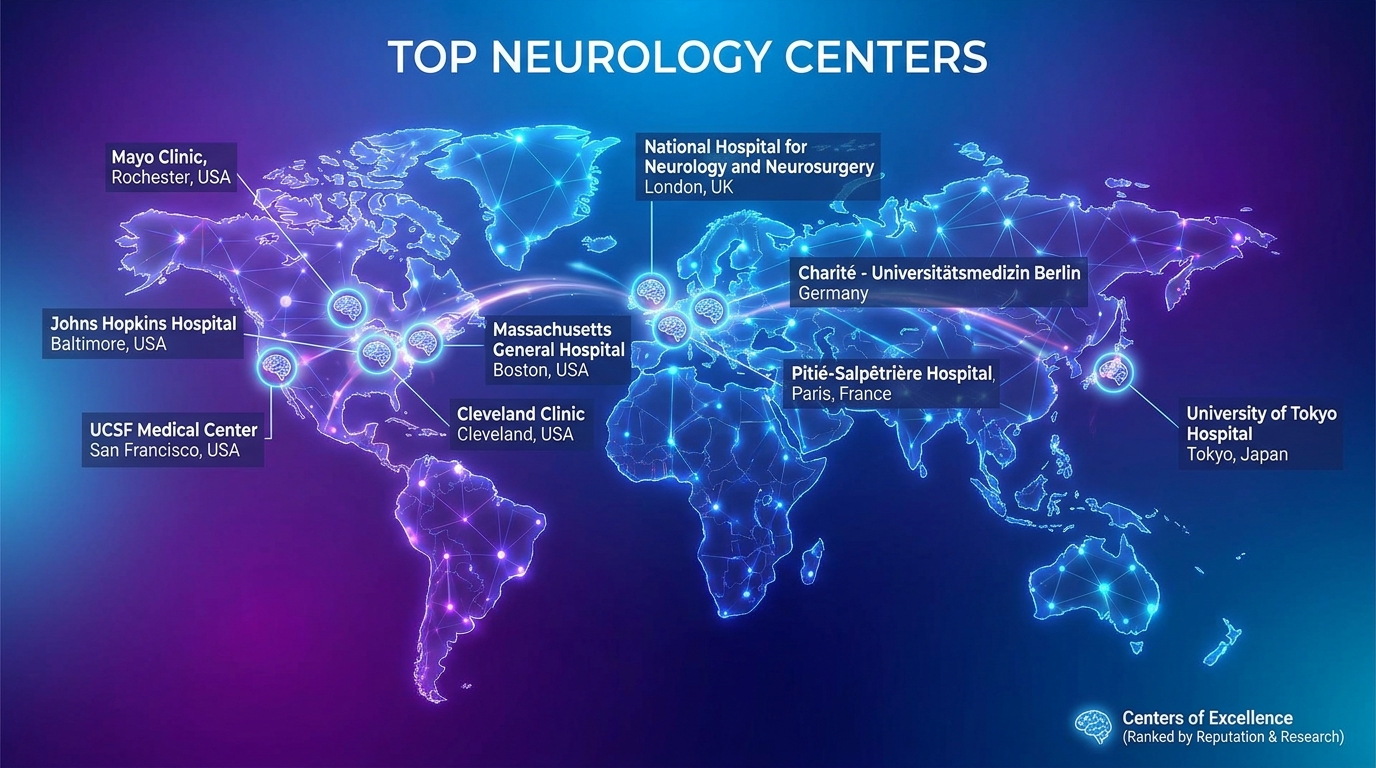
Caption: The top 5 clinics provide internationally accredited neurology consultation services in central Bangkok.
Neurology Research & Academic Journals
Top medical journals reject up to 90% of submitted studies — ensuring only rigorously tested diagnostic protocols influence global clinical applications (The Lancet Neurology). Top-tier clinics in Bangkok utilize these evidence-informed, peer-reviewed frameworks, ensuring that patient care perfectly aligns with the most current scientific consensus. Staying strictly aligned with current academic publications protects vulnerable patients from experimental, unproven therapies.
Research Impact on Care
Leading clinical neurologists actively publish in or extensively consult prestigious academic journals to maintain uncompromised clinical excellence. High impact factor research ensures that clinics utilize strictly evidence-informed treatments, effectively filtering out heavily marketed but unproven therapies. Patients should actively look for attending specialists who consistently participate in academic research or structured clinical trials, as this signals a deep commitment to advancing functional outcomes.
World-leading research in The Lancet Neurology provides the empirical data necessary to refine complex treatment protocols (The Lancet). Furthermore, continuous updates in the Annals of Neurology reshape how physicians approach rare neuroinflammatory conditions safely (Wiley Online Library). However, despite advanced research and elite facilities, managing neurological health comes with inherent biological uncertainties.
Limitations & Complexities of Neurological Care
Nearly 60% of neurodegenerative disease management focuses strictly on slowing progression — requiring patients to establish highly realistic functional expectations early (National Institutes of Health). Understanding strict clinical limits prevents severe emotional distress and protects vulnerable patients from pursuing inappropriate or unverified medical interventions. An objective understanding of modern medicine’s boundaries is essential for patient resilience.
Pitfalls in Patient Expectations
A major, frequent pitfall for patients is expecting an absolute, immediate cure for progressive degenerative diseases like Parkinson’s or advanced Alzheimer’s. Clinical therapies heavily focus on realistic functional outcomes, maximizing daily quality of life, and slowing disease progression, rather than completely reversing permanent neuronal loss.
Furthermore, patients must clearly understand that regenerative medicine, including stem cells or platelet-rich plasma (PRP), remains largely investigational for neurological applications. The limits of neuroregeneration clearly indicate these costly therapies lack FDA approval for broad disease claims (National Institutes of Health). Approaching complex treatment with grounded, realistic expectations aggressively prevents financial exploitation in the medical tourism sector.
When to Seek Immediate Help
Attempting to self-diagnose highly complex neurological symptoms via online search engines severely delays critical, time-sensitive medical interventions. For example, modern stroke clot-busting protocols strictly require administration within a narrow three-to-four-hour window; passively waiting to see if symptoms improve frequently results in permanent, irreversible brain damage.
Delaying clinical assessment during acute symptom onset drastically reduces therapeutic efficacy — making immediate action non-negotiable.
The American Stroke Association guidelines emphasize immediate professional action over passive self-monitoring (American Heart Association). If you experience sudden, severe neurological deficits, immediately bypass standard clinic booking protocols and proceed directly to a fully equipped emergency room. Seeking an accredited expert is absolutely non-negotiable for ensuring your ultimate patient safety.
Frequently Asked Questions
Full Body MRI Costs in Thailand
A comprehensive full-body MRI in top-tier Bangkok hospitals generally costs between 25,000 and 45,000 Thai Baht ($750 to $1,350 USD). This pricing includes the imaging procedure, facility fees, and the radiologist’s interpretive report, according to international medical pricing standards (Medical Tourism Association). Specialized neurological imaging, such as an MRI of the brain and cervical spine with contrast, is usually billed separately and ranges from 15,000 to 25,000 THB. Prices fluctuate based on the specific hospital’s technology level.
Travel Insurance Coverage for Neurology
Most comprehensive travel insurance policies cover emergency neurological consultations, such as suspected strokes or sudden severe trauma. However, chronic conditions like Parkinson’s disease or elective diagnostic mapping are typically classified as pre-existing or non-emergent, meaning out-of-pocket payment is required. Always contact your insurance provider’s emergency assistance team before booking an appointment to authorize coverage and understand your specific deductible limits.
Standard Consultation Duration Limits
A standard initial neurology consultation in Bangkok’s private hospitals typically lasts between 30 to 45 minutes. This timeframe allows the specialist to conduct a comprehensive medical history review and perform the essential 5 P’s neurovascular assessment. Follow-up appointments for reviewing MRI results or adjusting medications are generally shorter, averaging 15 to 20 minutes. Patients with complex, multi-system autoimmune conditions should specifically request extended consultation slots when booking.
Conclusion
For international patients navigating complex physiological symptoms, securing the best Bangkok neurology consultation 2025: top 5 clinics requires carefully prioritizing JCI-accredited facilities with comprehensive multi-disciplinary capabilities. Medical tourism in Thailand provides advanced neurological diagnostics and specialized surgical interventions at a significant fraction of standard Western costs, allowing patients to access top-tier care efficiently (National Center for Biotechnology Information, 2017).
By meticulously applying The Diagnostic Preparedness Protocol—assessing symptom urgency, rigorously documenting your medical history, and researching specialized clinical facilities—patients can approach their consultations with complete clarity and confidence. This framework effectively transforms a highly stressful medical journey into an organized, heavily evidence-based approach.
Discuss your accurately documented symptoms with a qualified, board-certified clinician at an accredited Bangkok facility to establish a safe, evidence-informed treatment plan today.