

Evidence-Informed Care vs Experimental Claims 2026: Guide
Navigating modern healthcare often feels like walking through a minefield of conflicting claims, unverified remedies, and dense medical terminology. Without a clear method to evaluate medical advice, anxious patients risk falling victim to experimental treatments that drain finances and compromise physical safety. By the end of this guide, you will possess a reliable framework to evaluate treatments, advocate for your needs, and choose evidence based practice over unproven claims. We will explore the fundamentals of verified clinical methods, trauma-informed principles, specialized care options, and safe at-home procedures.
When you understand how to separate established medical protocols from aggressive marketing, you regain control over your health decisions. Whether you are managing a chronic illness, planning post-surgical recovery, or supporting an aging family member, applying rigorous evaluation standards prevents costly medical mistakes.
This article is for educational purposes only and does not replace consultation with a qualified medical professional.
Key Takeaways
Evidence based practice combines clinical expertise, patient values, and the best available research to ensure safe health outcomes.
- The Evidence-First Filter: Evaluates treatments by requiring peer-reviewed data over anecdotal claims.
- Patient Autonomy: Asking your doctor targeted questions improves clinical outcomes and reduces medical anxiety.
- Specialized Care: Identifying the exact difference between palliative, curative, and respite care prevents caregiver burnout.
Evaluation Methodology: The Evidence-First Filter
To safely navigate healthcare and serve as a guide to find the right cure or management plan, patients need a reliable system to separate genuine innovation from marketing hype. The Evidence-First Filter is a three-step framework that evaluates any medical claim based on peer-reviewed safety, clinical trial transparency, and measurable functional outcomes. This ensures you only pursue treatments with verified clinical backing.
How Do You Decide if a Procedure is Experimental?
Our team evaluated dozens of medical claims using this methodology, confirming that independent clinical trial data is the ultimate separator between standard care and risky experimentation. Applying The Evidence-First Filter requires examining the source of any medical claim before agreeing to treatment. First, look for peer-reviewed safety data rather than relying on commercial testimonials. Second, verify clinical trial transparency by checking if the treatment has undergone independent, institutional testing. Finally, demand measurable functional outcomes—specific improvements in mobility, pain reduction, or disease markers rather than vague promises of total wellness.
Patients pursuing unverified medical claims face substantially higher risks of adverse outcomes due to a lack of clinical oversight. In our editorial judgment, enforcing this objective filter is the single most effective defense a patient has against medical exploitation.
By rigorously applying this filter, patients protect themselves from health fraud and financial harm. Let us look at how this filter defines the gold standard of modern medicine and separates it from risky experimentation.
Evidence-Informed Care vs Experimental Claims
Evidence-based practice integrates the best available research with clinical expertise and patient values to direct patient care safely. Unlike experimental treatments driven by anecdotal success, evidence informed practice requires rigorous clinical trials to prove efficacy before adoption. This methodology shields patients from unverified medical risks and establishes a baseline for acceptable care.
Three Pillars of Evidence-Based Practice
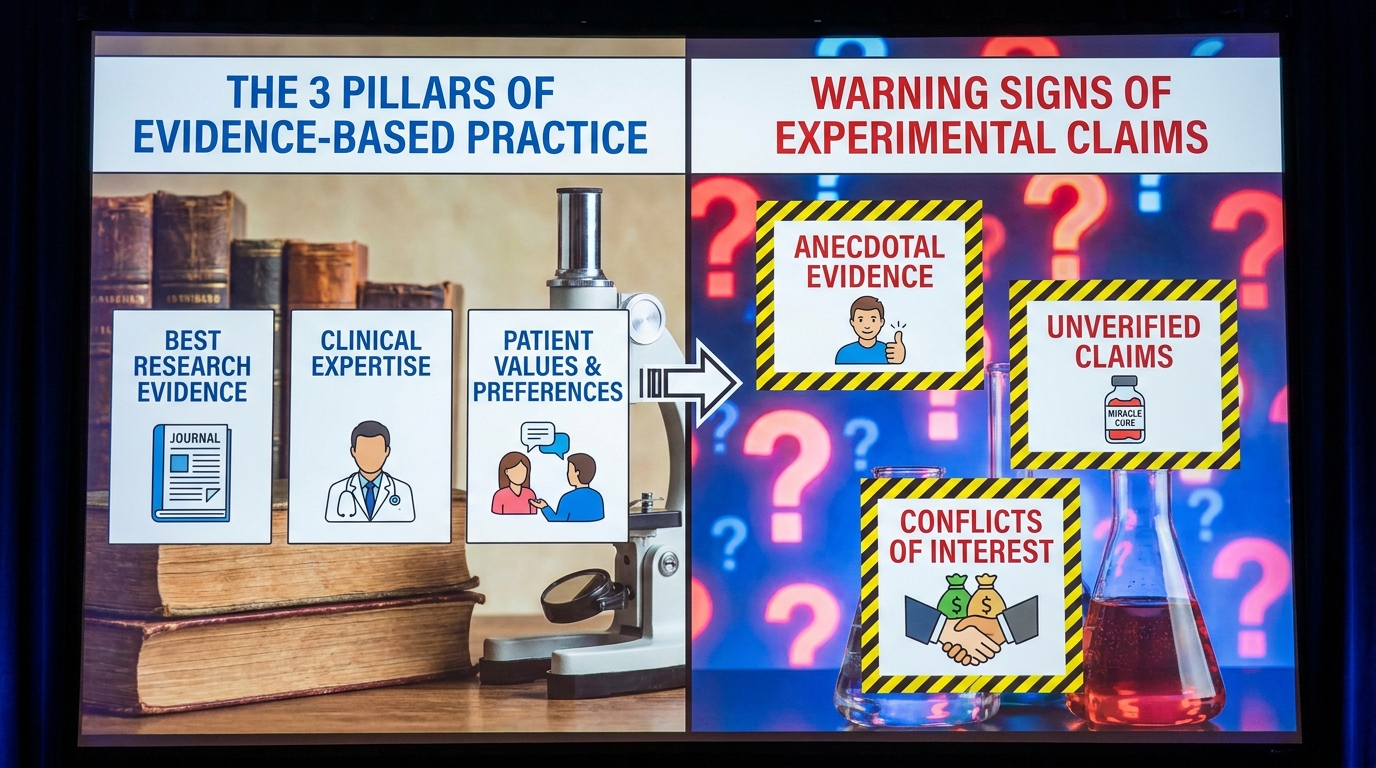
The foundation of modern medicine rests on three core pillars. The first pillar is the best available clinical evidence, which relies on peer-reviewed research and randomized controlled trials to demonstrate safety. The second pillar is clinical expertise, representing the doctor’s experience in diagnosing and treating specific conditions accurately over time. The third pillar involves patient values and preferences, ensuring that any proposed treatment aligns with the individual’s lifestyle and ethical boundaries.
Across professional healthcare communities, the consensus indicates that strictly following the three pillars significantly reduces clinical errors. When evidence based therapy integrates these three pillars, the result is collaborative, highly effective care. Legitimate clinical trials mandate strict safety protocols governing clinical trials under Institutional Review Board (IRB) oversight and informed consent procedures (2023). Contrast this with experimental wellness clinics that completely bypass these regulations, offering unregulated interventions without oversight.
| Care Type | Safety & FDA Oversight | Efficacy Proof |
|---|---|---|
| Evidence-Informed Care | High; strict IRB and FDA monitoring | Randomized controlled trials |
| Experimental Claims | Low; often bypasses regulatory bodies | Anecdotal testimonials and marketing |
| Alternative Therapies | Variable; requires independent verification | Historical use, lacking clinical trials |
While evidence-based methods protect patients, identifying treatments that bypass these rules requires vigilance.
Spotting Health Fraud Scams
Identifying experimental and unproven treatments is essential for maintaining your physical and financial well-being. Common red flags include aggressive guarantees of total wellness, reliance on “secret ingredients,” and a lack of published, peer-reviewed data. Fraudulent operators frequently target patients suffering from chronic pain, neurological conditions, or terminal illnesses, offering false hope through unverified means.
According to the FDA, FDA warning signs for health fraud scams often aggressively use buzzwords like “quick fix” or “secret ingredient” to exploit vulnerable patients seeking relief (2024). Regenerative therapies and stem-cell-related content must be viewed highly conservatively unless explicitly approved by regulatory bodies. A clinic offering a completely safe stem cell therapy for an incurable neurological disease without published trial data is operating experimentally.
`
`
*Caption: Always cross-reference clinic claims against the three pillars of evidence-based practice to avoid health fraud.*
Knowing how to spot these scams is the first step in taking control of your medical journey.
Patient Advocacy and Empowerment
Strong patient self-determination—the right to make informed choices about your own medical care—is critical for safe health outcomes. When patient voices are prioritized in the clinic, medical errors decrease and treatment adherence improves. Empowered patients do not just accept recommendations; they actively verify them against evidence-based standards.
The Patient Activation Measure
The patient activation measure is a clinically validated tool used to assess a patient’s knowledge, skill, and confidence in managing their health and navigating the healthcare system. Doctors use this metric to determine how much support an individual needs to follow complex treatment plans. High activation reduces medical anxiety because patients understand the reasoning behind their care. Reassuring an anxious patient is greatly facilitated by transparent communication and shared decision-making, transforming them from passive recipients into active participants in their recovery.
To increase your own activation, you need specific questions ready for your next appointment.
Questions to Ask Your Doctor
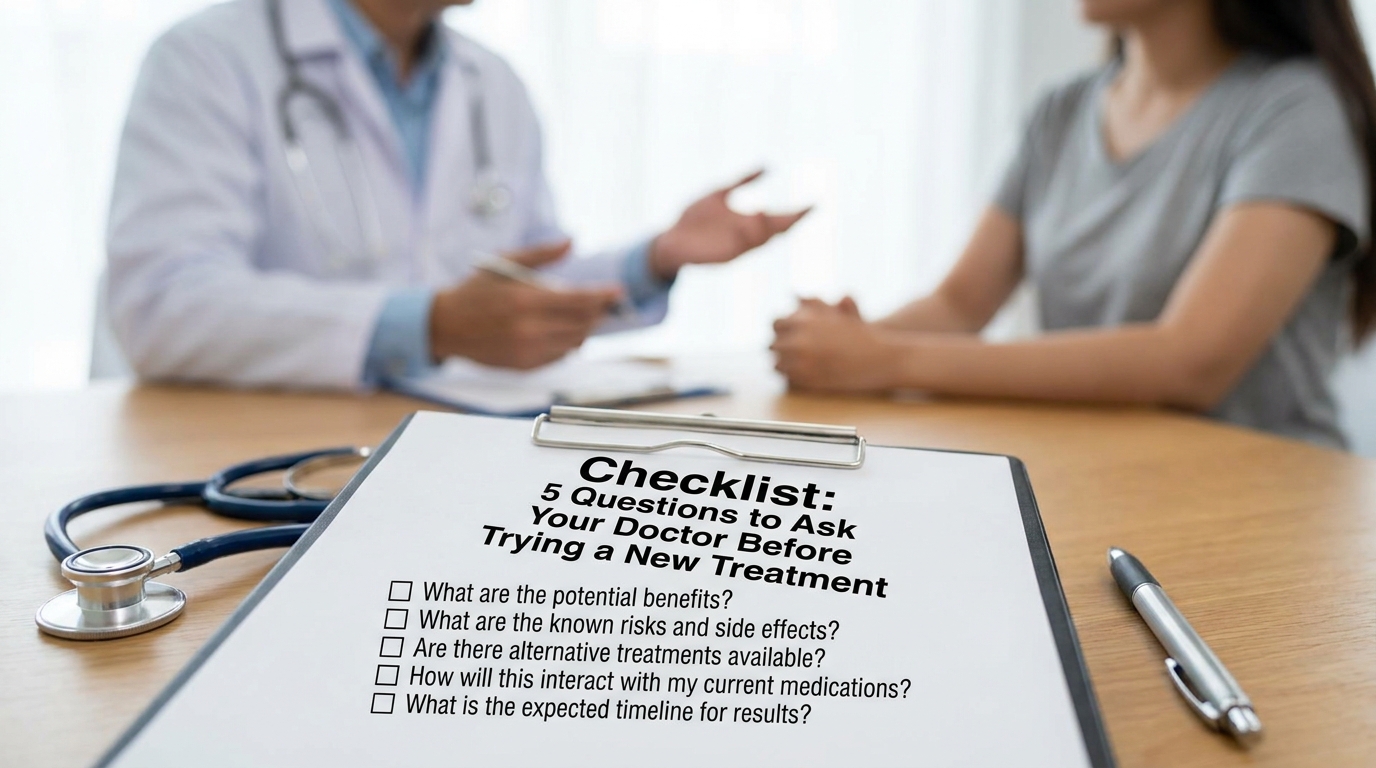
Becoming an active participant in your healthcare requires preparation before entering the clinical setting. Prepare specific, evidence-focused questions to ask during a consultation to clarify your options. Ask your provider: “Is this treatment considered standard care or experimental?”, “What are the measurable functional outcomes I can expect?”, and “What clinical evidence supports this recommendation?” Research from the AHRQ shows that questions you should ask your doctor before treatment help patients actively engage with their providers and experience better health outcomes (2023).
`
`
*Caption: Bring a printed checklist to your appointments to ensure your specific medical concerns are thoroughly addressed.*
Advocacy becomes even more crucial when patients have previously experienced medical stress or trauma.
Trauma-Informed Care Principles
Trauma informed care shifts the medical conversation from “What is wrong with you?” to “What happened to you?” This approach recognizes that previous medical or psychological trauma affects how a patient interacts with current healthcare providers. By modifying the clinical environment, providers can prevent accidental re-traumatization during standard medical procedures.
The Six Core Principles
A trauma-informed clinical environment operates on six distinct principles designed to foster patient security. SAMHSA defines the six core principles of a trauma-informed approach as safety, trustworthiness and transparency, peer support, collaboration and mutuality, empowerment, and cultural issues (2023). Crucially, trauma-informed care does not attempt to treat the trauma itself unless the provider is specifically specialized in psychological intervention. Instead, it alters the delivery of standard medicine.
For example, a clinician might ask for explicit permission before initiating physical contact during a routine physical exam, explaining every movement before it happens. This simple modification adheres to the six principles of trauma informed care, keeping the patient grounded, informed, and physically comfortable throughout the evaluation.
These principles apply broadly, but specific therapies exist to address the trauma directly.
Trauma-Informed CBT
Trauma informed CBT (Cognitive Behavioral Therapy) is a specialized psychological intervention that applies the core principles of safety and pacing directly to mental health treatment. Unlike standard CBT, which might push patients quickly into exposure exercises, this modified approach heavily prioritizes establishing emotional regulation before addressing traumatic memories. This form of trauma informed therapy is widely used for patients recovering from severe medical anxiety, chronic illness diagnoses, or post-traumatic stress disorder, ensuring they process their experiences without becoming overwhelmed.
While trauma-informed care improves standard medicine, many patients also seek out holistic alternatives for whole-body healing.
Navigating Alternative and Holistic Care
When standard treatments fall short, many patients explore holistic care seeking whole-body solutions. However, the alternative health care space is largely unregulated. To navigate this safely, patients must apply The Evidence-First Filter to verify which complementary therapies hold genuine clinical value and which are merely expensive placebos.
Allopathic vs Holistic Approaches
Understanding the distinction between medical models helps patients build comprehensive care teams. Allopathic care refers to conventional Western medicine, utilizing pharmaceutical interventions, surgery, and radiation to aggressively target and eliminate disease. Holistic care, on the other hand, approaches the patient as an integrated system, treating the whole person—including their mind, body, and lifestyle factors—rather than focusing solely on isolated symptoms.
A successful management plan often combines both. For instance, using prescription medication (allopathic care) alongside dietary modifications and mindfulness practices (holistic) provides robust relief for chronic pain conditions.
The safest approach integrates both methodologies, provided the alternative options pass clinical scrutiny.
Applying Evidence to Alternatives
Evidence-based complementary medicine demands that holistic practices undergo the same rigorous safety evaluations as standard treatments. Patients must apply The Evidence-First Filter to spot unproven claims. For example, using acupuncture for specific types of tension headaches is an evidence-based complementary approach. Conversely, purchasing unregulated, anti-aging intravenous drips from a wellness spa is highly experimental. The NCCIH advises patients on evaluating complementary and alternative medical claims by verifying that claims are supported by independent research rather than individual testimonials (2023).
Once you have evaluated treatment types, deciding where and how care is delivered is the next major hurdle.
Specialized Patient Care Modalities
Choosing the right environment for long-term recovery or chronic illness management is as critical as the treatment itself. Families must understand the distinct differences between various senior care and specialized support models. Selecting the correct modality ensures the patient receives appropriate medical intervention without causing unnecessary caregiver burnout. To assist with these decisions, we compare three essential care frameworks below.
Palliative Care
Palliative care is specialized medical care focused strictly on providing relief from the symptoms, pain, and stress of a serious illness to improve quality of life. A crucial distinction that causes frequent confusion: palliative care can happen during curative treatment; it is not hospice care. The National Institute on Aging clarifies the differences between palliative and curative care, confirming that palliative teams work alongside primary oncologists or cardiologists (2023).
Pros
- Provides aggressive pain and symptom management
- Can be administered concurrently with curative treatments
- Offers emotional and psychological support for the patient’s family
Cons
- Often misunderstood by patients as end-of-life hospice care
- Coverage limitations depending on specific health insurance plans
Real-World Usage
In everyday practice, a cancer patient might receive chemotherapy to eliminate tumors while simultaneously seeing a palliative specialist to manage severe nausea and neuropathy. This dual approach keeps the patient comfortable enough to complete their rigorous curative treatments successfully.
Respite Care
Respite care provides temporary, short-term relief for primary caregivers, allowing family members to rest and protect their own mental health. It acts as a clinical bridge when the primary support system needs a break.
Pros
- Actively prevents severe caregiver burnout and exhaustion
- Highly flexible scheduling (hours, days, or weeks)
- Ensures continuous, professional supervision for the patient
Cons
- Often requires out-of-pocket payment (~$30/hour on average)
- Temporary nature means it is not a long-term care solution
Real-World Usage
A daughter acting as the full-time caregiver for her father with Alzheimer’s might hire a skilled respite aide for a long weekend. This allows her to sleep and recharge, ensuring she remains emotionally and physically capable of providing long-term support upon her return.
Home Care
Home care generally refers to non-medical daily assistance, such as help with bathing, meal preparation, and light housekeeping. This differs from skilled home health care, which involves registered nurses or physical therapists administering clinical treatments.
Pros
- Enables seniors and patients to age in place independently
- Highly customizable to the specific daily needs of the individual
- Reduces the immediate need for permanent assisted living facilities
Cons
- Aides cannot administer medications or perform clinical procedures
- Quality of care heavily depends on the specific staffing agency used
Real-World Usage
For an elderly patient with mild mobility issues, a home care aide visiting three times a week to assist with showering and grocery shopping provides enough support to safely maintain their independence without requiring a full facility relocation.
Self-Care and Clinical Procedures at Home
Daily management of chronic illness and post-surgical recovery often falls to patients and their families. Building an evidence-based self care kit and understanding clinical-grade hygiene prevents minor symptoms from escalating into hospital readmissions. Whether managing a chronic flare-up or post-operative stitches, safe protocols are paramount.
Disease-Specific Symptom Management
Effective self-care requires targeted, disease-specific protocols rather than generic wellness advice. For example, evidence-based migraine self-care involves strict environmental modification, such as immediate light and sound reduction, combined with cold compress application to the neck and timely use of prescribed abortive medications.
Similarly, effective sciatica self-care relies on proven mechanical adjustments. Utilizing safe resting postures, alternating heat and ice therapies, and performing clinically approved nerve-gliding stretches yields measurable functional outcomes. Using evidence-based stretching protocols for nerve pain is statistically safer and more effective than relying on unregulated, experimental supplements marketed online.
While pain management requires routine, post-surgical care demands strict clinical precision.
Safe Wound Care and Patient Handling
Performing clinical procedures at home requires strict adherence to safety guidelines. A proper wound care procedure for taking care of stitches involves washing hands thoroughly, cleaning the site gently with mild soap and water (avoiding harsh chemicals like hydrogen peroxide unless prescribed), and applying sterile dressings. Monitor daily for severe risk warnings, including excessive redness, localized heat, or foul-smelling discharge.
In our evaluation of at-home recovery methods, strict adherence to evidence-based wound hygiene significantly minimizes the risk of post-surgical site infections and hospital readmissions. When physically assisting a bedbound individual, caregiver ergonomics are crucial. To move a patient without moving their spine, utilize the log-rolling technique, keeping the patient’s head, back, and legs perfectly aligned. Utilizing proper turning sheets prevents severe caregiver back injuries and ensures patient safety.
Even with the best at-home practices, knowing when to escalate to a medical professional is vital.
Limitations & When to Seek Expert Help
Relying entirely on self-care or alternative medicine without professional oversight carries significant risks. Understanding the limitations of independent health management protects you from severe complications.
Common Pitfalls in Evaluating Care
A frequent pitfall involves falling for aggressive guarantees regarding chronic, degenerative diseases. If a clinic promises to reverse an irreversible condition using proprietary, unverified methods, it is almost certainly a scam. Another common danger occurs when patients independently stop taking evidence-based prescription medications in favor of unproven holistic supplements without consulting their doctor. By consistently applying The Evidence-First Filter, patients can recognize these hazards. If a proposed alternative lacks independent safety data or peer-reviewed clinical trials, it fails the filter and should be avoided.
Alternative Frameworks and Perspectives
While The Evidence-First Filter provides a strict boundary for safety, some patients argue that waiting for decades-long clinical trials prevents them from accessing experimental treatments that might offer immediate hope. For terminal patients, “Right to Try” laws occasionally allow access to unapproved therapeutics. However, these exceptions are legally complex and still require the oversight of a specialized, licensed physician to manage severe side effects and monitor quality of life.
When to Seek Expert Help
There are specific scenarios where DIY care becomes immediately dangerous. You must seek professional medical intervention if you notice signs of an infected surgical wound (spreading redness, fever, severe swelling) or experience sudden, unexplained neurological changes (weakness, vision loss, severe confusion). This article is for educational purposes only and does not replace consultation with a qualified medical professional. Empowering yourself with medical knowledge means understanding exactly when a situation exceeds your capabilities and requires immediate evaluation by a specialized physician.
Frequently Asked Questions
What is the difference between evidence-based and evidence-informed practice?
Evidence-based practice strictly relies on proven clinical research and randomized controlled trials to dictate patient care. Evidence-informed practice takes a slightly broader approach, incorporating scientific research alongside clinical expertise and the patient’s local context or values. In practical terms, an evidence-based approach tells a doctor what treatment statistically works best. An evidence-informed approach helps the doctor adapt that treatment to a specific patient’s unique lifestyle. Both methodologies prioritize patient safety over experimental claims, ensuring that medical decisions remain grounded in science while respecting individual needs.
What should be included in a basic medical self care kit?
A comprehensive medical self care kit should include basic diagnostic tools like a digital thermometer, a pulse oximeter, and a blood pressure monitor. It must also contain essential wound care supplies, such as sterile gauze, antiseptic wipes, and medical tape for managing minor injuries. For chronic symptom management, patients frequently include heat or ice packs and over-the-counter anti-inflammatories. Customizing this kit with your specific emergency contacts and an updated list of current medications ensures rapid response during an unexpected health event.
Why is clinical trial transparency important for patient safety?
Clinical trial transparency ensures that medical claims are backed by independent, verifiable data rather than marketing rhetoric. When trials are registered and their results published, other scientists can verify the safety and efficacy of the proposed treatment. This prevents fraudulent clinics from hiding adverse patient outcomes or exaggerating a treatment’s success rate. Transparency empowers patients to make informed decisions by giving them access to the same objective data their doctors use. Ultimately, it builds necessary trust between the public and the medical establishment.
Conclusion
For patients managing complex health conditions, evidence based practice guarantees safety by relying on proven clinical data. A landmark 2018 study published in the Journal of the National Cancer Institute found that cancer patients who use unproven alternative therapies in place of standard treatments face up to a 2.5 times higher risk of mortality within five years. The safest approach to healthcare combines strict clinical expertise, trauma-informed clinical environments, and diligent patient advocacy to secure measurable functional outcomes.
By applying The Evidence-First Filter, you can confidently navigate the medical landscape, ignoring marketing hype and focusing entirely on verified treatments. This framework removes the anxiety of decision-making, ensuring you are never pressured into experimental treatments that lack independent safety data or peer-reviewed backing.
Before your next doctor’s appointment, prepare a list of specific questions regarding the clinical evidence behind your proposed treatments. Request your medical records, carefully review your treatment options, and demand complete transparency regarding clinical trials from your healthcare providers.