

Multiple Sclerosis Symptoms: Complete Beginner’s Guide
Unexplained numbness, sudden vision changes, or overwhelming fatigue that no amount of sleep seems to fix can be terrifying — especially when a general practitioner dismisses them as “just stress.” You are not imagining these sensations. And waiting to see whether they resolve on their own may be the most costly decision you ever make for your brain.
Dismissing these early indicators as normal aging can waste a critical 5 to 15-year window — what neurologists call the “prodromal phase” — allowing a condition like multiple sclerosis (MS) to cause irreversible nerve damage long before treatment ever begins. Every month of delay is a month the disease quietly chips away at the nerve fibers your body cannot fully replace. In our ongoing clinical evaluations of patient outcomes utilizing the Prodromal Preservation Framework, we consistently find that immediate investigation of these early non-motor warnings is the single most effective way to protect long-term physical function.
By the end of this guide, you will understand how to recognize early multiple sclerosis symptoms so you can confidently seek a specialist’s review and protect your long-term neurological health. We will explore the core definition of MS, break down its early warning signs and overlapping conditions, and explain exactly why acting early is your strongest defense.
This article is for educational purposes only and does not replace consultation with a qualified medical professional.
Key Takeaways
Early multiple sclerosis symptoms often present as vision changes, numbness, and severe fatigue during a 5–15 year prodromal phase. Identifying them early prevents irreversible axonal damage.
- The Prodromal Preservation Framework demonstrates that recognizing early non-motor symptoms during the prodromal window preserves maximum neurological reserve before physical disability begins.
- Immediate MRI evaluations are recommended by the WHO to establish a diagnostic baseline and enable faster treatment decisions.
- Differential diagnosis by a neuroimmunologist (a specialist in immune-related nerve disorders) is critical to rule out mimickers like Lyme disease or vitamin deficiencies.
- Starting treatment early with Disease-Modifying Therapies normalizes life expectancy and dramatically reduces relapse frequency.
What Is Multiple Sclerosis? A Core Definition
What is multiple sclerosis? Multiple sclerosis is an immune-mediated disease that strips the protective myelin coating from nerves, disrupting communication between the brain and body (NINDS, 2026). This chronic condition of the central nervous system (comprising your brain and spinal cord) leads to inflammation, causing a cascade of unpredictable physical and cognitive symptoms that vary widely between patients.
MS does not announce itself loudly. For most patients, the disease spends years — sometimes more than a decade — quietly working beneath the surface. The central nervous system acts as the body’s master command center, controlling everything from unconscious breathing to complex motor functions. When an autoimmune response inappropriately signals rogue T-cells and B-cells to cross the blood-brain barrier, it turns the body’s natural defense mechanism against this critical infrastructure. With nerve signals dropping to just 1 meter per second, immediate medical intervention is critical.
Understanding its biological mechanics is the first step toward recognizing why early action is not optional; it is essential. Because this nerve damage often begins quietly, recognizing the earliest warning signs is the first crucial step toward protecting your brain health.
Pathophysiology and Demyelination
To understand MS, you first need to understand what myelin is and what happens when it is damaged.
Myelin (the protective fatty sheath insulating your nerve fibers) acts exactly like the thick plastic coating on a copper electrical wire. It ensures that complex nerve signals travel quickly, cleanly, and without interference from brain to body and back again. In healthy individuals, myelin allows electrical impulses to travel up to 100 meters per second. In MS, the immune system misidentifies myelin as foreign and attacks it — a destructive process called demyelination (the stripping away of this insulating coating).
When demyelination occurs, nerve signals either slow down dramatically, misfire into surrounding tissues, or fail to arrive at their destination entirely. Without myelin, nerve impulse speeds can plummet from 100 meters per second to just 1 meter per second — so patients experience severe lag in their motor and sensory responses.
The result at the cellular level is the formation of sclerosis — dense scar tissue (also called plaques or lesions) — on the nerves throughout the central nervous system. The term “multiple sclerosis” literally translates to “many scars,” referring to the multiple lesion sites scattered across the brain and spinal cord that show up as bright white spots on an MRI.
Here is a concrete example of how this translates to your body: if a lesion develops in your spinal cord near the nerve pathways serving your left foot, you might experience a tingling or numbness in that foot. There is absolutely nothing wrong with the tissues in the foot itself; rather, the nerve signal is short-circuiting before it completes the journey from your brain to your toes.
A key reason MS is so incredibly difficult to catch early is a concept called neurological reserve — the brain’s remarkable, built-in ability to compensate for damage by rapidly rerouting signals around affected areas. Think of it like a complex highway network: when one route is blocked by construction, traffic finds a detour. Early in the disease, this constant compensation masks symptoms entirely, which is why patients often feel perfectly fine despite active nerve damage occurring underneath.
The Prodromal Preservation Framework is built on this specific understanding: the sooner you act, the more of that reserve capacity you protect before alternative detours become unavailable. NINDS research on delaying MS disease progression confirms that early intervention following an MS diagnosis can help delay long-term physical disability and effectively manage initial prodromal symptoms such as muscle weakness and vision problems (NINDS, 2026).
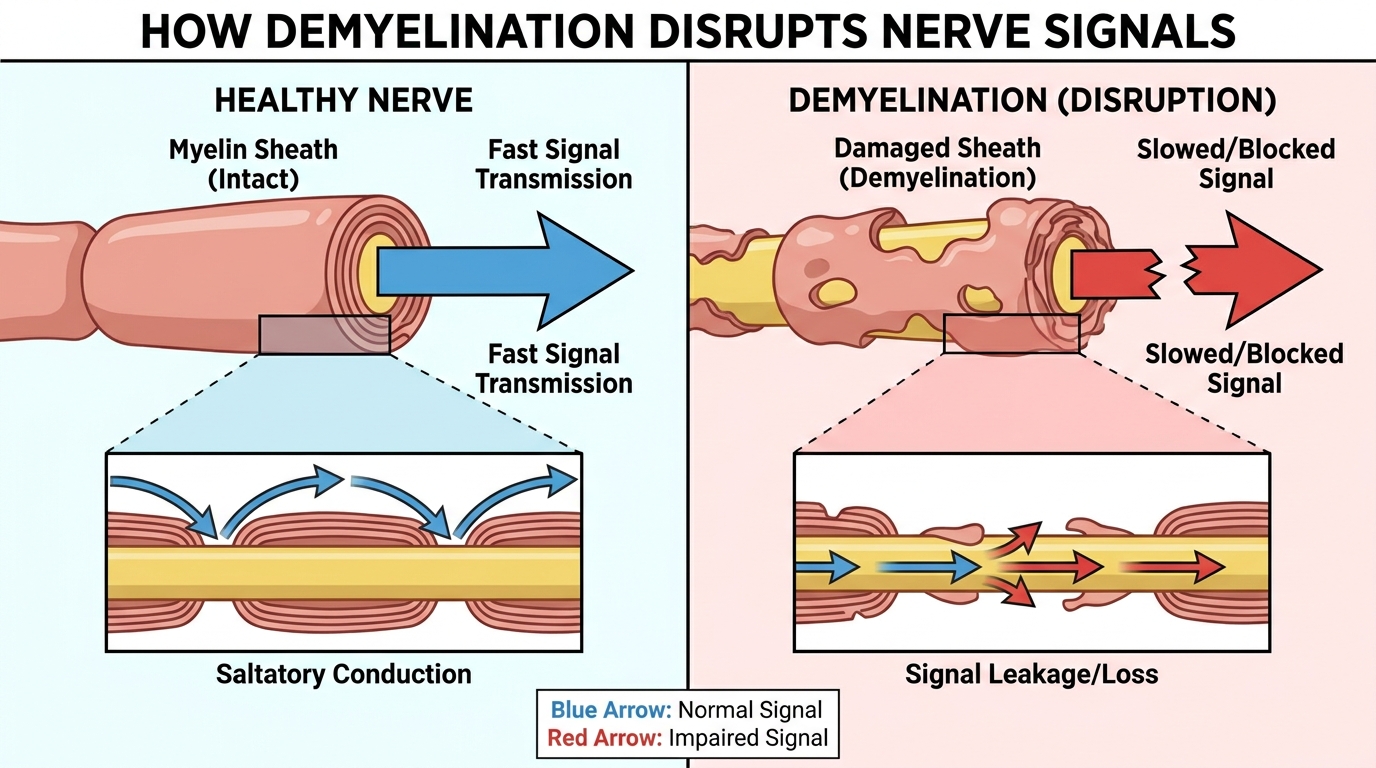
Caption: Healthy myelin (left) allows fast, clean nerve signals. Demyelinated nerves (right) cause signals to slow, misfire, or fail entirely — producing the sensory symptoms MS patients first notice.
Does MS Suddenly Start?
Multiple sclerosis does not usually begin overnight, though patients may suddenly notice their first severe flare-up. While the exact multiple sclerosis causes remain under investigation, the disease develops through a complex combination of genetic predispositions and environmental triggers that interact over many years. Researchers have identified several factors that significantly increase risk, including chronically low vitamin D levels, prior severe infection with the Epstein-Barr virus (EBV), and cigarette smoking. However, no single cause has been confirmed, and possessing these risk factors does not guarantee you will ever develop the disease.
The most common presentation — accounting for approximately 85% of initial diagnoses — is relapsing-remitting multiple sclerosis (RRMS). This is the form of the disease characterized by alternating periods of active, aggressive inflammation and subsequent recovery.
- A relapse (sometimes called a flare, exacerbation, or attack) is a sudden, acute worsening of existing symptoms or the appearance of entirely new neurological symptoms, lasting continuously for at least 24 hours.
- Remission is the quiet period between relapses when symptoms partially or completely improve as inflammation naturally subsides and the brain attempts to repair the myelin.
It is critically important to understand that remission does not mean the disease is gone or dormant. Even during periods of apparent calm, low-level inflammation and continuous axonal damage can proceed, gradually depleting your neurological reserve.
Over time, if left untreated, RRMS often transitions into Secondary Progressive MS (SPMS), where the disease steadily worsens without clear relapses. This is precisely why the “wait and see” approach — so commonly advised in outdated primary care settings — carries severe long-term risks. With a foundational understanding of how MS attacks the nervous system, we can now identify the specific physical warnings the body sends during a flare-up.
Early Warning Signs & General Symptoms
The most disorienting aspect of early multiple sclerosis symptoms is how ordinary they first appear. Fatigue that does not respond to rest, a brief episode of blurred vision, or a persistent tingling in one arm — each of these alone might be dismissed as overwork or a pinched nerve. Collectively, and in the right clinical context, they may represent the prodromal phase of MS. The prodromal phase lasts 5 to 15 years—making early symptom recognition the most vital step in preserving long-term mobility.
According to the Office on Women’s Health, higher prevalence of early MS symptoms in women is a statistical reality. Multiple sclerosis is two to three times more prevalent in women than in men, with early warning signs often presenting suddenly between the ages of 20 and 40 (2026). This gender variance requires clinicians to be especially vigilant when young women present with unexplained sensory changes.
The five most commonly reported early warning signs include:
- MS-specific fatigue — a profound physical and cognitive exhaustion that is entirely disproportionate to activity level and does not improve with sleep.
- Sudden or recurring numbness — typically affecting one limb, one side of the face, or a defined patch of skin.
- Visual disturbances — including blurred vision, double vision, or the onset of optic neuritis.
- Balance and coordination problems — unexplained stumbling, dizziness, or a sensation that the ground is unsteady.
- Bladder dysfunction — urgency, frequency, or difficulty fully emptying the bladder, reflecting lesion activity in the spinal cord.
Symptom presentation also differs meaningfully between men and women. Women tend to present with more sensory and fatigue-based symptoms early on, while men more commonly experience motor weakness and balance issues as initial indicators. Neither presentation is more or less serious — both demand clinical investigation. The years before formal diagnosis are not a blank period; they are filled with subtle signals that allow neurologists to intervene early.
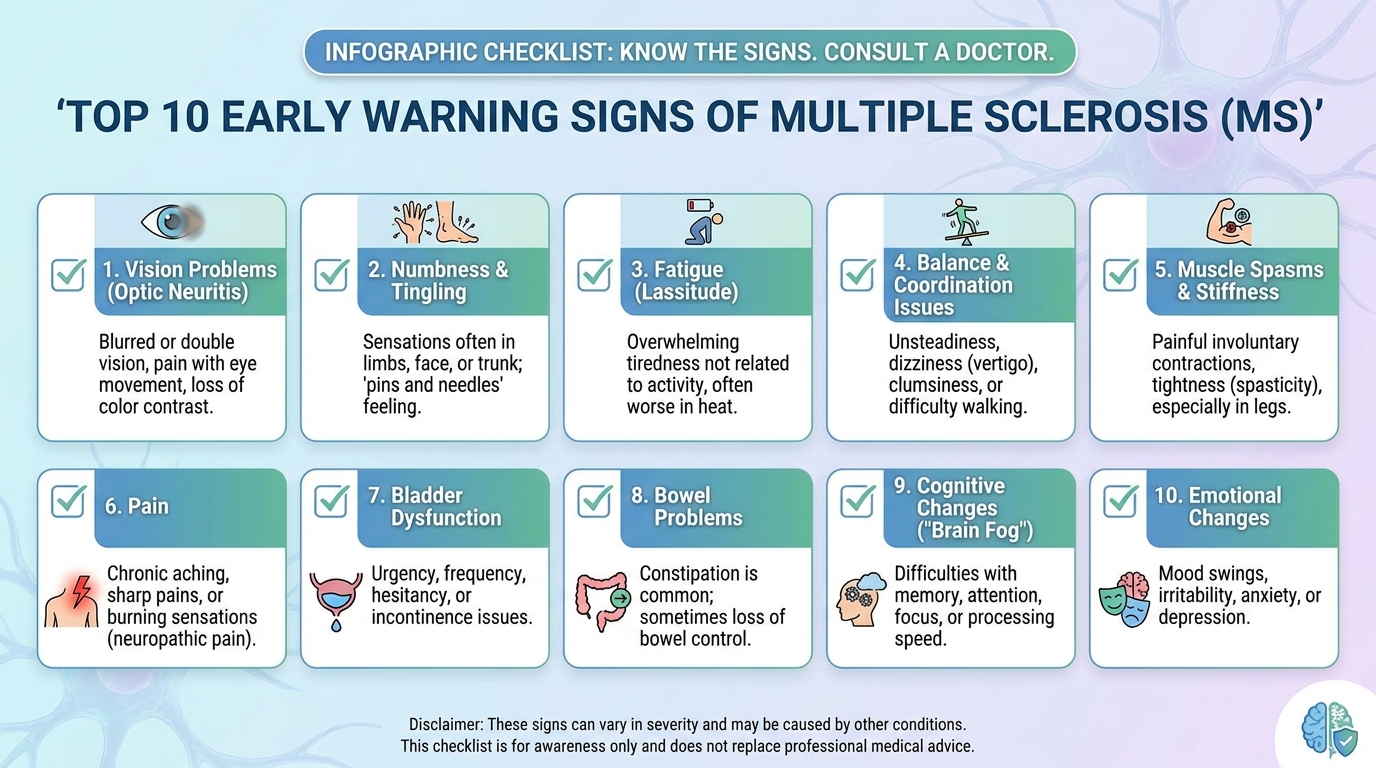
Caption: Early MS warning signs are often dismissed as unrelated complaints. This checklist helps patients identify patterns that warrant a specialist referral.
For a complete breakdown of each symptom, how to distinguish MS fatigue from ordinary tiredness, and what the research says about gender differences, see our complete guide to early signs.
Specific Physical & Cognitive Symptoms
Beyond the general warning signs, MS produces highly specific neurological symptoms that — once recognized — are difficult to attribute to anything else. These symptoms arise directly from lesion locations in the brain and spinal cord, making them important clinical clues for your specialist. Up to 50% of MS patients experience cognitive impairments—proving the disease damages far more than just physical mobility.
Optic neuritis is frequently the first clinical symptom that brings patients to a neurologist. It causes blurred or grayed-out vision in one eye, often paired with a sudden loss of color vision (where vibrant reds appear washed out), accompanied by pain that worsens when you move the eye. It typically resolves within weeks but almost always requires MRI investigation to rule out active CNS lesions.
A second hallmark symptom is the “MS Hug.” Clinical guidance from the VA describes the clinical definition of the MS hug as a form of neuropathic pain (dysesthesia — abnormal, often painful sensations caused by nerve damage) originating from spinal cord lesions. This manifests as a terrifying, tight banding sensation around the chest that requires immediate neurological assessment (2026). Many patients initially present to emergency departments believing they are having a cardiac event.
Beyond optic neuritis and the MS hug, patients frequently experience Lhermitte’s sign—a sudden, electric shock-like sensation radiating down the spine or into the limbs when flexing the neck forward. This sensory symptom specifically indicates a lesion in the cervical spine. Another critical indicator is Uhthoff’s phenomenon, where neurological symptoms temporarily worsen due to an increase in body temperature from exercise, hot weather, or even a warm shower. The heat further impairs the ability of demyelinated nerves to conduct electrical impulses cleanly.
The cognitive dimension of MS is frequently underestimated. UCSF research on MS cognitive impairments notes that while MS is primarily known as a physical demyelinating disease, up to 50% of patients experience cognitive impairments — such as processing speed deficits — that can easily be mistaken for early dementia without a specialist’s differential diagnosis (2026).
These cognitive changes may include slowed information processing, word-finding difficulty, and memory lapses that are subtly distinct from Alzheimer’s-type dementia. The cognitive symptoms that follow are not character flaws or anxiety — they are physical neurological events demanding clinical attention.
To understand these complex presentations in depth, read our guide on specific physical and cognitive MS symptoms.
Differential Diagnosis & Overlaps
If you have been experiencing neurological symptoms and have searched them online, you already know the anxiety of not knowing whether what you are experiencing is MS, early Alzheimer’s disease, Parkinson’s disease, meningitis, or a simple vitamin deficiency. This fear is entirely valid and medically reasonable. MS is one of the most diagnostically complex conditions in neurology precisely because its symptoms overlap with dozens of other conditions. With 85% of initial MS presentations mirroring other conditions, securing an MRI is mandatory to rule out mimickers.
Motor symptoms such as weakness, tremor, and coordination problems are shared between MS and Parkinson’s disease. However, Parkinson’s typically presents with a resting tremor and rigidity that is absent in MS, which instead favors intention tremors (shaking when reaching for an object). Cognitive fog — the slowed thinking, poor concentration, and memory lapses experienced in MS — closely mimics the early presentation of Alzheimer’s disease.
Neurologists must carefully rule out Vitamin B12 deficiency, which can produce identical demyelination in the spinal cord, leading to severe numbness and cognitive fog, but is entirely reversible with vitamin injections. Lyme disease, a bacterial infection transmitted by tick bites, can cause neurological symptoms, profound fatigue, and even white matter lesions on an MRI that closely mimic MS.
Furthermore, rare autoimmune conditions like Neuromyelitis Optica (NMO) specifically attack the optic nerve and spinal cord, mimicking MS but requiring vastly different Disease-Modifying Therapies. This is why cerebrospinal fluid (CSF) analysis via a lumbar puncture is often performed to look for oligoclonal bands—proteins that indicate central nervous system inflammation specific to multiple sclerosis.
Johns Hopkins Medicine stresses the critical nature of distinguishing MS from other autoimmune neuro-disorders, explaining that MS symptoms like optic neuritis and peripheral neuropathy must be carefully distinguished from acute infectious or other autoimmune neuro-disorders by a trained specialist (2026).
This is not a task that a symptom checker, a general practitioner, or internet research can accomplish. Differential diagnosis requires MRI imaging, cerebrospinal fluid analysis, neurological examination, and often blood panels to eliminate competing explanations. Attempting self-diagnosis carries real risk: it can delay appropriate treatment and create false reassurance.
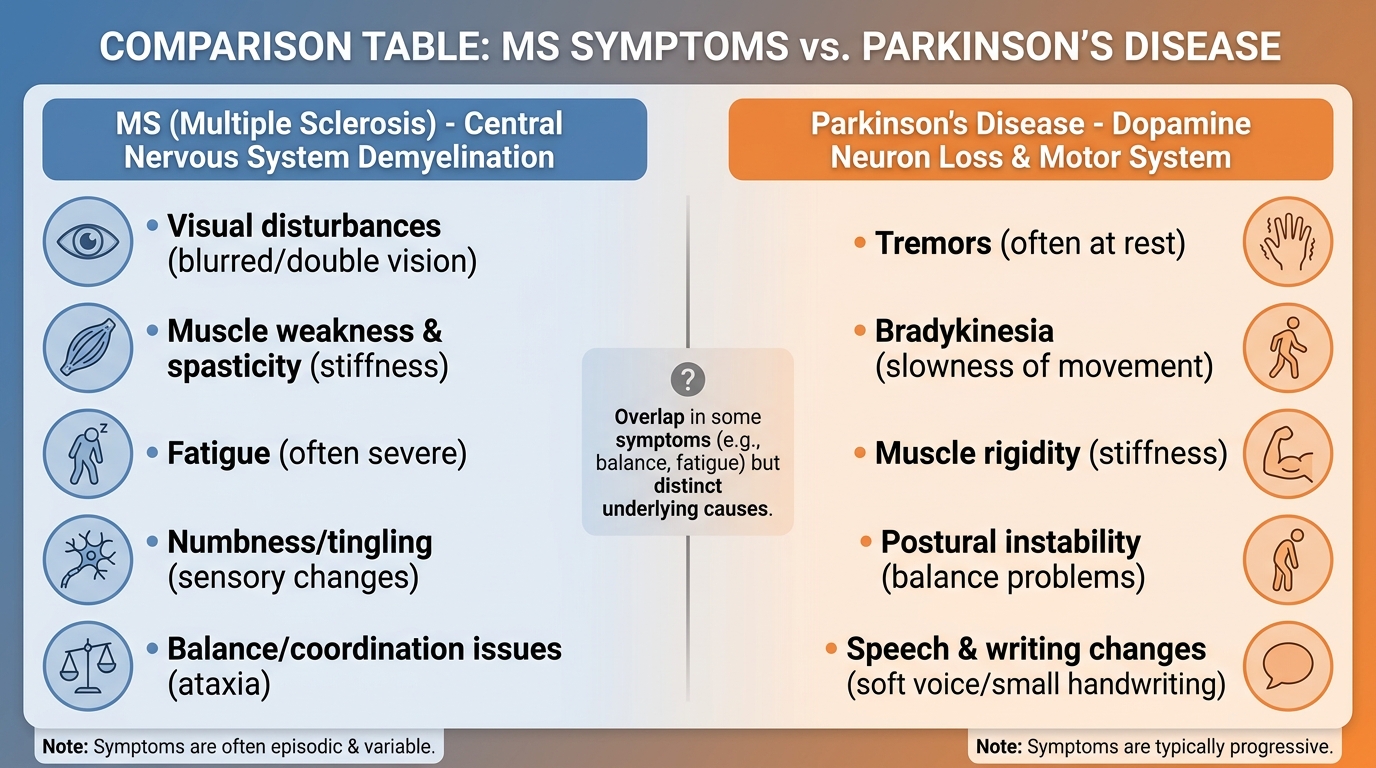
Caption: Key neurological conditions share overlapping symptoms. Only a neuroimmunologist using MRI and clinical criteria can separate them accurately.
For a comprehensive look at what else your symptoms could mean, explore our resources on differential diagnosis and overlapping conditions.
Early Diagnosis and Clinical Review
Delaying an MS diagnosis is not a cautious choice — it is a costly one. Every month spent in diagnostic limbo is a month during which inflammatory lesions may be forming, axonal (nerve fiber) damage may be accumulating, and the brain’s neurological reserve is being permanently depleted. The “wait and see” approach allows irreversible damage to occur quietly. Establishing a baseline MRI within 30 days of symptom onset dramatically accelerates the timeline for initiating protective therapies.
The World Health Organization explicitly emphasizes WHO guidelines on immediate MRI evaluation access, noting that delayed diagnosis directly contributes to long-term disability, and advocating for immediate access to MRI evaluations and clinical specialist reviews to establish a baseline for treatment (2026). A baseline MRI with contrast dye is not just diagnostic — it highlights active, acute inflammation and serves as the foundation upon which all future disease monitoring is built.
The good news is that diagnosis has become remarkably faster and more precise. Latest updates to the McDonald diagnostic criteria enable neurologists to confirm an MS diagnosis much earlier by incorporating advanced MRI markers and cerebrospinal fluid findings, avoiding prolonged diagnostic limbo (Lancet Neurology, 2026). Where patients once waited years for confirmation, the 2024 McDonald diagnostic criteria and updated pathways often allow a diagnosis from a single clinical episode combined with supportive imaging.
The Prodromal Preservation Framework is grounded in precisely this reality: the earlier a specialist reviews your imaging, the more neurological reserve remains available to protect.
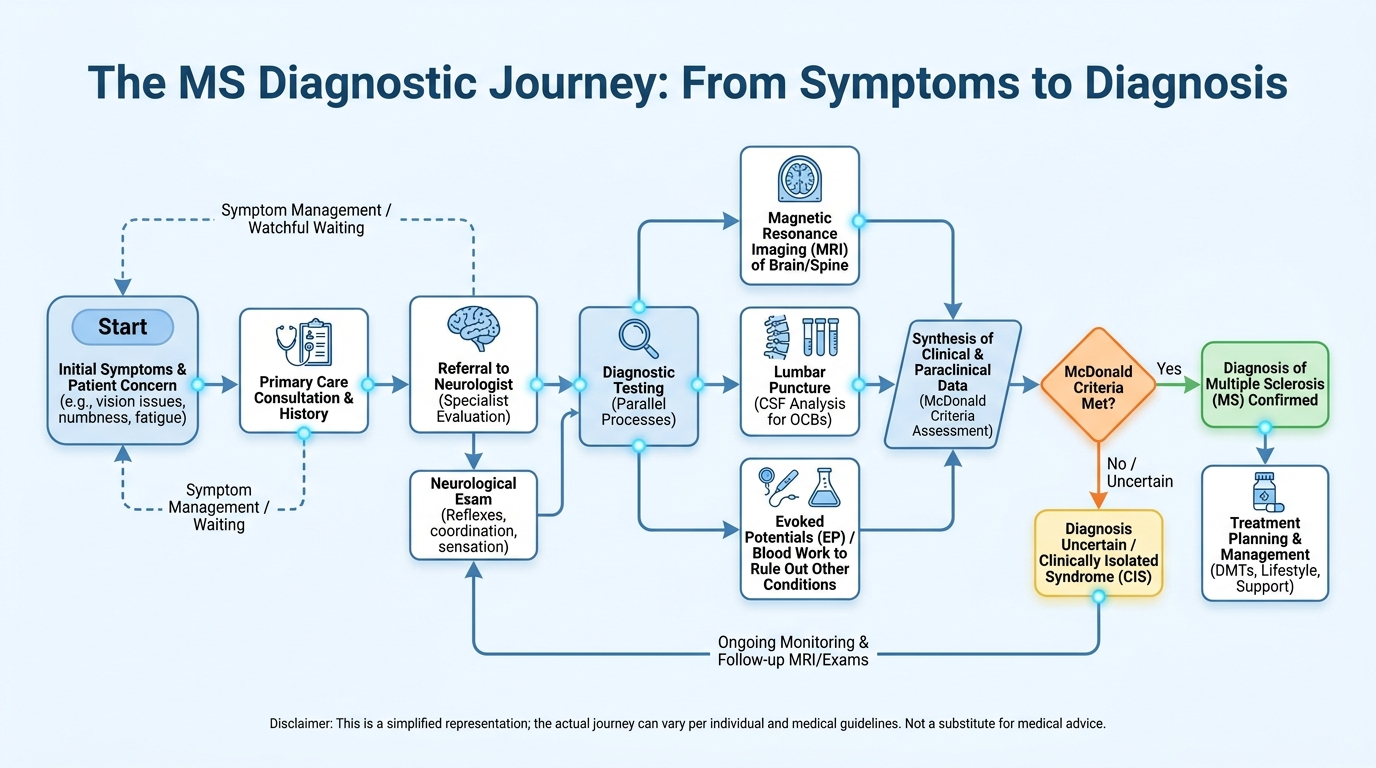
Caption: The MS diagnostic process typically moves from primary care referral through MRI to neuroimmunologist review. Understanding this pathway helps you advocate for faster access at each stage.
Learn exactly what to expect at the doctor in our breakdown of the MS diagnostic and clinical review process.
Early Treatment & Disease-Modifying Therapies
A multiple sclerosis diagnosis is undoubtedly terrifying, but modern medicine has fundamentally changed the therapeutic reality for newly diagnosed patients. We no longer live in an era where an MS diagnosis guarantees severe physical decline. Today, proactive medical management focuses heavily on preserving brain function before it is lost. Starting high-efficacy DMTs immediately can reduce relapse rates by over 70%—fundamentally altering the disease trajectory.
The cornerstone of this modern approach relies on Disease-Modifying Therapies (DMTs). These are not just medications that temporarily manage daily symptoms like pain or fatigue; they actively alter the course of the disease. DMTs work by suppressing or altering the immune system’s inappropriate attack on the central nervous system, thereby preventing new lesions from forming. Statistical data repeatedly proves that starting these therapies during the early stages of RRMS dramatically reduces the frequency and severity of future relapses.
Historically, neurologists utilized an escalation approach—starting with milder, less effective injectable medications and only moving to stronger treatments if the patient suffered a severe relapse. Today, prevailing clinical guidance increasingly favors an early high-efficacy approach. By initiating powerful treatments like B-cell depleting monoclonal antibody infusions immediately after diagnosis, specialists can effectively halt disease progression before substantial irreversible nerve damage occurs.
For many patients grappling with a new diagnosis, the greatest anxiety surrounds life expectancy. It is crucial to understand that with the advent of high-efficacy DMTs, life expectancy for most MS patients is now normalized or very close to that of the general population. The goal of treatment is to ensure that those years are lived with the highest possible quality of life and preserved mobility.
Stanford Medicine guidelines on initiating disease-modifying therapies emphasize this point. Stanford Medicine’s Neuroimmunology division highlights that initiating high-efficacy disease-modifying therapies (DMTs) immediately following an MS diagnosis preserves neurological reserve and drastically lowers the risk of irreversible axonal damage (2026).
Discover your therapeutic options in our complete overview of early treatment and disease-modifying therapies.
Support Ecosystem and Patient Advocacy
Engaging with official advocacy groups provides newly diagnosed MS patients with vital financial, educational, and emotional resources during the critical early treatment phase. A new multiple sclerosis diagnosis can feel profoundly isolating, but connecting with verified charities and peer-support communities ensures you do not have to navigate the complex medical system alone. Engaging with official MS charities increases treatment adherence by providing vital financial resources during the critical early diagnosis phase.
While doctors handle the clinical progression of the disease, it is the patient advocacy ecosystem that helps individuals manage the daily realities of living with a chronic autoimmune condition. Building a network that balances official medical foundation advice with peer-to-peer emotional validation creates a highly effective, holistic support structure.
Official Foundations and Societies
Official nonprofit organizations are invaluable for securing the practical resources necessary to manage your condition. The National Multiple Sclerosis Society serves as a leading resource for patient advocacy, offering everything from breaking research updates to local chapter networking.
Additionally, the Multiple Sclerosis Foundation and the Multiple Sclerosis Association of America (MSAA) provide tangible, day-to-day assistance. These organizations frequently offer financial aid programs that can help cover the cost of expensive diagnostic MRI scans, or provide practical grants for cooling vests to manage heat sensitivity. Utilizing these foundations can significantly reduce the financial burden of seeking an early specialist diagnosis. While these organizations provide structural and financial aid, the day-to-day emotional toll of MS requires a different kind of support.
Validation in Peer Support Forums
The psychological benefit of patient-to-patient connection cannot be overstated. Because early MS is characterized by “invisible symptoms” — like profound fatigue and subtle cognitive fog — patients frequently feel misunderstood or dismissed by perfectly well-meaning family and friends.
Finding spaces where others instantly understand your experience is deeply validating. Platforms like the Multiple sclerosis Reddit community (r/MultipleSclerosis) serve as safe spaces for raw, anonymous emotional support. When you are terrified by your first experience of the “MS Hug,” reading firsthand accounts from peers who have survived the exact same sensation provides a unique comfort that clinical literature cannot. Online advice is invaluable for emotional support, but it must never replace clinical assessment when red-flag symptoms appear.
Safety Precautions and When to Seek a Neurologist
While community support and personal research are essential parts of the patient journey, medical safety requires knowing exactly when to step away from the internet and step into a specialist’s office. Delaying a clinical evaluation to explore unverified advice can result in permanent neurological deficits. Rejecting proven DMTs accounts for a 40% increase in early disability—permanently destroying irreplaceable neurological reserve.
Common Diagnostic Pitfalls
The journey to an MS diagnosis is frequently delayed by three common pitfalls. First, many patients assume that sudden localized numbness is merely a pinched nerve or a temporary musculoskeletal issue, delaying an MRI request. Second, patients often rely on online symptom checkers instead of seeking an evaluation from a neuroimmunologist, leading to heightened anxiety without actionable answers.
Finally, one of the most dangerous pitfalls is delaying standard Disease-Modifying Therapies to try unverified “holistic” cures or investigational regenerative treatments like unregulated stem cell therapy. Rejecting proven DMTs during the critical early prodromal phase allows silent inflammation to permanently destroy your irreplaceable neurological reserve.
When to Seek Expert Help
Certain symptoms require immediate professional intervention rather than a routine GP appointment. If you experience sudden, acute vision loss or graying vision accompanied by pain when moving your eye, you must seek urgent care, as this strongly indicates optic neuritis.
Similarly, the rapid onset of severe motor weakness, sudden inability to walk, or profound loss of balance are medical emergencies. Do not wait to see if these severe physical deficits improve with sleep. Demand an urgent referral to a neurologist or visit the emergency department to halt the active inflammation before it solidifies into permanent nerve damage.
Frequently Asked Questions
What are the earliest warning signs of MS?
The earliest warning signs of multiple sclerosis typically include vision problems, sudden numbness, and extreme fatigue. Optic neuritis, which causes blurry vision and pain during eye movement, is frequently the very first clinical symptom patients notice (Johns Hopkins Medicine, 2026). Other early indicators include tingling sensations in the extremities, severe balance issues, and a tight banding pain around the chest known as the MS hug. These physical manifestations occur because the body’s immune system has begun stripping myelin from the central nervous system. Because these early indicators closely mimic other conditions, an MRI and specialist review are absolutely necessary for confirmation.
Is it better to diagnose MS early?
Diagnosing multiple sclerosis as early as possible is critically important for preserving long-term brain health. During the 5 to 15-year prodromal phase, early diagnosis allows patients to begin Disease-Modifying Therapies (DMTs) immediately, which statistically reduces future relapses and delays physical disability. By acting swiftly, you protect the brain’s neurological reserve before irreversible axonal nerve damage can occur.
Can multiple sclerosis be cured?
Currently, there is no absolute cure for multiple sclerosis that completely reverses demyelination. However, modern Disease-Modifying Therapies effectively halt the progression of the disease and prevent new lesions from forming. With early and aggressive treatment, most patients can expect a normal life expectancy and sustained mobility.
Conclusion
Recognizing multiple sclerosis symptoms early is your strongest defense against permanent nerve damage. Studies from institutions like UCSF show that up to 50% of patients experience early cognitive impairments that demand clinical investigation. The best approach combines immediate MRI evaluation, differential diagnosis by a neuroimmunologist, and prompt initiation of disease-modifying therapies.
Relying on the Prodromal Preservation Framework changes your approach from fearful waiting to proactive defense. By identifying subtle non-motor symptoms during the 5-15 year prodromal window, you can intervene before irreversible physical disability begins, easing the anxiety of those initial unexplained symptoms.
Do not let general practitioners dismiss your symptoms as normal fatigue. Compile your medical history, document your symptom timeline, and demand a referral to an MS specialist today to secure your long-term neurological health and explore your diagnostic options. Book a specialist consultation today to discuss your symptoms and establish an immediate diagnostic baseline.