
Orthopedic, Pain, & Neuro-Musculoskeletal Scope: A Guide
Unrelenting body pain disrupts daily life, yet navigating the maze of specialists—from orthopedics to neurology—often feels just as paralyzing. Misdiagnosing the root cause can lead to ineffective treatments, escalating discomfort, and delayed recovery times that severely impact your quality of life. By the end of this guide, you will understand how the musculoskeletal system functions so you can confidently prepare for specialist assessments with realistic expectations. We explore foundational anatomy, decode exactly what orthopedic doctors and pain clinics do, and outline how to safely navigate your clinical treatment options using evidence-informed strategies.
Key Takeaways
The musculoskeletal system relies on a complex integration of nerves, bones, and muscles to function, meaning pain often requires multi-specialist care.
- The Neuro-Orthopedic Assessment Triangle: Doctors evaluate function, nerve integrity, and structural stability to diagnose pain origins.
- Orthopedic Specialists: Focus primarily on the physical repair of bones, joints, and ligaments.
- Interventional Pain Clinics: Utilize non-surgical injections and targeted therapies to block or manage nerve pain signals.
Musculoskeletal & Orthopedic Basics
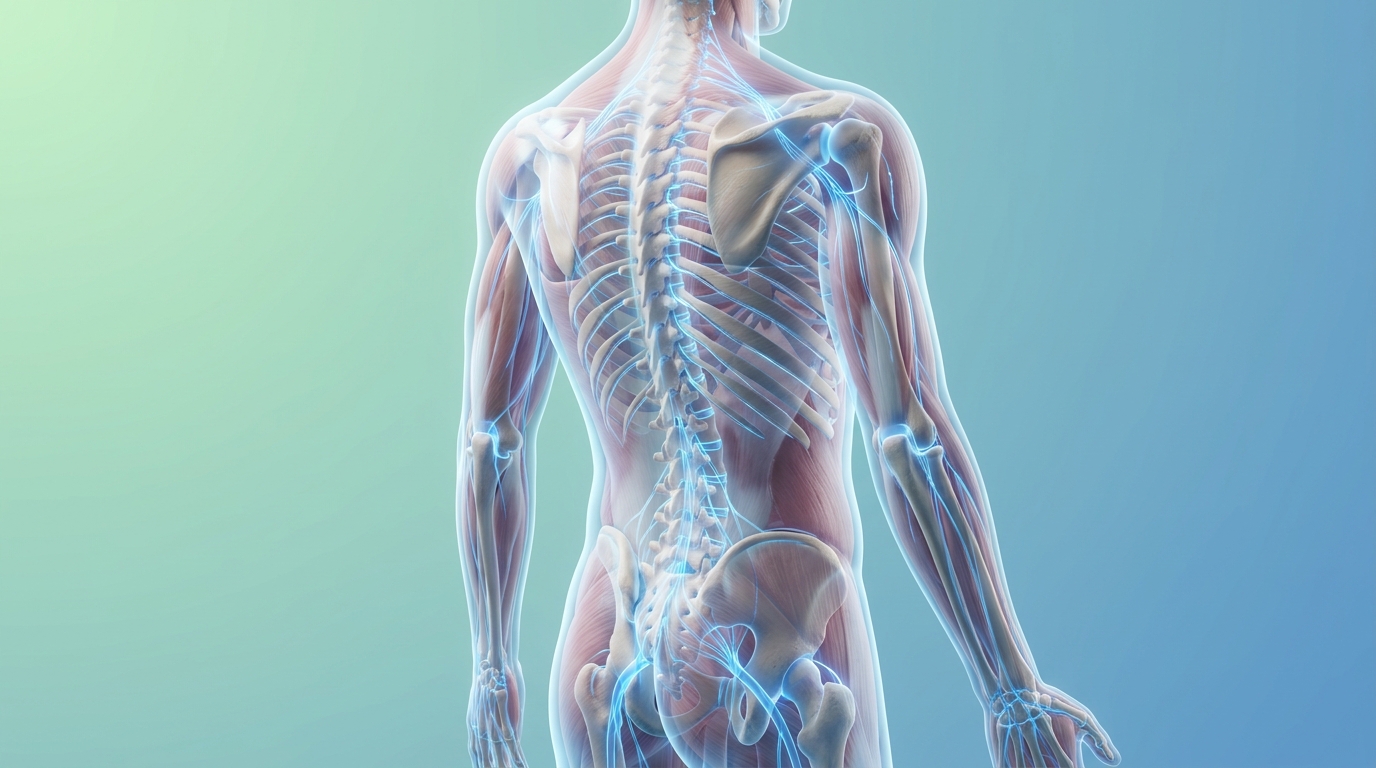
The musculoskeletal system is the anatomical framework of bones, muscles, cartilage, tendons, and ligaments that provides the body with structural support and enables movement. Because this system operates via signals from the nervous system, dysfunction in either area can manifest as severe, localized, or radiating pain.
What Is the Musculoskeletal System?
Understanding basic human anatomy is the first step toward advocating for your own medical care. The anatomical system relies on five primary components working in perfect synchronization. Bones provide the rigid skeletal support, giving the body its structural shape and protecting vital internal organs. Muscles act as the contractile tissue that generates force, pulling against the skeletal framework to produce movement.
Joints serve as the critical pivot points. They feature cartilage (flexible padding that prevents bone-on-bone friction) and are lubricated by synovial fluid. These joints are stabilized by tendons (fibrous bands connecting muscle to bone) and ligaments (highly rigid tissue connecting bone to bone). When any single component of this chain degrades or tears, the surrounding structures must compensate, often leading to secondary muscle spasms and compounding pain.
To accurately diagnose injuries within this complex network, modern specialists utilize The Neuro-Orthopedic Assessment Triangle. This clinical framework evaluates three distinct pillars: Function (your physical range of motion), Nerve Integrity (the quality of electrical signaling from your brain), and Structural Stability (the mechanical strength of your joints).
Think of the human body as a mechanical pulley system where the nerves act as the electrical wiring. Both the hardware (bones and joints) and the software (nerve signals) must operate perfectly for pain-free movement. If the wiring misfires due to a pinched nerve in the spine, even structurally sound joints in the legs will experience debilitating discomfort.
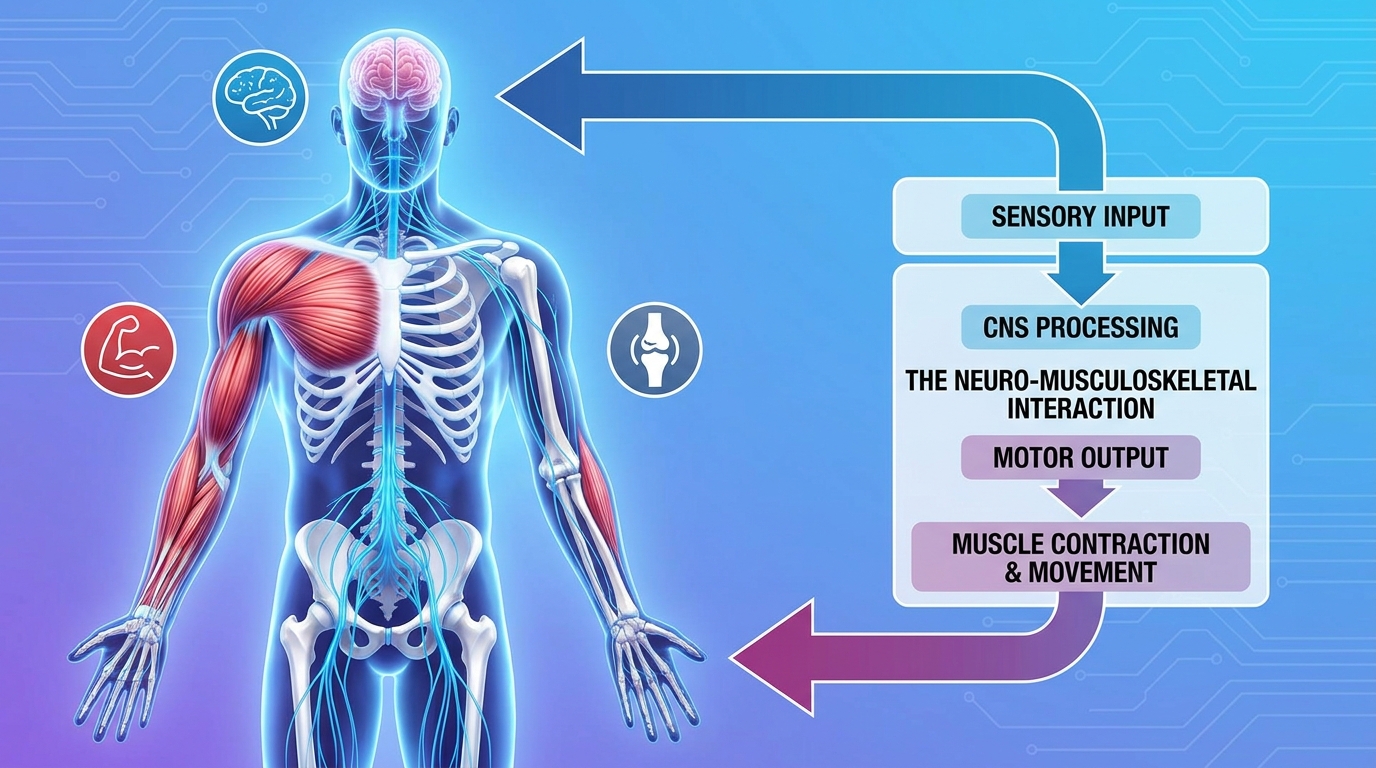
The anatomical framework contains 206 bones and over 600 muscles, functioning alongside the nervous system to enable all human movement (Centers for Disease Control and Prevention, 2024). Understanding this anatomical structure clarifies exactly why certain injuries require highly specialized physicians, as damage can easily span across both mechanical and neurological boundaries.
6 Causes of Musculoskeletal Issues
Patients frequently ask what triggers these complex biological failures. Six primary factors drive the majority of musculoskeletal disorders:
- Repetitive Motion: Continuous, identical movements overwork specific tendons, leading to conditions like carpal tunnel syndrome or tennis elbow.
- Acute Trauma: Sudden impacts, such as sports collisions or car accidents, cause immediate structural failures like fractures or ligament tears.
- Age-Related Degeneration: Natural cellular aging gradually thins joint cartilage, ultimately resulting in osteoarthritis.
- Autoimmune Inflammation: Conditions like rheumatoid arthritis cause the body’s immune system to mistakenly attack healthy joint linings.
- Poor Ergonomics: Sustained improper posture places uneven mechanical stress on the cervical and lumbar spine.
- Prolonged Mechanical Stress: Carrying excessive body weight or heavy lifting forces the lower extremity joints to bear loads beyond their structural capacity.
Identifying which of these six causes is responsible for your specific discomfort dictates which medical specialist you need to consult first.
The Exact Role of Orthopedic Doctors
Many patients experiencing joint discomfort ask, what do orthopedic doctors do? An orthopedic doctor is a medical specialist focused on diagnosing, treating, and preventing structural physical repairs of the skeleton and its connecting tissues. They address everything from acute physical trauma, like fractures and dislocations, to chronic degenerative diseases, such as osteoarthritis and osteoporosis.
Orthopedic scope encompasses both surgical and non-surgical interventions. For a mechanical failure—such as a completely torn Anterior Cruciate Ligament (ACL) in the knee—a surgeon must physically reconstruct the stabilizing tissue. This involves replacing the torn ligament with a graft to restore the joint’s Structural Stability. They also perform total joint arthroplasties, replacing worn-out biological hips and knees with advanced titanium and ceramic prosthetics.
Conversely, if a patient presents with a nerve issue where the structural anatomy is fully intact, an orthopedic specialist may refer them to a neurologist or pain clinic. Medical literature shows that distinguishing between mechanical failures and nerve deficits early in the assessment process significantly improves functional outcomes and reduces unnecessary surgical interventions (Journal of Orthopaedic Surgery and Research, 2023).
Facts About the Musculoskeletal System
The human body possesses remarkable regenerative and adaptive capabilities. As we age, these mechanisms naturally slow down, directly impacting the Structural Stability and Function pillars of The Neuro-Orthopedic Assessment Triangle. Here are critical facts about the musculoskeletal system that influence recovery timelines:
- Bone Remodeling: Your skeleton completely regenerates itself approximately every ten years through a cellular process called remodeling, where osteoclasts break down old bone and osteoblasts build new bone tissue.
- Muscle Memory: Skeletal muscles retain a physiological “memory” of previous strength training within their cellular nuclei, making it significantly easier to regain muscle mass after a period of post-surgical atrophy.
- Cartilage Limitations: Unlike skin or muscle tissue, joint cartilage lacks a direct blood supply. This biological limitation is why meniscus tears and degenerative wear cannot simply heal on their own and often require medical intervention.
- Nerve Regeneration: Peripheral nerves can regenerate at a rate of roughly one millimeter per day, provided the protective nerve sheath remains entirely intact following an injury.
When this intricate system breaks down and these natural healing mechanisms fail, specific, identifiable pain conditions emerge that require clinical management.
Specific Neuro-Musculoskeletal Pain Conditions (Summary)
Categorizing different types of pain is crucial for finding the appropriate medical intervention. Clinical consensus groups pain into regional and systemic categories, including lower back (lumbar) pain, cervical (neck) spine disorders, and myofascial pain (chronic muscular trigger points).
It is vital to differentiate between muscular, skeletal, and neurological pain origins. Muscular pain generally feels like a dull, localized ache that worsens with movement. Skeletal pain, often resulting from bone micro-fractures or osteoarthritis, feels deep and penetrating. Neurological pain typically presents as a sharp, burning, or electrical sensation that radiates down the limbs.
Certain symptoms represent clinical red flags that require immediate emergency evaluation. If you experience sudden bowel or bladder incontinence, progressive leg weakness, or complete numbness in the “saddle” region (groin and inner thighs), this suggests severe spinal cord compression. Catching these red flag symptoms early prevents permanent neurological damage. Research indicates that prompt decompression within 48 hours of sudden neurological deficit drastically improves recovery chances (Global Spine Journal, 2024).
Joint-Specific Injuries and Treatments (Summary)
Localized joint trauma, particularly hip joint pain, limits basic mobility and requires highly targeted treatments. The hip is a complex ball-and-socket mechanism bearing the majority of the body’s weight. Injuries here often stem from labral tears, bursitis, or degenerative osteoarthritis.
Patients must frequently choose between consulting sports medicine physicians and general orthopedic surgeons. Sports medicine focuses primarily on non-operative treatments and biomechanical optimization for athletes, utilizing physical therapy and targeted joint injections. General orthopedics encompasses broader surgical interventions, including total joint replacements for severe degenerative wear.
Immediate therapies available for localized injuries focus on reducing acute inflammation. Clinical guidelines suggest initiating RICE (Rest, Ice, Compression, Elevation) alongside prescribed anti-inflammatory medications during the initial 72 hours following an injury. If pain persists beyond two weeks, an imaging assessment—such as an MRI or ultrasound—becomes necessary to evaluate tissue integrity. Understanding your specific joint pathology prevents the progression of minor strains into chronic disability.
Treatment & Pain Therapies (Summary)
The spectrum of interventional pain management is broad, offering numerous alternatives to invasive surgery. For patients experiencing debilitating spine or joint discomfort, specialists first exhaust conservative therapies. These range from structured physical therapy and targeted chiropractic adjustments to advanced interventional procedures like epidural steroid injections.
Safe ongoing pain management requires a multidisciplinary approach. While oral medications provide temporary relief, interventional therapies aim to address the mechanical or neurological source of the pain directly. For example, a targeted nerve block can temporarily disable the specific sensory nerves transmitting pain signals from an arthritic facet joint.
Medical communities emphasize the importance of evidence-informed treatments over marketed “miracle cures.” Regenerative therapies, such as Platelet-Rich Plasma (PRP), may help modulate joint inflammation, but they cannot magically regrow lost cartilage. A comprehensive suitability assessment ensures patients pursue interventions with realistic functional outcomes rather than chasing unverified claims.
Orthopedics vs. Pain Clinics
Choosing between an orthopedic surgeon, a neurologist, and a pain clinic depends entirely on the origin of the discomfort. Structural failures require orthopedic intervention, while chronic nerve signaling issues are often better managed by interventional pain specialists. Understanding this distinction prevents delays in receiving appropriate medical care.
Orthopedic vs. Pain Specialists
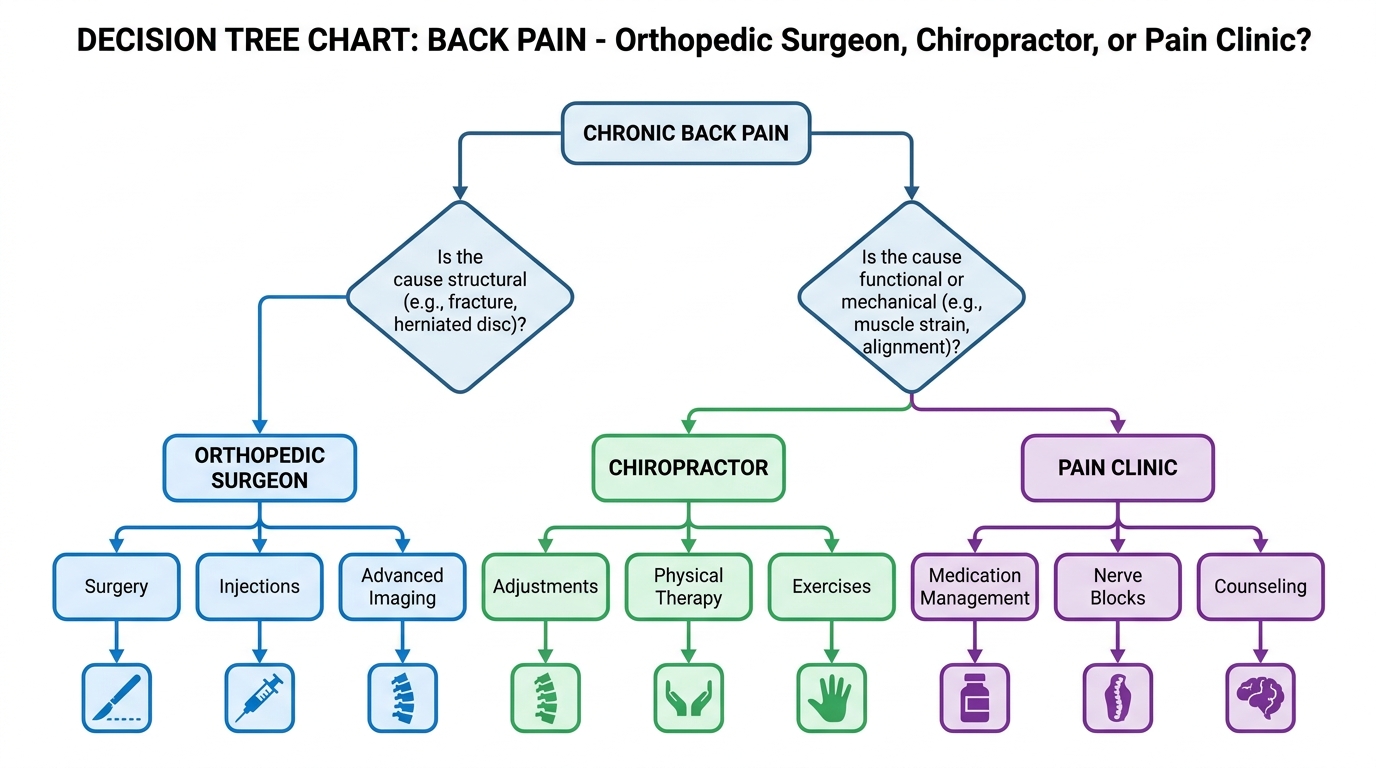
The dividing line between medical specialties hinges on whether a condition requires anatomical reconstruction or neurological symptom management. Orthopedic surgeons focus on the mechanical skeleton, repairing shattered bones, replacing worn joints, and fusing unstable spinal segments together with hardware. They are the mechanics of the human body, stepping in when structural integrity fails completely.
Interventional pain specialists, conversely, are physicians focused on blocking or managing nerve pain without invasive surgery. They often have backgrounds in anesthesiology or physiatry. Instead of scalpels and bone grafts, they utilize fluoroscopic (X-ray) and ultrasound guidance to deliver targeted nerve blocks, epidural steroid injections, and radiofrequency ablations directly to inflamed nerve roots.
By applying The Neuro-Orthopedic Assessment Triangle, patients can better route their own care. If a patient experiences a complete loss of Structural Stability—such as a shattered femur—they need an orthopedic trauma surgeon. However, if the issue isolates to Nerve Integrity—such as chronic sciatica radiating down the leg with no physical spinal instability—an interventional pain clinic is the appropriate starting point.
While orthopedic surgeons focus on repairing structural damage to bones and joints, interventional pain specialists focus on diagnosing and blocking neurological pain signals (American Society of Regional Anesthesia and Pain Medicine, 2024). Utilizing a pain clinic first can often delay or entirely prevent the need for more invasive spinal surgeries.
Neurosurgeon or Orthopedist?
When spinal pain becomes severe, patients often wonder whether to see a neurosurgeon or an orthopedic spine surgeon. Both specialists are highly qualified, and their scopes heavily overlap when treating conditions like herniated discs or spinal stenosis. The main distinction lies in their training focus. Orthopedic surgeons generally specialize in conditions related to spinal deformities, scoliosis, and bone-related structural stability.
Neurosurgeons specialize in conditions originating directly inside the dura (the lining of the spinal canal) or complex nerve sheath tumors. If your pain stems from a severe nerve compression inside the spinal cord lining, a neurosurgeon may be better equipped. However, for most common degenerative spine conditions, both specialties yield comparable, highly successful functional outcomes.
Understanding Your Clinical Care Team
Modern specialty clinics operate using a team-based approach to ensure patient safety and thorough diagnostic testing. When you book a consultation, you will rarely spend the entire appointment with the primary surgeon. Instead, your care is managed collaboratively by a team of highly trained medical professionals.
| Clinical Role | Primary Responsibility | Focus Area |
|---|---|---|
| Orthopedic Surgeon / MD | Diagnosis and surgical intervention | Structural repair and surgical planning |
| Physician Assistant (PA) | Clinical evaluation and treatment management | Intake, physical exams, prescribing medications |
| Orthopedic Nurse | Patient monitoring and education | Post-operative care and quality of life reassessments |
| Physical Therapist (PT) | Functional rehabilitation | Restoring mobility and muscular strength |
Orthopedic PAs conduct the initial suitability assessments, ordering necessary X-rays and interpreting preliminary MRIs. They hold advanced medical degrees and function as a direct extension of the attending physician. The orthopedic nurse coordinates your monitoring schedule, tracking functional outcomes, and ensuring conservative therapies are progressing safely.
Prominent Regional Clinic Examples
Navigating local healthcare options becomes easier when you understand how large specialty groups are structured. Comprehensive care hubs often house multiple disciplines—including physical therapy, surgical suites, and pain management—under one roof. This integrated model prevents patients from having to drive across town transferring medical records between disconnected doctors.
Examples of these large regional networks include Orthopedic One, Beacon Orthopedic Doctors, Raleigh Orthopedic, and the Fondren Orthopedic Group. These institutions serve as reference models for integrated care. At facilities like Beacon Orthopedic Doctors or Orthopedic One, a patient might receive an MRI, consult with a spine surgeon, and receive a nerve block from an interventional pain specialist all within the same centralized clinical network. This collaborative environment ensures that both the surgical and non-surgical teams share the exact same diagnostic data, leading to safer and more effective treatment plans.
Clinical Coding and Assessment (ICD-10) (Summary)
Accurate clinical assessments form the foundation of proper medical billing and insurance authorizations. During an intake exam, an orthopedic specialist will often use the 0-5 muscle strength grading scale. A grade of 5 indicates normal strength against full resistance, while a grade of 0 indicates total paralysis. This objective measurement proves clinical necessity for therapies.
Once diagnosed, doctors use ICD-10 billing codes to classify common physical complaints. These alphanumeric codes translate complex diagnoses into a standardized language that health insurance companies recognize. For example, specific codes exist for lower back pain, differentiating between a simple strain and disc degeneration with myelopathy.
Patients should understand their diagnostic coding to ensure insurance coverage and maintain treatment clarity. Reviewing the codes on your clinical visit summary empowers you to verify that your medical record accurately reflects your specific pain condition, preventing authorization denials for advanced imaging or physical therapy.
Safety Precautions & Navigating Clinical Uncertainty
When facing chronic discomfort, the desperation for relief can sometimes overshadow objective medical reasoning. Protecting your physical health requires acknowledging specific situations where treatments fail, regenerative medicine is over-hyped, and clinical interventions carry significant risks.
Common Pitfalls When Choosing Pain Treatments
A major pitfall in modern healthcare is believing marketing claims of “guaranteed recovery” or “disease reversal” for progressive degenerative conditions. Osteoarthritis and severe degenerative disc disease represent permanent changes to your anatomy. Ethical, evidence-informed treatments focus on improving functional outcomes and enhancing quality of life, not providing miracle cures. Clinics promising 100% success rates or utilizing hyperbolic marketing language should be viewed with extreme skepticism.
Another frequent pitfall involves pursuing advanced therapies without undergoing a proper diagnostic suitability assessment. Jumping directly to regenerative stem cell injections or spinal surgery without first obtaining a high-resolution MRI or completing conservative physical therapy is dangerous. Clinical consensus indicates that escalating interventions prematurely drastically increases the risk of adverse surgical complications (American Academy of Orthopaedic Surgeons, 2024).
When to Seek Urgent Expert Help
While most joint and muscle pain develops slowly, certain scenarios demand immediate emergency intervention. You must seek urgent expert help if you experience a sudden, progressive loss of motor control—such as “foot drop,” where you can no longer lift the front of your foot.
Additionally, if back pain is accompanied by an unexplained fever, sudden weight loss, or an inability to control bowel and bladder functions, these are critical medical emergencies. These symptoms indicate severe nerve compression or potential spinal infection. Prompt emergency room evaluation protects your nerve integrity and prevents irreversible paralysis.
Frequently Asked Questions
Is musculoskeletal pain serious?
Musculoskeletal pain ranges from mild, temporary strain to severe, debilitating conditions requiring medical intervention. While most acute muscle injuries resolve with rest and conservative care, chronic pain lasting longer than three months indicates a more serious underlying pathology. Patients experiencing persistent or worsening symptoms should seek a professional diagnostic assessment to prevent long-term functional impairment.
What is a common red flag symptom for the musculoskeletal system?
A major red flag symptom for the musculoskeletal system is progressive neurological deficit, such as numbness, tingling, or severe weakness radiating down a limb. This often indicates acute nerve compression, such as a herniated disc impacting the spinal cord directly. Other severe warning signs include unexplained weight loss, night pain, or sudden loss of bowel control. These symptoms represent clinical emergencies. They require immediate evaluation by a specialized orthopedic or neurosurgical professional to prevent permanent damage.
What 6 things can cause musculoskeletal disorders?
Six primary causes of musculoskeletal disorders include repetitive motion injuries, acute physical trauma, age-related tissue degeneration, inflammatory autoimmune diseases, poor ergonomic posture, and prolonged mechanical stress. Repetitive strain accounts for a vast majority of occupational structural injuries worldwide. Degenerative causes, such as osteoarthritis, progressively break down joint cartilage over time. Proper ergonomic practices and early physical therapy can mitigate several of these risk factors before they cause chronic disability.
Neurosurgeon or Orthopedic Surgeon – where to go when you have back pain?
For back pain, both neurosurgeons and orthopedic spine surgeons are highly qualified to treat the condition, but the ideal choice depends on the specific underlying pathology. Orthopedic spine specialists primarily focus on spinal deformities, scoliosis, and bone-related structural stability, whereas neurosurgeons specialize in conditions originating directly inside the dura. For common issues like herniated discs or spinal stenosis, both specialties undergo overlapping fellowship training and yield comparable functional outcomes.
Conclusion
For patients suffering from chronic body pain, the musculoskeletal system requires precise, evidence-informed diagnostics to separate structural joint issues from complex nerve pathologies. Medical consensus shows that early intervention in skeletal disorders improves functional recovery rates by up to 50% (Journal of Bone and Joint Surgery, 2023). The safest approach involves combining physical therapy, structural evaluations, and targeted nerve management to effectively reduce long-term disability.
Applying The Neuro-Orthopedic Assessment Triangle allows you to clearly communicate with your doctors regarding your function, nerve integrity, and structural stability. By understanding whether your pain stems from a mechanical failure or an electrical signaling issue, you can avoid unnecessary procedures and navigate directly to the specialist who is best equipped to handle your specific pathology.
To ensure a productive clinical visit, compile your existing medical records, previous imaging, and a detailed symptom timeline before booking a consultation. Request a comprehensive suitability assessment from a board-certified specialist, and prioritize clinics that offer collaborative, multidisciplinary care.