
Why Follow-Up Data Matters in Chronic Disease Care: Complete Guide
Relying on emergency room visits for chronic illness is not a healthcare strategy; it is a crisis response that drains both quality of life and resources. When medical records remain fragmented across multiple clinics, doctors only see patients during severe health flare-ups. This means the underlying condition quietly progresses unchecked between visits, leading to preventable hospitalizations and rapidly deteriorating functional outcomes.
By the end of this guide, you will understand exactly why follow-up data matters in chronic disease care to ensure your treatments are adjusted proactively rather than reactively. We examine the mechanics of primary care, the automated technologies bridging the communication gap between clinics, and the clinical reality of evidence-informed symptom monitoring.
Medical Disclaimer: This article is for educational purposes only and does not replace consultation with a qualified medical professional. Always seek professional advice for diagnostics and treatment suitability.
Key Takeaways
Why follow-up data matters in chronic disease care comes down to prevention: it allows clinicians to spot deteriorating trends and adjust treatments before a medical emergency occurs.
- The Proactive Data Loop: Continuous monitoring replaces reactive emergency interventions with stable, predictable care.
- Continuity of Care: Routine lab tests and remote monitoring prevent fragmented medical records.
- Reduced Hospitalizations: Proactive primary care lowers emergency room dependency by addressing flare-ups early.
What Are Chronic Diseases and Primary Care?
Chronic diseases are long-term medical conditions—such as rheumatoid arthritis or autoimmune disorders—that require continuous monitoring rather than a single curative treatment. According to CDC research on chronic disease, managing these conditions effectively relies heavily on preventive care to slow disease progression. This makes consistent data tracking essential for maintaining patient quality of life.
Chronic vs. Acute Illness
Understanding the fundamental difference between a temporary illness and a lifelong condition completely changes how patients must approach their healthcare. An acute illness, such as a severe bacterial infection or a broken bone, appears suddenly and resolves quickly with targeted medical intervention. You treat the immediate problem, the body heals, and the medical interaction ends.
Chronic diseases operate on an entirely different timeline, demanding an entirely different medical framework. Conditions like autoimmune disorders, type 2 diabetes, and neuropathy cannot be cured with a short course of medication. Instead, they require ongoing, evidence-informed management spanning decades. Expecting a miracle cure for a chronic illness often leads to immense disappointment and dangerous gaps in treatment. Patients must transition from expecting a quick fix to embracing lifelong monitoring and data collection.
Consider the difference between treating a sudden asthma attack and managing the underlying respiratory condition. Responding to the attack with a rescue inhaler is an acute, reactive measure designed strictly to prevent immediate harm. Conversely, tracking daily lung function over months to identify environmental triggers and adjust baseline medication before an attack ever happens is chronic management. Understanding this long-term timeline highlights exactly why isolated doctor visits fail without a central medical hub. Continuous data provides the necessary context to separate daily fluctuations from dangerous downward trends.
What is Primary Care?
Primary care serves as the foundational healthcare sector focused exclusively on prevention, early detection, and overall health management for patients across their lifespan. Rather than treating isolated, acute symptoms in a vacuum, the primary care physician (PCP) acts as the central coordinator—or “quarterback”—of a patient’s entire medical team. Primary care interventions that utilize continuous data tracking can significantly reduce emergency room admissions for chronic disease patients (CDC, 2023).
This coordination role proves absolutely vital for individuals managing complex, multi-system health conditions. A primary care doctor aggregates test results, monitors prescription interactions, and assesses overall treatment suitability over time. When a patient needs advanced intervention, the PCP ensures that specialists, such as neurologists or rheumatologists, receive a complete and accurate medical history.
For example, a patient living in Bangkok might utilize a primary care clinic in Lad Phrao 101 to coordinate routine blood work and baseline physical assessments. If that patient later consults an international specialist for a second opinion on a rare autoimmune condition, the primary care team provides the comprehensive follow-up data required for an accurate clinical assessment. Without this central hub, the specialist only sees a snapshot of the patient’s health on that specific day. For a healthcare systems overview to succeed in this role, the clinical approach must shift entirely away from reactive habits.
Shifting to Proactive Care
Reactive care waits for a medical crisis to occur before taking any measurable action. Under a reactive model, a patient only visits the doctor when their joint pain becomes unbearable or their blood sugar spikes dangerously high. This approach inherently damages the body over time, as interventions only happen after the disease has already progressed and caused irreversible physical harm.
Proactive chronic disease management flips this model entirely by utilizing clinical data to forecast issues. Clinicians use follow-up data to adjust medications and lifestyle interventions early, preventing the severe symptom spike from ever happening in the first place. A review of clinical patient data indicates that individuals who establish consistent primary care baselines experience fewer unplanned ER visits and maintain higher functional independence. Maintaining realistic expectations means understanding that the primary goal is maintaining functional outcomes over years, not just finding temporary relief for a few days.
For instance, conducting routine blood tests to measure rheumatoid arthritis inflammation markers allows a doctor to predict a painful flare-up weeks before physical symptoms peak. They can adjust immune-modulating medications immediately. This proactive shift is entirely dependent on one critical element: the seamless, secure flow of clinical data between the patient, their home monitoring devices, and the doctor’s office.
How Data Analytics Ensures Continuity of Care
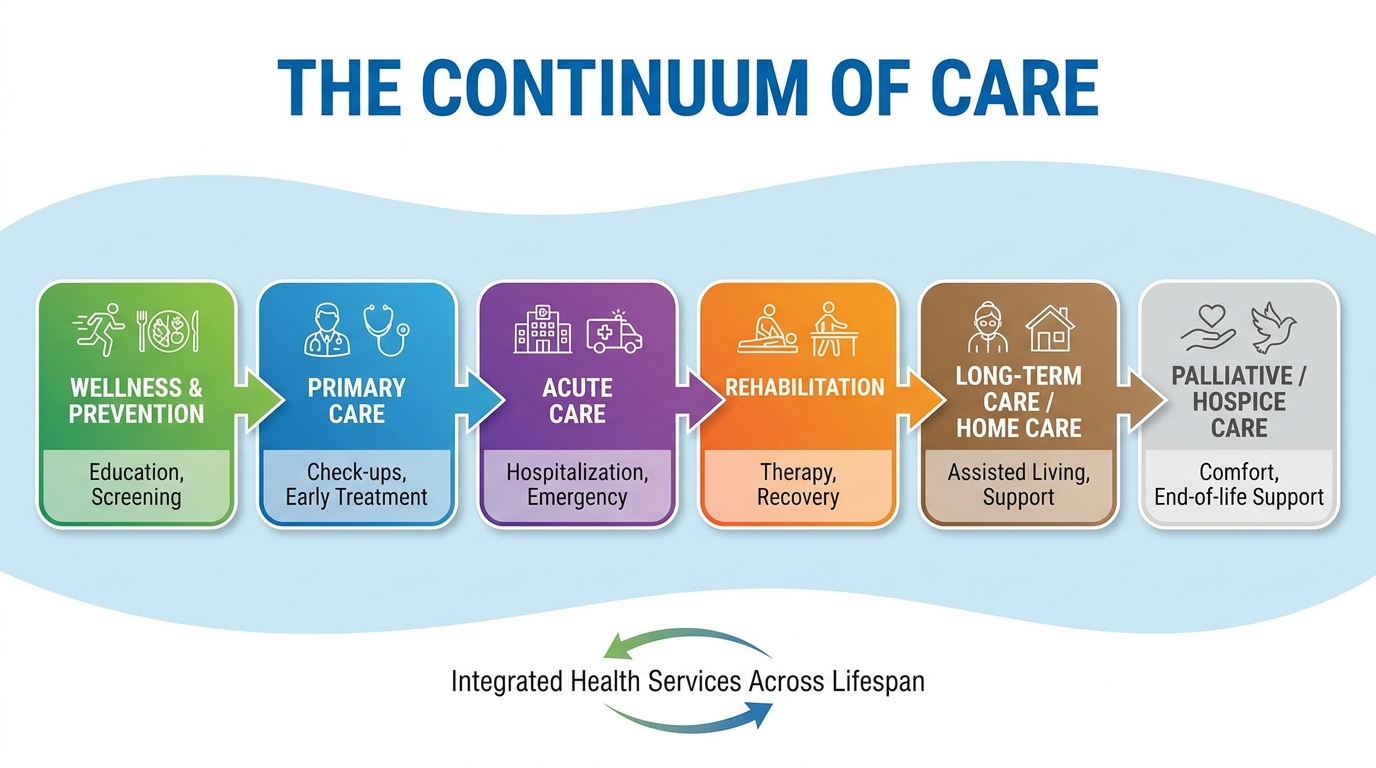
Why follow-up data matters in chronic disease care is primarily due to continuity of care—the seamless transition of medical information across different providers. When primary care doctors possess comprehensive, longitudinal data, they can accurately map the continuum of care, adjusting dosages and treatment plans before a patient requires emergency hospitalization.
The Cost of Medical Silos
Medical silos represent one of the greatest dangers to patient safety in modern healthcare infrastructure. Fragmented patient information occurs when a person visits specialists, urgent care centers, and primary care doctors who do not share integrated data systems. In these fractured scenarios, crucial medical context is lost at every single transition point.
This fragmentation directly leads to duplicate diagnostic testing, conflicting prescription regimens, and severely compromised patient safety. According to NIH research on care continuity, patients navigating disjointed healthcare systems experience significantly higher rates of adverse medication interactions. To solve this systemic failure, clinical organizations are aggressively adopting The Proactive Data Loop—the practice of continuously capturing patient follow-up data through labs and sensors to preemptively adjust chronic disease treatment before a clinical flare-up occurs.
Imagine a patient receiving advanced neuro-musculoskeletal treatments from a specialized physical therapy clinic while simultaneously taking unrelated blood-thinning medications prescribed by another doctor in a different health system. If follow-up data isn’t actively shared and monitored by a central primary care provider, an adverse interaction or physical injury could easily occur unnoticed. To fix these fragmented systems, clinicians must rely on objective metrics captured directly at the source.
Point-of-Care Data Tracking
Point of care data collection refers to medical testing and assessment conducted directly where the patient is receiving treatment, rather than sending samples to a distant laboratory and waiting days for the results to process. This vital clinical capability includes rapid blood draws at the clinic, immediate mobility assessments, and rapid diagnostic imaging.
Sequential LabCorp clinical analytics demonstrate that regular lab results track the actual, objective trajectory of a disease. For autoimmune conditions, tracking specific inflammation markers over a six-month period provides a clear mathematical curve of disease progression or remission. Furthermore, routine follow-up questionnaires provide critical subjective data regarding a patient’s mental health support needs, pain levels, and overall quality of life during chronic illness management.
Consider a patient preparing for a specialist consultation in Bangkok. By aggregating six months of point of care blood work, they can explicitly prove to the specialist that their current treatment is losing efficacy over time. This data-backed approach transforms a subjective complaint into an actionable medical reality that specialists can immediately work with.
`
`
Caption: The Proactive Data Loop relies on continuous data integration across all medical touchpoints.
While lab data provides the clinical picture, keeping track of the patient’s physical movements across the broader healthcare system requires automated notification technology.
Understanding ENS Alerts
To understand Encounter Notification Services (ENS) and Health Management Information Systems (HMIS), you can compare them directly to automated bank fraud alerts. Just as your bank immediately texts you if your credit card is used in a different country, ENS automatically alerts your primary care doctor the moment you are admitted to or discharged from a hospital or urgent care facility.
These secure, real-time alerts ensure that a patient never falls through the cracks after an emergency. Care coordination systems built on modern ENS technology significantly improve patient compliance with follow-up appointments because the primary care clinic reaches out proactively rather than waiting for the patient to call them.
If a patient visits an out-of-network emergency room for a severe lupus flare-up on a weekend, their regular rheumatologist or primary care physician is automatically notified via ENS by Monday morning. The clinic can then schedule an urgent follow-up appointment for medication reassessment before a secondary flare-up occurs. Beyond the clinic and hospital networks, the most frequent and valuable data collection is now happening directly where the patient lives.
Remote Patient Monitoring
Remote home monitoring devices represent the frontier of continuous patient tracking, literally extending the continuum of care directly into the patient’s living room. Modern tools like Bluetooth-enabled blood pressure cuffs, continuous glucose monitors (CGMs), and wearable mobility trackers provide a relentless stream of vital health metrics back to the clinical team.
This continuous stream of data feeds directly into The Proactive Data Loop, allowing doctors to make real-time treatment adjustments without requiring an exhausting office visit. Remote patient monitoring models empower physicians to intervene the exact moment a negative health trend appears, rather than waiting for a scheduled follow-up appointment three months later.
For a neurology patient managing Parkinson’s disease, wearable devices can track the frequency and severity of daily tremors objectively. This provides the physician with quantifiable data to adjust dopamine medications with precise accuracy. When continuous remote data indicates that a patient requires significantly more physical assistance at home, the overall care model must escalate accordingly.
In-Home and Long-Term Care Solutions (Summary)
Long-term care solutions rely heavily on the follow-up data generated in primary care to manage patients safely within their own homes. When chronic diseases progress to a point where daily functioning becomes impaired, physical home support becomes a medical necessity rather than just a convenience.
Navigating the spectrum of support requires understanding the difference between standard home care and specialized medical assistance. Standard home care provides essential daily living assistance, such as bathing, meal preparation, and mobility support. Home health care introduces clinical oversight, while palliative care focuses specifically on advanced comfort care and symptom relief. Regardless of the tier, professional caregivers utilize daily remote data monitoring to report vital metrics directly back to physicians.
This continuous feedback loop ensures that caregivers and doctors remain aligned on the patient’s safety and treatment efficacy. For families exploring 24-hour care or specialized senior care options, understanding how to integrate these services with ongoing medical data tracking is critical for long-term success.
“
Urgent and Ambulatory Care Interventions (Summary)
Despite the most meticulous follow-up data tracking and proactive care strategies, unpredictable acute flare-ups happen. When chronic conditions suddenly destabilize, patients require immediate urgent interventions that bridge the gap between their living room and the hospital emergency department.
Knowing exactly where to go during a crisis saves critical time and resources. Emergency rooms remain necessary for life-threatening events, but ambulatory care and specialized urgent care clinics effectively manage moderate symptom spikes, such as mild asthma exacerbations or localized infections. Importantly, modern Encounter Notification Services (ENS) technology ensures that any data generated during an ambulatory care visit flows seamlessly back to the primary care provider.
Furthermore, when hospital admissions do occur, structured post-hospital care step-downs are essential. These transition programs utilize precise follow-up metrics to prevent dangerous hospital readmissions. Understanding the specific clinical parameters for choosing an urgent care clinic versus a full hospital admission requires detailed preparation.
“
Safety, Limitations, and Professional Consultation
While data collection provides immense benefits for chronic disease management, interpreting health metrics without professional clinical context poses serious risks. Patients must understand the boundaries of home monitoring and prioritize expert medical evaluation.
Health Data Pitfalls
A significant danger in modern healthcare is patients misinterpreting their own raw lab data or overreacting to minor daily fluctuations on home monitors. Without medical training, an isolated, slightly elevated blood test result can cause severe anxiety, leading patients to inappropriately alter their own medications.
According to health information technology guidelines, wearable health data frequently produces false positives or captures benign anomalies that require clinical context to decipher. You can avoid this by always reviewing data contextually alongside a qualified clinician. While continuous health data is an incredibly powerful tool for tracking trends, it cannot ever replace an evidence-informed physical assessment performed by an experienced physician.
When to Seek Urgent Clinical Evaluation
Relying entirely on scheduled data uploads or routine follow-up appointments becomes highly dangerous during sudden, severe medical events. Remote monitoring is an observational tool; it is absolutely not a substitute for emergency medical services during critical situations.
Specific scenarios require immediate emergency evaluation, completely bypassing the standard proactive data loop. Sudden loss of motor function, acute chest pain, sudden difficulty breathing, or severe, unprecedented neurological symptoms demand an immediate 911 call or emergency room visit. Waiting for a remote care team to analyze wearable data during an active stroke or heart attack can result in catastrophic harm or death.
The Importance of Specialist Assessment
When dealing with complex, progressive conditions like rheumatoid arthritis or advanced neuropathies, seeking a comprehensive specialist assessment is essential. A general practitioner manages daily continuity, but specialists provide the depth required for advanced interventions.
Patients seeking second opinions at major medical hubs, such as specialized neurology or autoimmune clinics in Lad Phrao 101, Bangkok, must approach these visits prepared. Bring your thoroughly organized medical records, detailed symptom logs, and longitudinal follow-up data to ensure the physician can perform an accurate suitability assessment. Maintain realistic expectations; evidence-informed approaches may help maintain functional outcomes, but no credible physician will guarantee a miraculous cure.
Frequently Asked Questions
Why is follow-up care important for chronic diseases?
Follow-up care is essential for chronic diseases because it allows doctors to track disease progression and adjust medications before symptoms suddenly worsen. Without regular monitoring, conditions like arthritis or neuropathy can cause irreversible functional damage. Health systems utilizing continuous care models see significantly reduced rates of preventable emergency hospitalizations.
How do doctors monitor chronic disease progression?
Doctors monitor chronic disease progression through a combination of point-of-care lab tests, remote patient monitoring devices, and regular physical assessments. These tools generate longitudinal data that reveals subtle changes in inflammation, blood sugar, or neurological function over time. Encounter Notification Services (ENS) also alert physicians if a patient requires urgent care between their scheduled visits. Together, this data creates a highly comprehensive continuum of care profile for the patient.
What should I bring to a chronic disease follow-up appointment?
You should bring all recent lab results, a current medication list, and detailed symptom tracking logs to your chronic disease follow-up appointment. Providing your primary care doctor or specialist with clearly organized medical records ensures they have the data needed to evaluate treatment suitability accurately. Wearable device data or detailed home monitoring logs are also highly valuable for spotting subtle lifestyle trends. Clinical research demonstrates that patients who arrive prepared often achieve more accurate medication adjustments. Always explicitly disclose any side effects or acute care visits you’ve experienced since your last appointment.
What is the role of remote monitoring in chronic care?
Remote monitoring’s primary role in chronic care is to capture real-time health data from the patient’s home to proactively manage their condition. Devices like Bluetooth blood pressure cuffs and continuous glucose monitors transmit daily metrics directly to healthcare providers, bridging the gap between fragmented medical appointments. This creates a proactive data loop that identifies dangerous trends early, though it never fully replaces in-person specialist evaluations.
Conclusion
For patients managing lifelong health conditions, why follow-up data matters in chronic disease care comes down to maintaining stability and preventing emergency interventions. Research confirms that continuous data tracking reduces preventable hospital admissions by catching disease progression early. The most effective, evidence-led approach combines point-of-care lab work, remote home monitoring, and centralized primary care coordination to create an uninterrupted safety net.
Utilizing The Proactive Data Loop ensures that medical teams adjust treatments based on objective trends rather than waiting for painful, reactive flare-ups. By bridging the massive communication gaps between isolated clinic visits and fragmented specialists, this continuity of care protects both patient safety and long-term functional outcomes. It eliminates the exhausting cycle of repeating your medical history to every new doctor.
Do not wait for a sudden medical emergency to evaluate your chronic disease strategy. Gather your recent lab results, aggressively organize your medical history, and consult a qualified clinician or specialist to review your current follow-up data and critically assess your treatment suitability.