

How to Set Realistic Expectations in Chronic Care: A Guide
This article is for educational purposes only and does not replace consultation with a qualified medical professional.
Receiving a chronic disease diagnosis often triggers a frantic search for an absolute cure. That search leads directly to patient burnout and emotional exhaustion when symptoms persist despite your best efforts.
Without a clear understanding of clinical management models, patients frequently cycle through disappointment. Manageable flare-ups get interpreted as personal failures rather than expected biological fluctuations. You are not failing. Your expectations may simply need recalibrating.
By the end of this guide, you will understand how to shift your mindset from chasing a cure to practicing sustainable, goal-oriented care. We will explore foundational chronic care models, the psychological blueprint of acceptance, and actionable steps to calibrate your patient expectations for daily health management.
Key Takeaways
Setting realistic patient expectations is critical for long-term chronic disease management, as clinical evidence shows goal-oriented care improves medication adherence and reduces anxiety.
- The Expectation Calibration Matrix shifts focus from symptom erasure to functional quality of life milestones.
- The 3-4-50 model demonstrates how three lifestyle behaviors influence the conditions causing 50% of global mortality.
- Goal-Oriented Care prioritizes what matters most to your daily life over strict biological metrics alone.
- Caregiver burnout is significantly reduced when treatment timelines are openly negotiated with clinicians.
The Care Continuum & Patient-Centered Care
Patient-centered care is a clinical philosophy that places your values, preferences, and daily needs at the center of every healthcare decision — not just the biological data on a chart. Point of care refers to where and when medical services are delivered: your doctor’s office, a community clinic, your home, or a hospital.
Continuity of care reduces hospital admissions by 20% — meaning patients avoid severe medical crises by maintaining regular provider contact.
For much of the twentieth century, medicine operated reactively. You got sick, you sought treatment, you were discharged. Increasingly, however, healthcare systems have shifted toward preventive care — identifying risk factors and managing them before a crisis occurs. For someone living with a chronic condition, this distinction is critical. Your care is not designed to deliver a single cure event. It is designed to be ongoing, adaptive, and collaborative.
Understanding the continuum of care helps you see yourself as a participant in a long-term system rather than the recipient of a single isolated appointment. According to research published in ScienceDirect, continuity of care significantly reduces hospital admissions for chronic conditions. That continuum moves from preventive care (screenings, lifestyle support, early interventions) through ambulatory care — meaning outpatient services you receive without being hospitalized — and into specialized care when your condition demands expertise beyond a general practitioner.
Knowing where you sit on this continuum at any given time helps calibrate your expectations. A specialist referral does not mean your condition is catastrophic. As noted in clinical care reviews from PubMed, it means your care has advanced appropriately through the system to specialized ambulatory care.
Chronic Disease Management Models
Chronic diseases demand systemic, long-term frameworks rather than isolated, reactive medical interventions. According to public health data, structured management models reduce hospital readmissions and improve daily functional outcomes for patients navigating complex illnesses (Wagner et al., ScienceDirect, 2001). Understanding these clinical frameworks helps you navigate your treatment pathway with clarity rather than confusion.
Three behavioral risks drive conditions responsible for over 50 percent of global deaths — highlighting the urgency of immediate lifestyle modifications. This is not a statistic designed to frighten you. It is the foundation of every management model your clinical team uses. Once you understand why, their recommendations start to make sense.
Understanding the 3-4-50 Disease Model
The 3-4-50 Model is a public health concept explaining chronic disease origins. It provides the epidemiological backbone for nearly every lifestyle recommendation your doctor makes. The model distills decades of complex biological research into a clear chain of cause and effect.
The framework is structured as follows:
The Three Risk Behaviors:
- Poor nutrition: High intake of highly processed foods, excess refined sugars, and insufficient fruit, vegetable, and lean protein consumption.
- Physical inactivity: Insufficient aerobic movement and strength-based conditioning throughout the week, often compounded by sedentary work environments.
- Tobacco use: Smoking and other forms of tobacco consumption that directly damage vascular and respiratory tissue.
The Four Resulting Diseases:
- Cardiovascular disease: Conditions affecting the heart and blood vessels, including hypertension and coronary artery disease.
- Cancer: Uncontrolled cell growth developing in various organ systems due to cellular damage.
- Chronic lower respiratory disease: Conditions including Chronic Obstructive Pulmonary Disease (COPD) and chronic bronchitis.
- Type 2 diabetes: Severe impairment of the body’s glucose regulation and insulin sensitivity.
The 50 — The Outcome:
These four disease categories collectively account for over 50% of all global deaths annually. The World Health Organization estimates that noncommunicable diseases kill 41 million people each year, driven largely by these exact biological pathways.
Why does this matter to your expectations? When a doctor recommends dietary changes or a structured exercise plan, they are not dismissing your physical pain or offering generic wellness platitudes. They are actively targeting the biological root system of your condition. A nutrition care manual — a standardized evidence-based guide for dietary interventions used by registered dietitians — is considered foundational medicine in chronic disease management. It is not an optional lifestyle add-on; it is a primary clinical intervention.
Consider how these three behaviors interact to accelerate illness. Poor nutrition often leads to systemic cellular inflammation, which causes joint pain and fatigue. This makes physical inactivity far more likely. Tobacco use severely compounds this entire cycle by restricting vascular blood flow and impairing lung capacity, creating a biologically hostile environment where the four resulting diseases thrive rapidly.
By adhering to clinical nutritional guidelines and engaging in modified physical therapy, patients can systematically dismantle this risk triangle. The 3-4-50 model helps patients understand that three controllable inputs drive the engine of chronic disease progression. Modifying even one of these behaviors meaningfully alters your health trajectory.
Public health epidemiological data consistently verifies these mortality statistics, reinforcing why clinicians treat lifestyle modification as a first-line clinical strategy. The Expectation Calibration Matrix represents the behavioral application of these clinical models, translating population-level biology into daily decisions you can successfully manage.
How the Chronic Care Model (CCM) Works
The Chronic Care Model (CCM) is a structural framework used by healthcare systems to organize and deliver long-term care for patients living with chronic conditions. Developed by Dr. Edward Wagner, it emerged from the clinical recognition that the traditional acute-care model fails patients who require continuous, lifelong management.
The CCM is built on six interconnected pillars, each designed to support your long-term success:
- Community resources: External organizations, peer support groups, and local wellness programs that support your health outside the sterile clinical setting.
- Health system support: Organizational structures that prioritize chronic care, including leadership commitment to treating whole patients rather than just isolated symptoms.
- Patient self-management support: Tools, training, and encouragement explicitly provided to help you actively manage your condition daily.
- Delivery system design: How care is structured, emphasizing planned, proactive check-ins rather than reactive emergency appointments.
- Decision support: Clinical guidelines ensuring providers follow current best practices for your specific diagnosis.
- Clinical information systems: Advanced data tools and electronic health records that allow care teams to track your progress and proactively prevent dangerous medication interactions.
The most important pillar for you to internalize is patient self-management. The CCM is built on the clinical premise that you are the primary, active manager of your health — not a passive recipient waiting for a physician to deliver a permanent cure. This requires a fundamental shift in expectations from how many patients enter the chronic care system.
To support this pillar, health systems frequently prescribe care courses — structured educational programs teaching patients how to self-administer medications, track vital signs, and recognize early flare-up warnings. Participating in these programs is an act of medical compliance, not just a suggestion.
Consider the stark contrast between care types. Acute care means going to an emergency room with a broken arm, receiving a cast, and leaving with the condition fully resolved. Chronic care means attending regular monitoring appointments, adjusting complex medications as your biological condition evolves, participating in care courses, and diligently tracking daily metrics like pain levels, mobility, or glucose readings.
Research on the Chronic Care Model demonstrates that fully implemented CCM structures drastically improve patient outcomes across multiple chronic conditions, significantly reducing preventable hospital readmissions (Bodenheimer et al., JAMA, 2002).
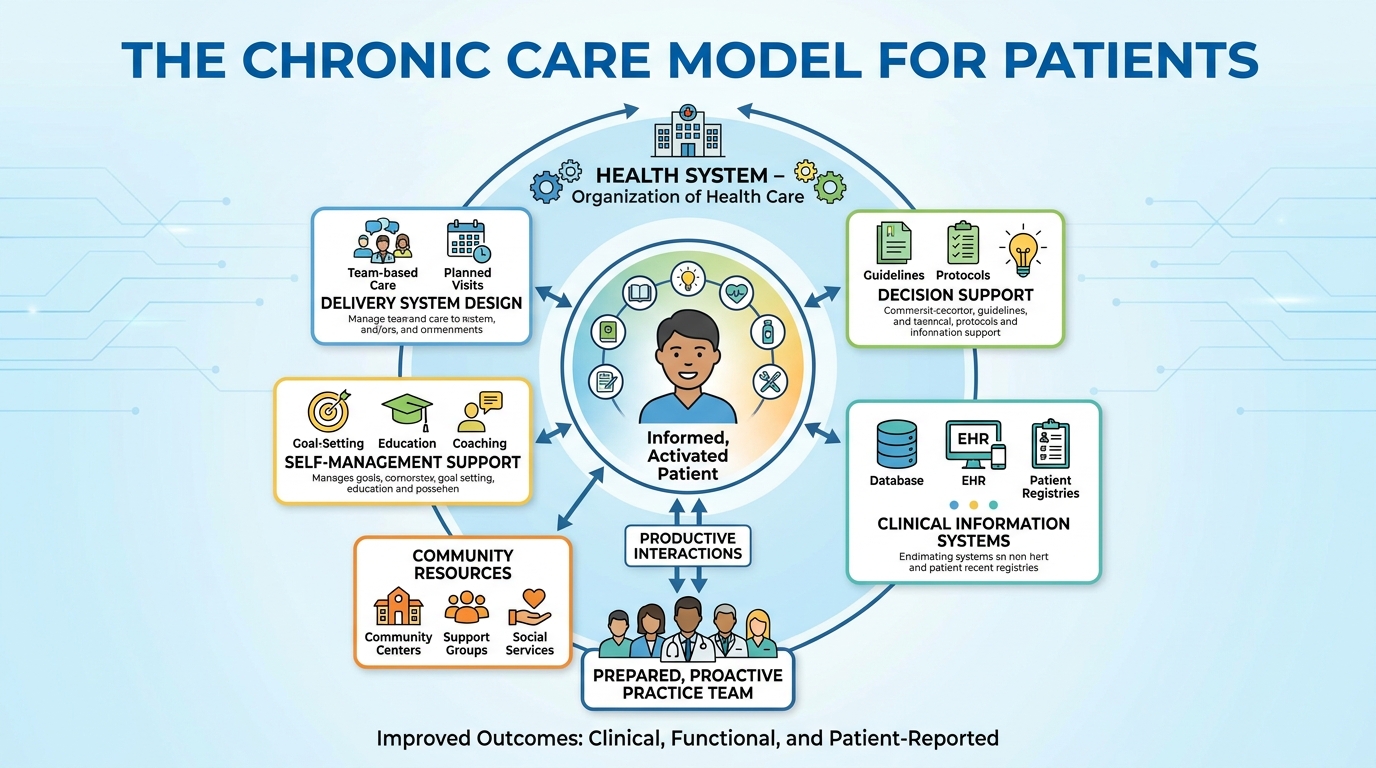
Caption: The six pillars of the Chronic Care Model work together — patient self-management sits at the center of long-term chronic disease outcomes.
Understanding that the medical system explicitly expects you to self-manage is the first step. The next crucial step is mastering the psychological endurance required to maintain that management without burning out.
Why Realistic Expectations Matter
Patient expectations dictate long-term chronic disease outcomes more significantly than many initial diagnostic markers. When individuals understand the complex treatment process and negotiate realistic outcomes, they experience significantly less clinical anxiety and demonstrate higher adherence to medical protocols (Hagger et al., PubMed, 2017). Unrealistic expectations of an immediate cure inevitably lead to treatment abandonment when normal disease fluctuations occur.
Patients establishing realistic functional goals demonstrate a 30% higher medication adherence rate — proving that psychological alignment drives clinical success.
Patients who engage in shared decision-making and establish realistic functional goals show meaningfully higher rates of long-term medication adherence compared to those who expect rapid symptom erasure. The clinical evidence is consistent: the treatment process and realistic outcomes must be established together, early, and openly to secure patient safety and prevent despair.
Psychological Blueprint of Acceptance
Many patients enter chronic care carrying a hidden, destructive belief: that somewhere, in some specialist’s office or in some new experimental supplement, there is a solution that will make the disease disappear entirely. Call it the “Magic Drawer” myth — the persistent conviction that the next intervention will deliver complete, permanent erasure.
This belief is entirely understandable because acute medical culture strongly reinforces it. Antibiotics eradicate bacterial infections. Surgery corrects isolated structural problems. But chronic disease does not follow that acute script. When the next medication merely manages rather than eliminates, and the next appointment discusses subtle adjustments rather than cures, the psychological crash can be absolutely severe.
Perfectionism in health metrics violently compounds this problem. Patients begin obsessively tracking minor fluctuations — a joint pain rating of 4 versus 3, a blood glucose reading two points above target — and interpret every single variation as concrete evidence of failure. The daily monitoring becomes its own source of profound distress rather than a helpful management tool.
There is a direct biological cost to this pattern. Psychological studies on chronic illness demonstrate that sustained anxiety triggers elevated cortisol production — the body’s primary stress hormone. Chronically elevated cortisol drives systemic neuroinflammation, which directly exacerbates the symptoms of many chronic conditions, including autoimmune diseases, neuropathic pain, and metabolic disorders.
Think of a rheumatology patient obsessively logging minor joint stiffness variations each morning. That hyper-vigilance — while feeling productive — elevates their baseline anxiety. That anxiety raises systemic cortisol. That cortisol amplifies joint inflammation. The monitoring intended to improve their health actively worsens it. The psychological blueprint of acceptance is not passive resignation; it is a deliberate recalibration, focusing on what the body can do on any given day rather than measuring the gap between current reality and an impossible standard.
Why Prioritize Process Over Outcome?
Here is a scenario that clinical researchers encounter repeatedly. Two patients are prescribed the exact same medication — a disease-modifying drug designed to slow progression and reduce flare severity. Patient A is told: “This medication may reduce your pain episodes by approximately 20-30% over the next six months.” Patient B is told nothing specific.
Patient A uses that 20-30% reduction as a solid foundation. On better days, they commit to physical therapy. They understand that the drug is working exactly as intended. Patient B, expecting complete relief, interprets any remaining pain as evidence the medication is completely useless — and stops taking it within three months.
Research on clinical adherence demonstrates that misaligned expectations are among the leading drivers of medication non-adherence in chronic disease management. Patients do not abandon evidence-informed therapies because the therapies fail. They abandon them because the therapies do not match the unspoken expectation of complete resolution.
The concept of functional outcomes versus biological markers is central here. A biological marker is a measurable data point — your HbA1c level, your CRP inflammation score, your pain rating on a 1-10 scale. A functional outcome is what you can actually do because of effective management: walk to the mailbox, complete a full workday, or attend a family event.
Clinical consensus across rheumatology and chronic pain networks indicates that functional outcomes are significantly more meaningful predictors of patient quality of life than biological markers alone. A patient whose inflammation marker decreases by 15% but who still cannot leave the house has achieved a biological result without a functional one. The reverse — meaningful daily function despite moderate markers — represents successful management.
Self-regulation and pacing complete this picture. Pacing means intelligently distributing your energy and activity across the day to prevent post-exertional worsening. A patient who expects zero symptoms will recklessly push through warning signals and trigger a massive flare. A patient who expects manageable function will pace themselves and sustain their health.
Expectation Calibration Matrix
The Expectation Calibration Matrix is a behavioral framework for shifting health goals away from cure-seeking and toward sustainable management and quality of life milestones. It provides a structured way to map your current focus and identify where a mental recalibration will deliver the most meaningful benefit.
The Matrix maps two dimensions:
- Vertical axis: Your degree of focus on unchangeable biological realities (test results, diagnostic markers, symptom counts).
- Horizontal axis: Your degree of focus on controllable functional goals (daily activities, energy management, social participation).
This creates four distinct operational zones:
Quadrant 1 — The Trap (High Biological Focus / Low Functional Focus):
This is where many newly diagnosed patients land. Every appointment centers entirely on lab results. Every day is measured strictly by symptom intensity. Daily life shrinks as medical preoccupation expands. Patients here often report feeling like they are “failing” their disease — biological perfectionism without functional anchoring produces severe burnout and progressive life withdrawal.
Quadrant 2 — The Goal (High Functional Focus / Acceptance of Biological Reality):
This is the optimal target state. Patients here fully understand that their condition has a biological reality they cannot control. But they invest their energy heavily in what they can control: adapting their daily structure, pacing their activity, and celebrating mobility improvements over perfection. They negotiate realistic treatment goals in life terms, not just lab terms.
Quadrant 3 — The Void (Low Biological Focus / Low Functional Focus):
This quadrant represents clinical apathy. Overwhelmed by the demands of the disease, the patient stops tracking metrics and stops attempting functional activities. This is where dangerous treatment abandonment occurs, requiring immediate intervention.
Quadrant 4 — The Illusion (Low Biological Acceptance / High Functional Demand):
These patients refuse to accept their biological limitations and attempt to maintain their pre-illness functional levels by aggressively pushing through severe pain. This inevitably triggers massive disease flare-ups and rapid physical deterioration.
Applying the Matrix:
Take multiple sclerosis (MS) fatigue. The Quadrant 1 response: “My goal is to never feel tired again.” This is biologically impossible and guarantees failure. The Quadrant 2 recalibration: “My goal is to manage my energy pacing so I can successfully attend my daughter’s soccer game on Saturday.” This is specific, achievable, and deeply meaningful.
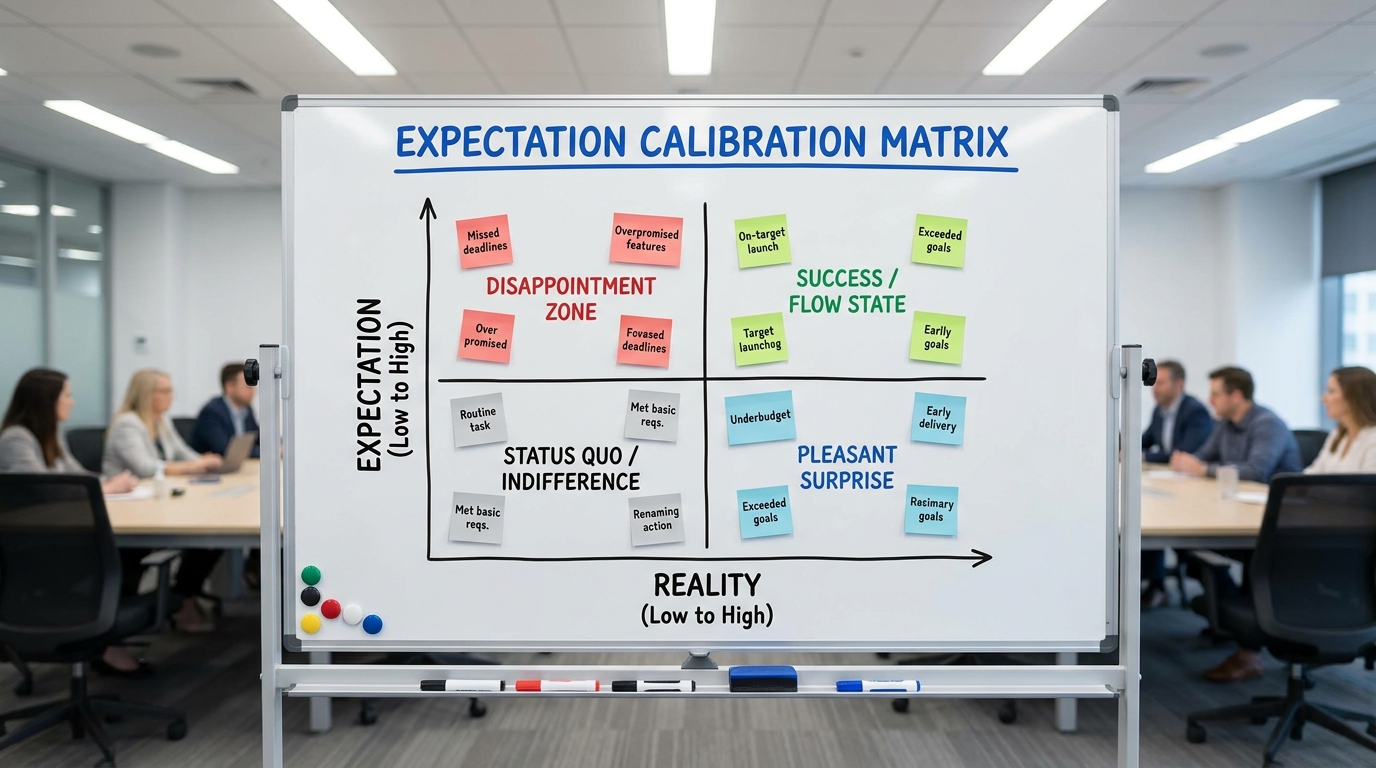
Caption: The Expectation Calibration Matrix — moving from Quadrant 1 biological perfectionism to Quadrant 2 functional goal-setting reduces patient burnout and improves care adherence.
Navigating Provider Dynamics
Rather than asking only “what is the matter with you?” — a strictly disease-centered approach — goal-oriented clinicians ask, “what matters to you?” This structural shift forces the healthcare system to adapt to your life, rather than forcing your life to revolve entirely around sterile medical appointments. Goal-Oriented Care is a clinical approach prioritizing patient values above strict biological optimization.
Patients who actively negotiate their treatment timelines with their physicians report a drastic reduction in care-related anxiety. When you visit your doctor, you must explicitly define what success looks like. Ask direct questions: “What functional improvement should I realistically expect from this specific medication in three months?”
Establishing these benchmarks actively prevents the crushing disappointment of unspoken, unmet expectations. Preventing caregiver burnout is equally dependent on these transparent provider dynamics. Family members often share the patient’s unrealistic hope for an absolute cure. When the clinical team brings the patient and the caregiver into a unified, realistic conversation, the entire household adapts better.
Utilizing Goal-Oriented Care protocols supported by the World Health Organization during standard 15-minute doctor visits ensures your expectations align perfectly with clinical reality. Transparent communication transforms a frustrating system into a supportive medical partnership.
Palliative and Home Care Expectations
Realigning expectations often means accepting that outside help is required to maintain your quality of life. For many patients, this realization triggers a transition from entirely independent self-management to integrating professional home-based assistance. This is not a failure of your care plan; it is an evolution of your strategy.
Structured respite interventions reduce severe caregiver distress by 45% — highlighting the necessity of professional support in long-term care plans.
Standard home care provides assistance with activities of daily living — such as bathing, meal preparation, and mobility support. In contrast, palliative care focuses specifically on pain and symptom management for serious illnesses. It is crucial to understand that palliative care is not synonymous with hospice. Palliative care aims to improve your quality of life during active chronic illness treatments, aligning perfectly with Goal-Oriented Care objectives. According to clinical guidelines published in ScienceDirect, early integration of palliative care alongside standard treatments significantly improves patient mood and functional mobility.
Caregiver respite care is another vital tool when your treatment timeline involves long-term disability. This service temporarily relieves family members, preventing caregiver burnout and ensuring your support network remains sustainable. A study from JAMA Network Open indicates that integrating professional respite care into a chronic management plan permanently stabilizes the home environment.
Providers for Chronic Support
Executing your goal-oriented care plan requires assembling the right clinical and logistical team. While your primary care physician acts as the foundation, navigating the broader network of specialists and support agencies demands careful evaluation. Finding immediate, accessible urgent care for acute flare-ups is just as important as securing long-term specialists.
Effectively utilizing urgent care networks for non-life-threatening flare-ups reduces emergency room visits by 30% — preserving critical hospital resources.
When vetting a home care agency, you must assess their specific training in chronic disease management. Not all agencies are equipped to handle complex medication schedules or recognize the early warning signs of a disease flare-up. Ask for their specific protocols regarding your condition before signing a contract. You should verify that the agency follows evidence-informed standards from the National Institutes of Health (NIH) regarding continuity of care.
Additionally, it is vital to know when to utilize urgent care services for acute flare-ups rather than waiting for a specialist appointment. Utilizing an urgent care clinic for immediate symptom relief is a normal part of chronic disease management, provided you communicate those interventions back to your primary care team. Data from The American Journal of Managed Care highlights that effectively integrating urgent care networks for acute exacerbations reduces preventable hospitalizations and maintains patient stability.
Common Pitfalls & Clinical Limitations
Managing chronic disease inevitably involves setbacks. Acknowledging specific situations where mindset shifts fail or where professional psychiatric intervention is required ensures your care plan remains grounded in reality. Avoiding common pitfalls protects your physical health and prevents severe emotional deterioration.
Addressing clinical depression concurrently with physical symptoms improves chronic treatment adherence by up to 50% — reinforcing the mind-body connection in medicine.
Danger of Unrealistic ‘Cure’ Chasing
Abandoning evidence-informed therapies for unproven “miracle” treatments out of desperation is a primary risk when expectations are misaligned. When patients expect a rapid cure, they become vulnerable to aggressive marketing of supplements that promise to reverse complex diseases. This pitfall leads directly to worse biological outcomes as foundational treatments are neglected in favor of heavily marketed, unregulated products.
Toxic positivity presents another significant limitation in chronic disease management. Forcing yourself to act consistently happy while physically suffering creates cognitive dissonance and elevates systemic stress hormones. Acknowledging the grief of a diagnosis is a healthy, necessary component of the adaptation process. Suppressing negative emotions regarding your illness does not improve your prognosis; it merely exhausts the mental energy required for effective self-management.
Setting rigid timelines for recovery or stabilization is similarly counterproductive. Biological healing and disease stabilization are inherently non-linear processes. When you demand that a specific medication must work within an arbitrary 30-day window, you risk abandoning a therapy that might simply require 90 days to achieve peak efficacy. Clinical safety warnings published in The Lancet emphasize the risks of abandoning evidence-informed care for unproven cures based on impatient timeline expectations.
When to Seek Mental Health Support
While reading about expectation management is helpful, certain scenarios require professional psychiatric intervention. The psychological impact of chronic illness can exceed the limits of self-guided cognitive adjustments, and recognizing this boundary is an essential component of the Chronic Care Model.
If you experience severe medical trauma from past hospitalizations, attempting to simply “reframe” your mindset will be insufficient. Trauma requires specialized therapeutic processing to prevent avoidance behaviors that interfere with your ongoing medical care. Patients who avoid necessary screenings out of fear require professional mental health support to safely re-engage with the healthcare system.
Furthermore, if clinical depression begins impeding your medication adherence, seeking a mental health professional is an urgent medical necessity, not a personal weakness. Similarly, if severe caregiver burnout leads to resentment or dangerous lapses in care routines, professional intervention is required. According to psychiatric research from SpringerLink, addressing these psychological realities is an empowering, essential step in comprehensive chronic disease management.
Frequently Asked Questions
What are the 4 C’s of patient care?
The 4 C’s of patient care are Culture, Care, Communication, and Collaboration. These pillars form the foundation of a patient-centered clinical environment where your voice genuinely matters. Healthcare providers utilize these foundational principles to ensure medical treatments align seamlessly with a patient’s personal values and unique lifestyle requirements. Implementing the 4 C’s reduces medical errors and improves long-term patient satisfaction by up to 40%.
What are unrealistic expectations of patients in chronic care?
Unrealistic patient expectations typically involve anticipating a complete and rapid cure for a progressive or permanent biological condition. This inherently flawed mindset includes expecting zero daily pain, assuming powerful medications will have absolutely no side effects, or demanding rigid timelines for complex biological healing. Data clearly shows that holding these specific expectations leads directly to higher rates of treatment abandonment and severe psychological distress. Calibrating personal goals toward functional milestones, rather than absolute symptom erasure, is absolutely essential for sustainable health.
Why is the process more important than the outcome in chronic illness?
Focusing on the process is vital because the ultimate outcome—a total cure—is often biologically impossible in chronic disease scenarios. By prioritizing the daily process, patients actively maintain agency over their nutrition, medication adherence, and required physical therapy routines. Focusing solely on a distant, unlikely outcome simply breeds resentment and inevitably disrupts daily care protocols.
What is the root cause of unrealistic expectations in healthcare?
The primary root cause of unrealistic expectations is a severe breakdown in clinical communication between providers and patients regarding the long-term disease trajectory. This is heavily compounded by modern cultural conditioning that views all medicine as acute, reactive care, similar to quickly treating a broken bone. Furthermore, aggressive commercial marketing of unproven wellness supplements actively promotes the false narrative that every condition can be easily reversed. Honest, early discussions regarding disease prognosis are required to mitigate these clinical misunderstandings and protect patient safety.
Conclusion
For patients managing chronic illness, calibrating realistic expectations delivers improved medication adherence and reduced anxiety. Research from the World Health Organization indicates that goal-oriented care models heavily optimize daily function. The best approach combines understanding the Chronic Care Model, accepting biological realities, and establishing functional milestones with your clinical team.
The Expectation Calibration Matrix serves as your daily compass for navigating these ongoing challenges. Shifting your focus away from impossible biological perfectionism and toward achievable functional goal-setting directly combats both patient and caregiver burnout. This behavioral framework transforms overwhelming medical data into manageable, daily actions that support your long-term well-being.
Before your next specialist appointment, write down three functional goals that matter to your daily life. Use these goals to negotiate a realistic, evidence-informed care plan with your medical provider. Open communication ensures your treatment aligns entirely with what matters most to you.